


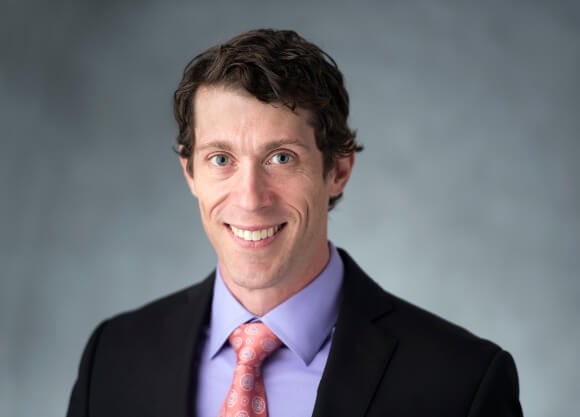
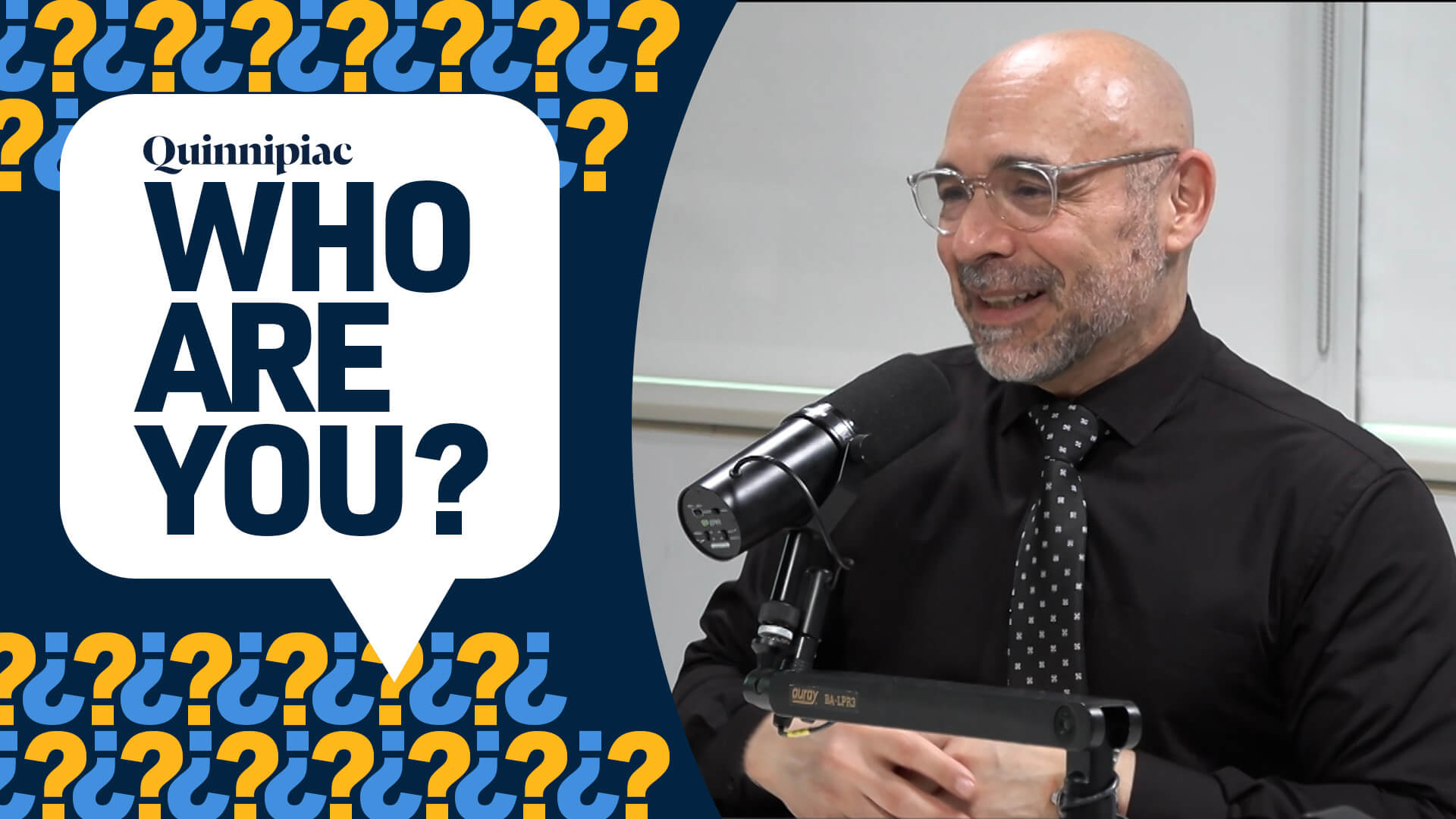
‘Who Are You?’ podcast with guest Bill Ollayas ’26
How helping others inspired a career change to law

How helping others inspired a career change to law
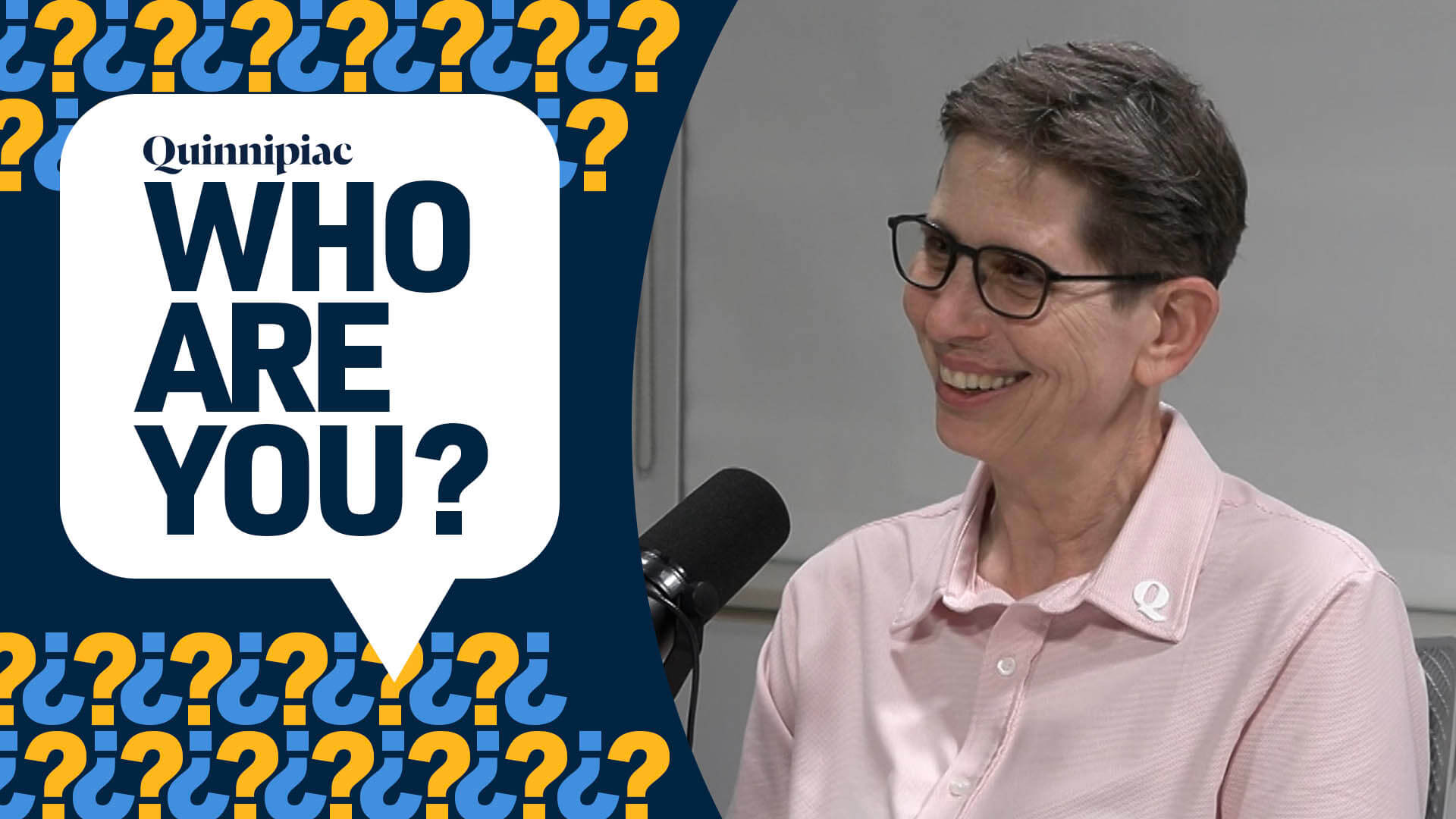
Joel Vanner: Welcome to ”Who Are You?,” The Bobcats you know, the stories you don't. I'm your host, Joel Vanner, inside the podcast studio at Quinnipiac University's School of Communications, and I am joined today by my guest, William Ollayos. William, welcome to the show.
William Ollayos: Hi. It's great to be here. Please feel free to call me Bill.
Joel Vanner: Bill. I'm sure you could guess by the name of the program, what my first question to you is going to be. And that is, who are you?
William Ollayos: Great. I'm shocked. I'm sorry. I wasn't ready for this. My name is Bill. I use he/him pronouns. I just finished my three L year at the Quinnipiac University School of Law, so I will be a four L in this fall. I'm in the part-time evening program, which has been a wonderful experience, and I'm currently a summer associate at Robinson and Cool.
Joel Vanner: Congratulations.
William Ollayos: Thank you.
Joel Vanner: Finishing your third year, entering your last. So tell me, Bill. Did you always think you'd go to law school?
William Ollayos: Oh, God. No, absolutely not. In undergrad, I went to a really large state school, and I was premed. So I actually double majored in biological sciences and English. Sounds like you've taken quite a path since then. Yes, yeah. So I went so far as to take the MCAT, and it was really when I sat down to study and had to review physics and organic chemistry that I was finally like, I don't think science is for me. That'll do it. I was doing biology because I thought I wanted to be a pediatrician. I really just wanted a career. I kept telling everyone who would listen, I just want to help people. I just want to help people. It didn't matter that I hated blood. I thought I was going to get over that, I guess, to help people. Um, but English was really my passion major, and it sounds like the two don't go together at all, but I really just took two science classes and two English classes every semester. So at the end of my undergraduate time, I was studying for the MCAT, hating every minute of it. And so I pivoted and decided, maybe I should talk to my English professors to figure out a different route. Um, so then I went and did a master's at a different large state school. This one out in Massachusetts. So I like to say that that is when I studied abroad and left Connecticut. I did a master's of comparative literature, and then I've been a student affairs professional ever since.
Joel Vanner: So, what was your entrance into the legal and political worlds? Like, you had your undergraduate degree, and then you got your masters, and how did you know you wanted to go into law?
William Ollayos: Absolutely. Well, so again, I had kind of a roundabout path. I helped to fund my master's program by working for residential life. And so I decided to become a student affairs professional, and I returned to Connecticut, working at a small private school where I've actually been for eight years. About halfway through my time there, I really just felt compelled. Again, I want to help people. I want to do something to make the community a better place. So about four years into my time as a full-time reslifer, I started getting more involved with politics. So I started working for a small advocacy org run by the Connecticut General Assembly. Which had a bunch of lawyers who were working there, and they were all doing different advocacy work for a variety of marginalized communities across the state. And they were all lawyers, and they were all at this point, I was like, 28, but they were all like, Bill, you should go to law school, which I had never considered. More school. I know. More school. I know. This will be my last schooling, most likely. But I do foresee working at colleges and universities for the rest of my career. So they were all lawyers. They said, If you want to do this sort of advocacy work, you should go to law school. And so I said, Okay, I guess I'm going to take the LSA. Which gave me visions of taking the MCAT, which was rough. And so I said, I'm not going to tell anyone that I'm taking the LSAT because if I don't do well, I'm not going to get in, and this is such a pivot for me that I hadn't ever considered. So I took the LSAT. I did well enough to actually apply, and then four years later, I'm almost on a Quinnipiac.
Joel Vanner: So, you shocked yourself going into the LSAT, not sure how you do, kind of keeping it under the radar, and here you are.
William Ollayos: Absolutely. I mean, I'll put in a cool pitch for the Connecticut Bar Association runs a program called the Future of the Legal Scholars Profession, FLSP. And so I applied, and they actually helped to fund my Kaplan prep course for the LSAT program, and I don't think I would have done quite as well if I hadn't had that exposure.
Joel Vanner: So you surprised yourself on the LSAT. What led you to come to Quinnipiac Law?
William Ollayos: Right. Well, so after I finished grad school, I said, I never want to be a full time student again. I really appreciate I knew from the jump that I wanted to be a part time student. And so I really appreciated the balance that I anticipated would come from going to school at night and working during the day. And I will confirm that it is really nice and just for everyone's mental health in the part time evening program, to have something going on during the day that is completely different from what you're doing at night. It really just kind of gives your brain some breathing room from the constant legal study, which is really, really wonderful. And so I said, Well, I'm going to keep working in Connecticut. I don't want to leave my job. And so, Quinnipiac was nearby. It really quickly rose to the top of my list, but I did apply to all of the Connecticut law schools. What I would not is, you know, never look at sticker price because it really did come down to financing for me, and I was really blown away by what Quinnipiac was able to offer me. And yeah, I accepted almost right away and never looked back, and I've been really happy about it.
Joel Vanner: So you mentioned being a part-time student gives you that balance, right? You can do something during the day and then have your studies at home. How has Quinnipiac supported you in being able to balance those things and maybe give you resources to be successful in your studies?
William Ollayos: It's funny you asked because, again, I work at a university right now, and so I'm constantly talking to undergraduate students about the importance of using their campus resources. And so for me, the exact same thing is true. I'd love to give a shout out to Jenny Chow and Amelia Vanderbrok from the CDO, the career office at Quinnipiac. They were 100% part of why I got to where I am today with my summer associateship at Robinson and Cole. We also have a new dean at Quinnipiac, Dean Brian Gollini and Dean Kathy Guhar has been here for a while. They've been wonderful advocates as well. I think part of the trick of being a part time student is sometimes you just don't know what you don't know, and the same can apply to faculty and staff. They're really receptive to feedback. Dean Kathy Guhar she actually was a part time student, so she's a wonderful sounding board. But as I've hit different obstacles and different maybe challenges throughout my time at law school, they've been really receptive to Oh, it sounds like that might be a little bit more challenging for a part time student, or it sounds like those structures might pose obstacles to maybe some of the evening students. And so they've been really creative about a lot of that.
Joel Vanner: And consider it, too, knowing that, you know, with part-time students, you have a lot going on, very much in addition to law school. You mentioned Robinson and Cole, which we'll get to in a minute. Is there a typical day for you as a part time law student?
William Ollayos: Uh, it really varies. And as I mentioned, I also work at a university where, you know, student needs can really inform what you're doing during the day. But so as a typical day in the life of a part timer, I would say, you know, you work nine to five, and so you're doing something that's completely outside the realm of legal studies. At least, typically, I have a lot of friends in the part time program who are actually paralegals, and they just seem like they have such an edge on me in a lot of the classes that we're doing. And so they're very, very impressive. But I would say for myself, I really didn't come in with much legal work in the traditional sense, certainly lots of advocacy and political. But so you work during the day, and then you're usually on campus 2-3 nights a week, and I anticipate having classes from 6:00 P.M. To 10:00 P.M. During any of those days. The hardest part about law school, usually, what I tell folks is staying awake and conscious until 10:00 P.M. Because my bedtime is 930. And still adjustment. Yes, you still have to get through class and then drive home. But, yeah, and then weekends are for homework and studying. Again, I really think if you can lean into your student skills. So time management organization, using your campus resources, that's really what's gotten me to the point I am now in my education.
Joel Vanner: Outside of your classes, are they externships and associate ships that contribute to your time here? You mentioned Robinson and Cole. Absolutely. Tell me about that. And what is that and what you do there?
William Ollayos: Yeah, so law school is its own universe, and so we have terms for all these different things. And then even, yeah, the legal world is its own universe, its own industry, and then law school is its own thing, as well. None of it I'm familiar. Yeah. So I have completed a few externships during my time at Quinnipiac. So I did complete one with the Connecticut General Assembly that involved putting a new spin in some of the work that I was already doing, which helped me to come to law school to begin with. And Quinnipiac got really creative about how I could meet the demand so that I would still abide by the American Bar Association's requirements so that I could properly get credit for that, which was awesome. Real big shout out to Dean Carrey Cash. She actually just retired. She was a huge advocate for part time students and really helped me find creative ways to get this awesome experiential education that was really some of the best that I got while at Quinnipiac. I also just completed an externship with the Attorney General's office back in the I think we started in February 2025, which was really, really cool. And again, working with Dean Cari cas, Alice Rosenthal, Professor Alice Rosenthal, she was also really helpful for me setting up those credits, which was awesome. And then the career office, the CDO. So some of the folks I mentioned earlier, the CDO runs a process called QCI, the Quinnipiac coordinated interviews. And so the CDO helped me last summer to interview with a number of large firms that set me up a year later. I started back in May at Robinson and Cole, and so that is an associate ship. So I am now currently working full time at a law firm, which has been a huge transition for me because a lot of the work I was doing before I was at least sort of familiar with. But now I'm currently on leave from my day job at a university, and I am working at a law firm, and I am really putting all the skills I developed in class in the classroom actually to practice.
Joel Vanner: Through all of these, you mentioned a number of faculty that have helped you along the way. It sounds like they really customize the experience you have here for you and your interests and where you want to go in the legal profession.
William Ollayos: Absolutely, and that is something I would really highlight about the Quinnipiac part-time program. I think they're able to individualize your curricula, like, really tailor their pedagogy to your educational experience in ways that I don't know other schools would be able to.
Joel Vanner: You mentioned Robinson and Cole getting experience, maybe you wouldn't have gotten otherwise. How have those kinds of experiences helped you grow and inform the path that you want to take in the legal field?
William Ollayos: What I was always saying as I was going through the QCI process last summer, so a full year ago. I just don't have a lot of traditional legal experience. So, you know, if you need to talk to a state representative, if you're trying to figure out how to advocate for something with a senator, I'm your guy. If you have a roommate conflict with my Res Life experience, if you need to mediate something with your neighbors, again, I'm happy to be helpful.
Joel Vanner: Sometimes they both act like senators, roommates and real senators.
William Ollayos: That's all of my professional experience so far. And so this summer, actually learning to go to the office, do research, write memos, draft research proposals, really look take unique perspectives on behalf of clients in order to support their argument. That is what I've been learning for the last four weeks, and I have six more to go, so I'm excited for all I've been able to actually apply.
Joel Vanner: So, looking back three years ago, when you were looking for a part time program, what would you say stood out to you most then, and what would you say to those who are looking for a similar experience now? What should they consider, and what should they be looking for to find the fit for?
William Ollayos: I mean, I think when you talk about higher education in the United States, it really all does come down to finances. Whether you're starting at a community college, because it's more affordable and then maybe transitioning afterwards, it really all does come down to money for me. I knew immediately that I wanted to be a part time student because it was more affordable, but also what I mentioned before, I had just kind of fried myself as a full timer earlier, and so I was ready for something new. Um, so once I knew, okay, I decidedly want to be a part time student, let me look at the part time programs in Connecticut that are commutable from my day job. And then from there, it really came down to funding. I would really say, never look at sticker price. You know, the financial aid that's available might really surprise you. It absolutely did for me. I've been so grateful to the resources that Quinnipiac has been able to provide for me throughout my JD. And so, yeah, that I think until something changes and higher Ed becomes more affordable, I really would advise looking at the smartest financial decision for yourself.
Joel Vanner: Then you've talked a little bit about this throughout the podcast so far. But what do you think sets Quinnipiac School of Law apart from other law schools? And what would you say to those that are really considering Quinnipiac School of Law? What would you say to them to get them?
William Ollayos: Think Quinnipiac's ability to individualize your education is really unique, and I don't think it is something that you would necessarily find in other schools. They are, of course, abide by the ABA guidelines at all times. They're really clear and very direct. But the way that they actually play out in the classroom can vary for part-time students, and there are a number of advocates on the faculty and on the staff at Quinnipiac who are really concerned with the experience that you're going to have while on campus. And they just added a new course that really focuses. I believe it's called Foundations of Practice. It focuses on educating the whole lawyer, taking a really holistic approach to talking about being a lawyer, taking care of your mental health, your physical wellness while actually working in private practice or something similar to that. And so that is actually I had just started when I was a one L, and so that was really interesting. We immediately were talking about substance abuse issues in the law or remembering to get enough sleep before taking the bar and things like that. So I really wasn't expecting to have those sort of unique conversations when I came in and I haven't heard from my peers at other colleges that they're at other law schools that they're doing similar work.
Joel Vanner: And it there's value in embracing the fact that life happens, right, while you're going to law school.
William Ollayos: Absolutely.
Joel Vanner: And having those conversations and embracing those things. So that's great. All of these experiences that you've had at the School of Law, how have those prepared you for life after law school, and where do you think you'll be headed?
William Ollayos: So I came to law school knowing that I wanted to be some sort of civil rights attorney, doing some sort of public interest. That's really broad and can show up in a lot of different ways. So currently, as I mentioned, I'm summering in private practice, and I'm hoping to start out there right after graduation, as well. There's just so many skills that I'm developing and adding to my resume that I don't think I could get otherwise. And then I'm excited to get really involved in their pro bono work, see what direction I get pulled to, and then see what happens for my career.
Joel Vanner: Well Bill, that's all the time we have for today. Thank you so much for joining me on the show and sharing your story from our School of Law. Absolutely, thank you so much for having me. If you like today's episode of ”Who Are You?,” be sure to like and subscribe and find other episodes of our show on Apple, Spotify, or YouTube podcasts. Until next time, when I ask my next guest, who are you? I'm Joel Vanner. Bye for now.















Quinnipiac Today is your source for what's happening throughout #BobcatNation. Sign up for our weekly email newsletter to be among the first to know about news, events and members of our Bobcat family who are making a positive difference in our world.
Sign Up Now