


Chapters
- 0:00 Who is Nitish Patidar?
- 0:59 What were your interests growing up?
- 3:25 Moving from a career in medicine to management
- 6:51 The types of courses Nitish teaches
- 7:09 How Nitish takes his work experiences into the classroom
- 11:34 What Lifelong Learning programs do you lead?
- 12:42 What can individuals who take part in your Lifelong Learning workshops take away?
- 14:14 How do students learn in the changing environments of healthcare and management?
- 16:30 How does the Lifelong Learning program you teach prepare students for changes fields?
Transcript
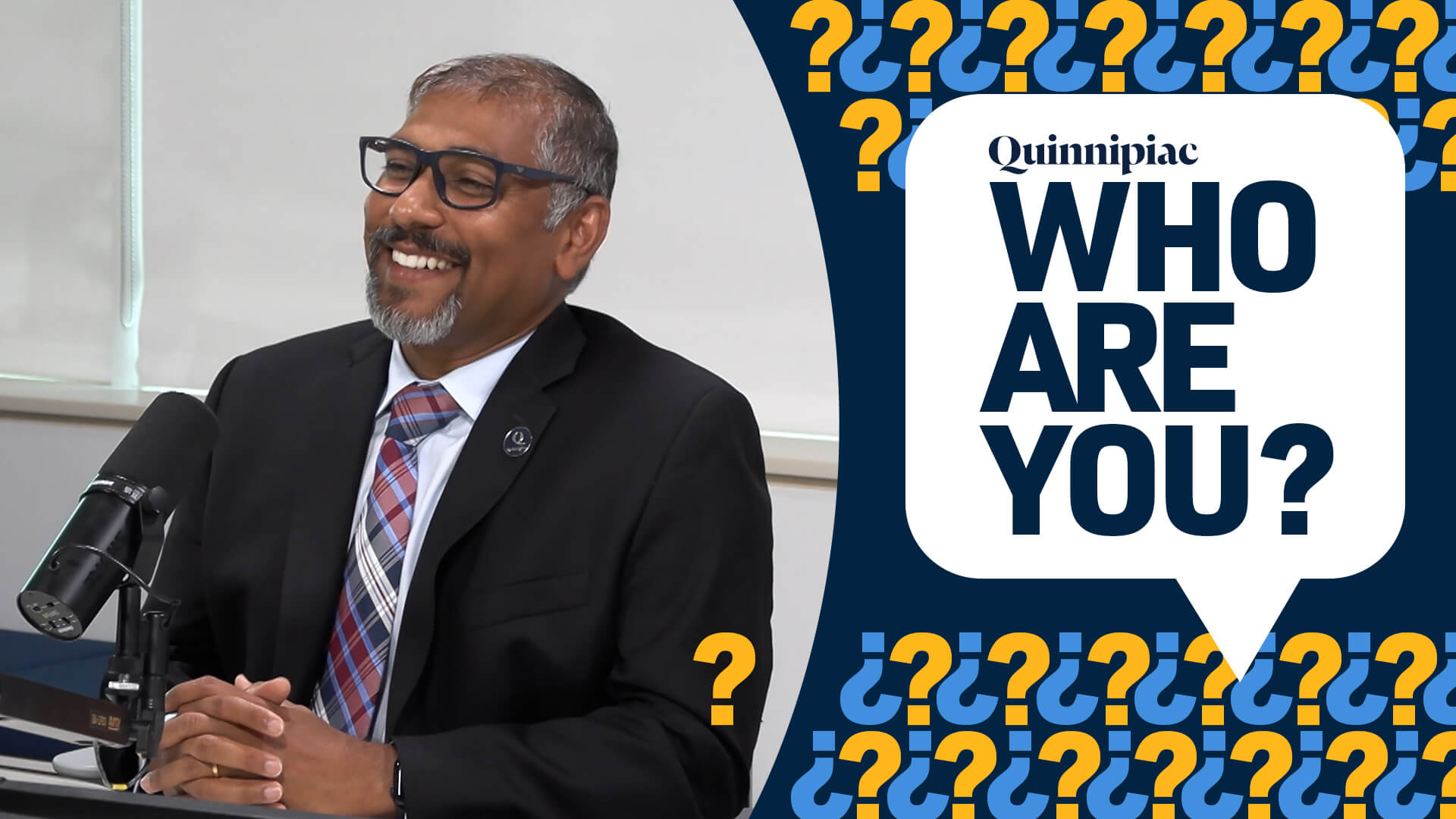
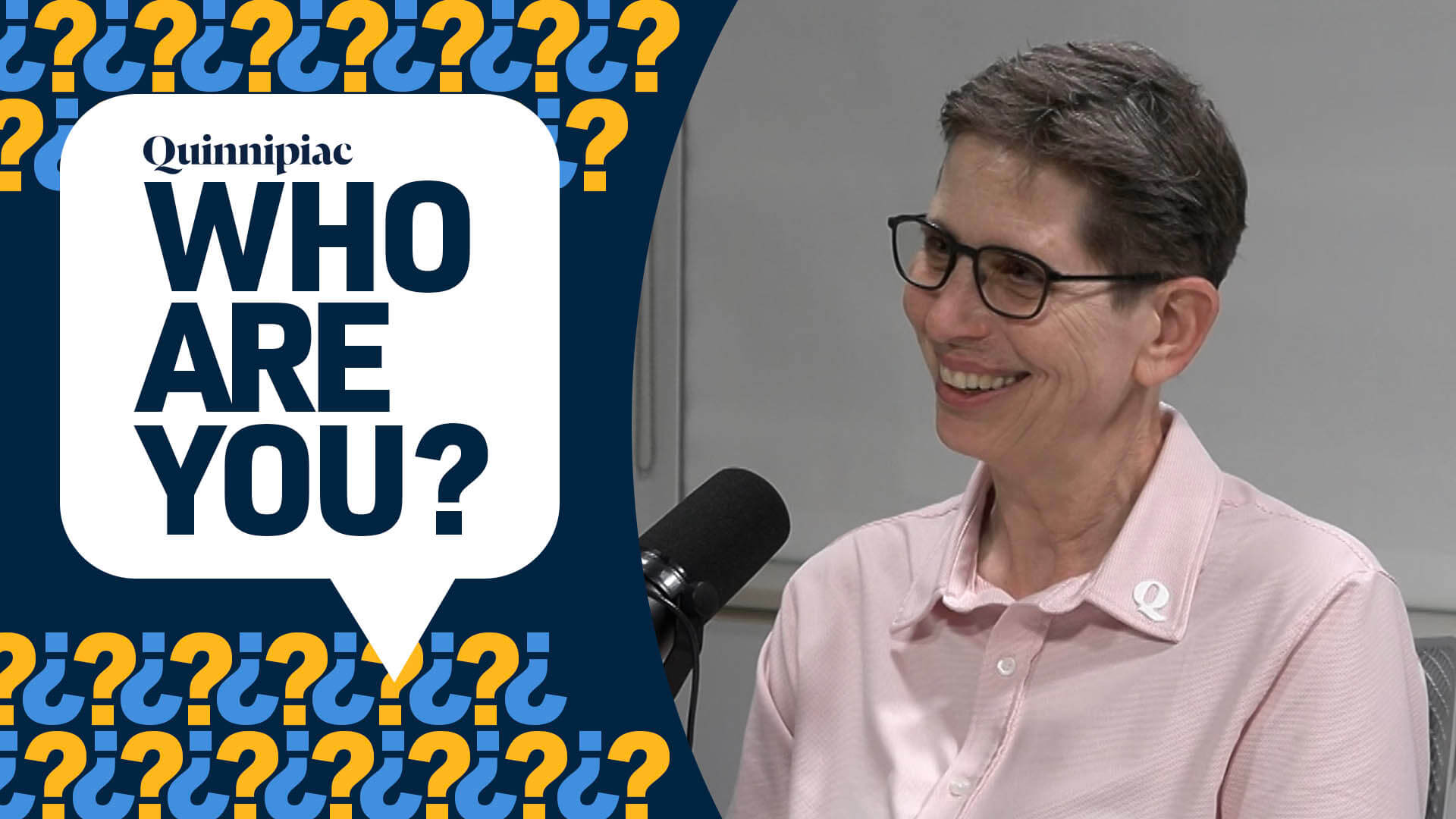
Joel Vanner: Welcome to ”Who Are You?,” The Bobcats you know, the stories you don't. I'm your host, Joel Vanner, inside the podcast studio at Quinnipiac University's School of Communications, and I am joined today by my guest, Nitish Patidar. Nitish, welcome to the show.
Nitish Patidar: Thank you, Joel, for inviting. Glad to be here.
Joel Vanner: Nitish, you have quite a background, which we'll get into on the show here and your experience at Quinnipiac. But first, I want to start with a pretty easy question: Who are you?
Nitish Patidar: So I am Nitish Patidar. I'm an associate professor in the management department in the School of Business, and I'm teaching here at Quinnipiac for, this is my 12th year, so I completed 11th year, and it's such a wonderful environment. There are like, you know, collegial faculty members. I have here the staff, really great staff, great students. And, you know, time flies when you have fun.
Joel Vanner: Yes, it definitely it definitely does. Speaking of time flying, let's fly back in time a little bit. When you were growing up, Nitish, where were your interests? Where was your career headed? Where did you think at that time?
Nitish Patidar: So I had totally different career stream when I started, like, my school. So I always wanted to be a physician when I was in high school, and I am from India. So back in India, you can start your medical school without going to four year university program. So you don't have to do undergraduate, your medical school is your undergraduate. So I started my medical school after I finished my high school. So I was a physician. I finished my medical school. I was working as an intensive care physician. And when I was working as an intensive care physician, I had this offer from one of my known person who invited me to work as an assistant director at his newly opened hospital, which was a specialty hospital, obstetrics and pediatrics, a small hospital, 35 beds, and my job was, like, a dual role I had. One is to set up the hospital because it was a new hospital. And the second is to, obviously, I was a physician, so my regular role as a physician, so I gave it a good try, and at the end, I was like, really frustrated, not because I was working there for 14 to 16 hour per day. I was used to it in the medical school, but I was frustrated because no matter what we are doing, we are not getting results. So we were trying to hire good staff. We're trying to get operations running smoothly, but everything we are doing, we are having some problems. I'm not saying it was a total disaster. But, you know, the amount of the effort you put, and when you don't get results, you are a little bit, like frustrated with that. So that day, I had, like, a moment of epiphany that changed my entire career, and I decided to go for a proper training in the management. And that's the- I joke around with my friends, and I say, like, that day, I turned towards the dark side.
Joel Vanner: You joined the dark side at that moment. You saw the lack of structures or processes, right, in that experience, and that encouraged you to go back to school for management.
Nitish Patidar: Yes. So I needed a proper training because I was a clinician, so I was good in what I was I was being trained to. But then I never trained to do, you know, accounting. I was never trained to manage people. I don't know how to run a hospital, right? So I've seen the clinical part, but never the management side. So I'm like, Hey, if I want to do something right, I will have a proper training and I'll do everything right. So that day, I joined, as I said, like, dark side, not in the bad way because when I say dark side, people get, like, a little bit, like, you know, confused.
Joel Vanner: Are you a Star Wars fan?
Nitish Patidar: Yeah, I'm a big Star Wars fan.
Joel Vanner: Now we get the reference?
Nitish Patidar: So “dark side”, I say, because when you go to a physician's office or a hospital, you always meet clinical person like physicians, nurses, but then you don't know that there is an entire team of management working in the background to make sure the entire operation runs smoothly. And that same thing happen with any other business. For example, if you are shopping on Amazon, you probably don't know that there are, like, a bunch of people who are making sure that you are getting your product delivered in two days, one day or overnight, but it takes a lot of effort. It takes, like, a teamwork, lot of people working. You're going to Starbucks expecting the same great coffee you want and you get it. Why? Because there is a bunch there are a bunch of people who are working to make sure that you are getting that wonderful coffee every time. So it's a team effort, but it's in the background. You don't know who are those people who are getting your coffee, but it's there. So that's why the reference “dark side”.
Joel Vanner: So you're equipped with your physician experience and your entry into the management field, and you got a master's in that field. Where was your next adventure with that combined knowledge? Where did you go from there?
Nitish Patidar: So once I finished my masters, I went to started working in telemedicine, and it was back in 2009 when-
Joel Vanner: I think the first iPhone was out by then, right?
Nitish Patidar: Yes.
Joel Vanner: Yes
Nitish Patidar: So when people ask me what I do for a living and I say, like, telemedicine and they're like, What's telemedicine? And I had to tell them, like, you know, you can see a physician on the screen. You are on the other side, and people used to think that I'm joking because I'm just making up the stories. It's again, back in 2009, where the Internet speed was like 756 KBPS, which is less than one MBPS. Now we have, like, you know, almost 1,000 times the speed than we had that time. But we had, like, really great technology. And my job was to manage telemedicine clinics. Outreach programs, like we go to the physicians and hospitals and trying to recruit them in our telemedicine network, and we can solve rural and remote areas. And we're having these, you know, like, wonderful people whom we are providing services for whom, like, if there was no telemedicine, they have to drive like 2 hours. So it was, like, really satisfying adventure I had. So I did that, but then I got into the research because it was such a new field. One part of my job is to do research. So once I started research, I got some grants, I published the papers. And then, again, you know, I thought, like, you know, if I'm doing research, I need a proper training. So I went to my doctoral degree program, and that's how I ended up with my PhD, and then I came to Quinnipiac back in 2014.
Joel Vanner: And the courses you teach at Quinnipiac now, what courses are they?
Nitish Patidar: So I given my, you know, multidisciplinary background, I teach variety of courses. So I'm in the management department, so I teach operations management courses, leadership, and health administration courses.
Joel Vanner: So with your experience as a physician and also in management, how do you take those experiences and bring them into the classroom for your students?
Nitish Patidar: So I learn a lot with my interdisciplinary background, and I have a few things that I always bring from my work experience in the classroom. So the first thing is the teamwork. Teamwork is really important in the business area, and, you know, without teamwork, you cannot do a lot of things or you cannot do a lot of things in the efficient way. That's the way I should put it. Because when you have teamwork, it's like you have, like, you know, multiple people. You get the experience- lifetime experience of let's say you are having ten people in the team. So you are getting the lifetime experience of ten people while if you are doing one thing, uh, one-person team, or one person, that's just the one lifetime experience. So one versus like ten or what are the team number just multiplies, and you get more efficient, better ideas. Just an example: when I was in telemedicine, we are trying to reach out and trying to get more people. Again, like 2009, people didn't know about telemedicine. We were trying to get more people in remote areas to come and get treatment at telemedicine. But no matter what we are doing, like we are doing patient education, pamphlets, and, you know, a lot of other things, but it wasn't working. One meeting, we had this person who had the background in medical representative for the pharmaceutical company. He brought the idea of a physician champion, where you have motivated people in the community, you work with them, and they try to market for you indirectly. So we had some of the patients who are really happy with the telemedicine treatment. They were motivated, and we have the conversation. We had, like, you know, 10, 15 patients we identified in the community, and then we work with them, and they become our champions. They went to the community. They shared their experience, they encourage other people. And within the next six months, we had substantial increase in the number of the patients. So just to give the idea, because, you know, we are a lot of people trying to do different things, but just one person who brought his experience from a different field, uh, boosted our process. So teamwork is really important, and that's how I start my class. The other thing that I always tell about is people. So people are, like, very important in your organization, because most of the time when we work in the business, our main goal is just to make profit, like, it's bottom line, right? But we always forget that this key element, like, people in your organization. So if the people are motivated in your organization, they will do better, versus if they are not motivated and salary or money is not the most important thing. That's what most of the managers they think. Like, Hey, if I'll give raise, people will be more motivated. It's not that way. What I learned from my experience is: people want growth in any career. So if you have a person who's doing one job, every day, 9 to 5, they will get bored at some point of the time and they'll be demotivated if there is no career growth. So career growth options is really important, and people should have this opportunity in their work, and you should provide this kind of environment to people in your organization that they feel that they are growing in their career. And you know, if you have happy people who are working in organization, you are happy organization. Then you can have, you know, great customer service, and your organization can grow, and you'll be more competitive. So these are, like, few things I just learn I learned from my 15, 10, 15 years of interdisciplinary career and I bring into my classroom.
Joel Vanner: There's a lot to unpack there. I think with the teamwork, something that came to mind for me was you get the experience that every member of the team brings, but you also get the passion that, you know, the experience says a lot about somebody, but it doesn't always showcase what they're passionate about and what they're interested in and having them on your team can just unlock that thing in them that contributes more to your organization. Your last point was talking about the people, you know, of a business. You have your job title in your area, but you also have other passions that round out who you are and make you who you are. You're also really involved in our continuing education Lifelong Learning offerings here at Quinnipiac. The example of telemedicine and how fast that accelerated today- it's AI and virtual doctor visits, and, you know, there's a whole lot there. What offerings in the Lifelong Learning area are there here at Quinnipiac that you've been a part of?
Nitish Patidar: So I have been part of program that we deliver healthcare leadership training to the managers and the director. So like the managers who are starting their career, so early stage, and someone who is at the mid-stage, like, director level. So we have different programs for different healthcare leaders. So one program I'm teaching in, which is for one of the big healthcare systems in Connecticut. So I'm teaching change management in that program. I was the part of the team that developed that workshop for the healthcare system, and we are also having multiple of these programs, and I'm working with almost all of these programs, teaching them or developing these programs.
Joel Vanner: And for the individuals who take this program, what are you hoping they walk away with? I think change management sounds broad. What are the things specifically that you're hoping that they walk away from these workshops with?
Nitish Patidar: So one thing in healthcare, I always say that one thing is constant in healthcare is change. Healthcare always changes. Like, you know, you see a lot of things changing around, like, because it's more political, it's more regulated, so it changes every single day. So if the things are changing, you need to be prepared to learn those things. So our healthcare manager who are joining these programs, they are getting these program because they want to be future leaders. So most of the education they have in undergraduate or master's program, it prepares them to be the manager. But we prepare them to be leaders. So one thing they learn from this program is how to manage the organization, how to navigate in your organization, how to lead the team of people, and understanding the data, and making the informed decisions as a leader. So our leadership workshop helps anyone, irrespective if you have masters, you have undergraduate in any business function or any healthcare business function area, and they can take all this training in our program, and they can boost their career, and they can become effective healthcare leaders.
Joel Vanner: There's a whole catalog of programs on the Lifelong Learning website, lifelonglearning.qu.edu. They're also on LinkedIn. If anyone's interested, they can connect with them there. You mentioned that change is something that's a constant in healthcare and in management. For the students in your classes who are just trying to learn the basics, the fundamentals, right, of management in a field that's changing so much, how do they do that? How do you do that in the classroom, teach them what they need to know, but also allow them to have the freedom to learn the things that are going to change probably as soon as they finish taking your class in some respects?
Nitish Patidar: So this program is applied. So when we designed this program, we were really careful. So we did a lot of research. So these programs were not designed in a month or two months. We spent almost like more than a year to develop this program because we understood the importance of this changing skills needed by healthcare organizations. So we did a lot of things. Like, we talked to a lot of healthcare leaders, and we asked them, like, "Hey, what your future leaders will need, the skills attitude and the knowledge, what will be needed by these leaders. If you are going to hire business leader in your hospital or your healthcare organization, what are the things- skills you are going to need"? So we have all these interviews. We talk to our students who are already working in this field, and we're like, "Hey, one thing if we would like you to provide at this stage of your career, what that skills or knowledge will be". We collected all that information. We looked all other programs at Quinnipiac and we're like, "Hey, what the best thing we can provide"? We compiled this program based on that information. And one thing we were careful to make sure that these are the applied program. As you just mentioned, the program is created in a way that you can take all the knowledge, all the learning in that program, and you can apply on day one. Next day, you can go to your hospital and you can like, "Hey, I learned this thing, change management, or the quality improvement", and you can start right away. So that's the wonderful thing about this program.
Joel Vanner: I was talking with Carrie Bulger. She's a professor of psychology here at Quinnipiac. Her area of expertise is in industrial-organizational psychology. We're talking about struggles that employees have in the workplace, and one of them is just poor leaders, leaders that don't know how to lead. They especially don't know how to lead through change. So it's awesome that this program you're describing equips leaders with the skills to lead and also lead through change, not just the change, but also the people, right?
Nitish Patidar: Yes, so this program covers, like, different topics to make great leaders out of the people who are joining this program. And for that reason, we have all these faculty members from different departments, different schools, with, like, unique skill sets matches with the topic we are providing. So we have, like, multiple people who are teaching in this program with great skill sets.
Joel Vanner: Sounds awesome, Nitish. Thank you so much for joining me on the show today. It was great to have you on, and thanks for sharing your expertise.
Nitish Patidar: Thank you, Joel. Same here.
Joel Vanner: If you like today's episode, be sure to like, subscribe, and share, and find other episodes of Who Are You on Apple, Spotify, and YouTube podcasts. Until next time, when I ask my next guest who are you? I'm Joel Vanner. Bye for now.
In this Article
Read This Next



















Stay in the Loop
Quinnipiac Today is your source for what's happening throughout #BobcatNation. Sign up for our weekly email newsletter to be among the first to know about news, events and members of our Bobcat family who are making a positive difference in our world.
Sign Up Now