


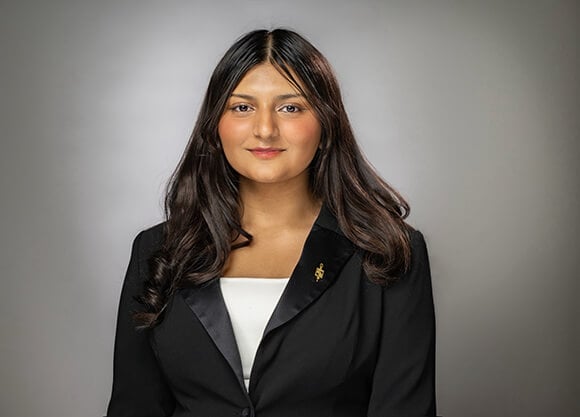
‘Who Are You?’ podcast with guest Tressa Pantalena ’25
A journey to a career in behavioral neuroscience
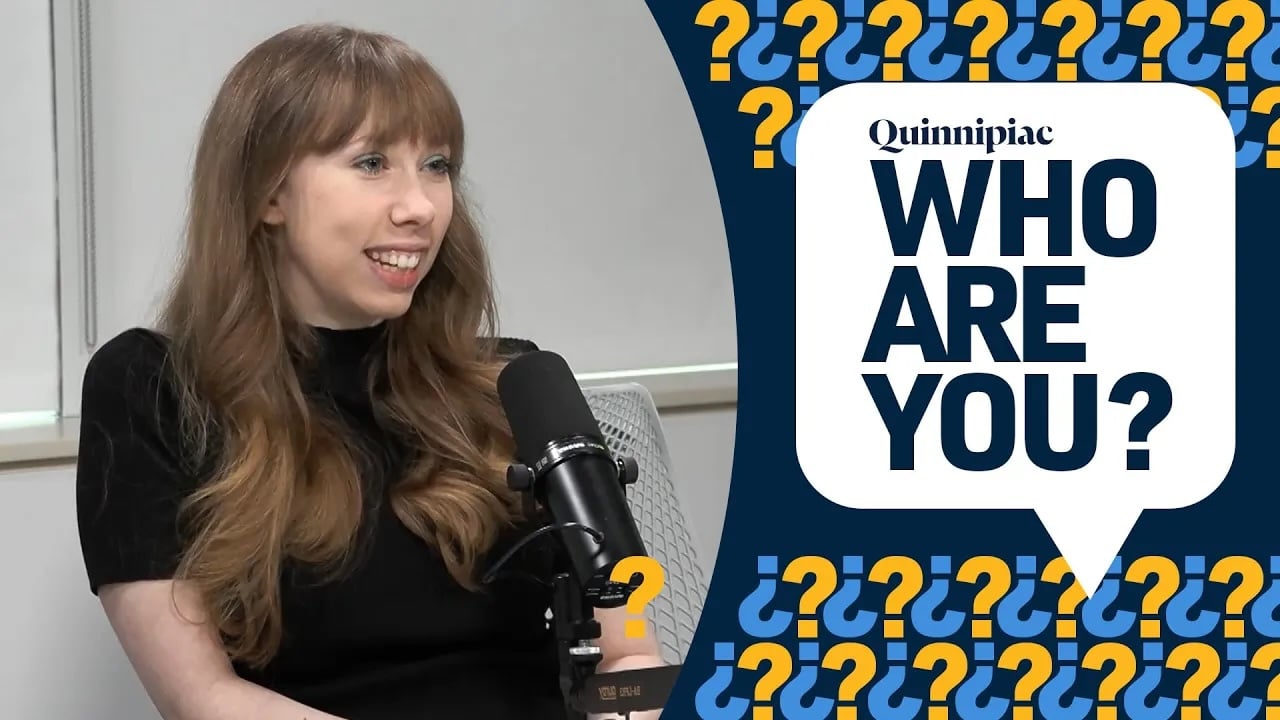
A journey to a career in behavioral neuroscience
0:00 Welcome to “Who Are You?”
0:14 Who is Tressa Pantalena?
0:25 Tressa’s Background & Journey to Quinnipiac
1:42 Getting Involved in Biomedical Research
2:57 First Lab Experience & Learning Basic Research Skills
5:36 Conducting Experiments & Gaining Confidence in the Lab
6:44 Collaborating with Professors & Mentors
7:58 Presenting Research & Key Takeaways
9:05 How This Experience Shapes Her Future Goals
10:18 Advice for Students Interested in Research
11:50 Final Thoughts & Takeaways
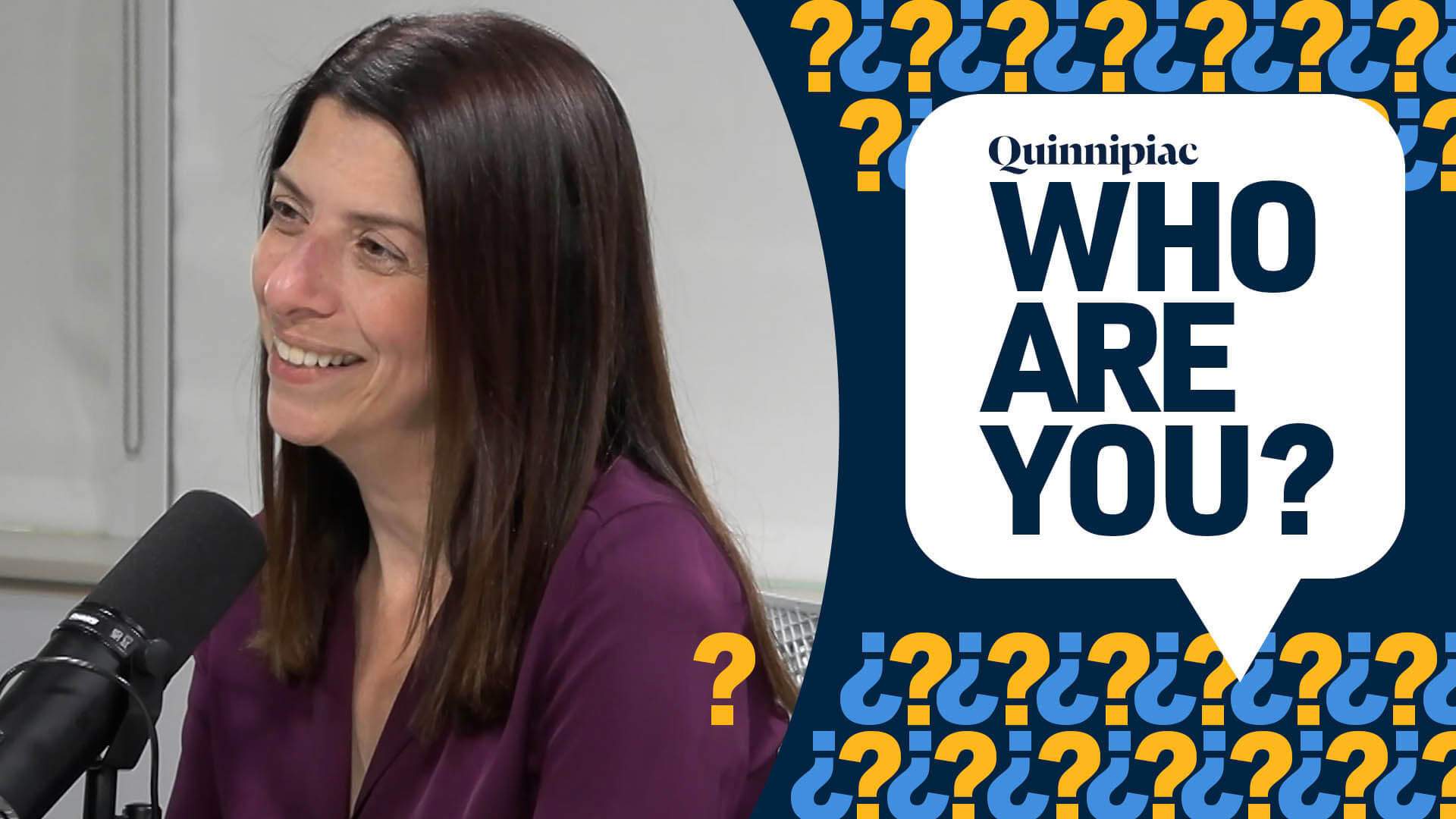
Joel Vanner: Welcome to “Who Are You?” The Bobcats You know, the Stories You Don't. I'm Joel Vanner your host, and I am joined for Episode six by Tressa Pantalena. Tressa, welcome to the show.
Tressa Pantalena: Hi, thank you so much for having me.
Joel Vanner: So I can only assume, Tressa by the name of the show, you know what my first question to you is going to be. And that is who are you?
Tressa Pantalena: I'm a senior Behavioral Neuroscience major, so I'm graduating this May. I'm from Connecticut, born and raised, so I've been here my whole life. I was very excited to go to college in-state to stay close to my friends and family. I honestly love it here at Quinnipiac. I feel like I've built such a good community here of friends, and I'm close to my family. So I don't know who I am, but I'm a Bobcat.
Joel Vanner: I love that. Your story is interesting. When you started at Quinnipiac, you were a psychology major, right? And that changed soon after you started; tell me a little bit about that journey on the academic side for you.
Tressa Pantalena: In high school, I was always obsessed with true crime and, you know, Dateline, 2020. So I came into college knowing I wanted to study the brain and probably criminal psychology. So that was my major. But it changed pretty quickly because my first semester, I had taken Biopsychology with Professor Haight. I had taken AP psychology in high school, so I could go right into any psychology class I wanted to. So I started with the physiological perspective of psychology. So literally the anatomy of the brain and how that controls parts of the body and the behavior and the mind. And immediately, I realized, I'm really into this biology aspect and a little bit less the social aspect of psychology. So after my first year, I pretty much immediately changed my major.
Joel Vanner: Professor Haight, you just mentioned him, has been an integral part of your journey so far. Tell me a little bit about how you've been working with Professor Haight during your time here at Quinnipiac.
Tressa Pantalena: Yeah, so on his first day of classes, my first day of my freshman year of college, he was like, “I have a research lab, and I have some samples that need to be sliced and stained. Does anyone want to join my lab?” And I was coming in fresh out of high school, and I don't know what entered my mind, but I was like, “This is what I want to do. I really want to be a part of this.” They generally take students sophomore year of college, so I didn't join until the following year, but he was open to taking students. They love to be involved as students at all times, helping on all of their projects. So I joined immediately, and it has been a never-ending story. Me just slowly being more involved in the lab until I've kind of become a leader in my small peer group. And it's a really fun process because you see the different generations of lab members kind of grow up from sophomores to seniors and go on to do whatever they would like to do after. But the skills that you learn in the lab really set you up for success.
Joel Vanner: And in the beginning, what were some of the first things that you took part of as just getting started out and participating in the lab?
Tressa Pantalena: So because I'd never been in a lab before, I obviously couldn't have my very own project yet. So I was just assisting the master student who was running a lot of behavior. So I was learning a lot of basic protocols and just how to do this and that in the lab and collect data and be organized and follow, you know, regular protocol procedures for safety. So it was a lot of following people around and helping them here and there, and I ended up being authored on, you know, a poster after my first year.
Joel Vanner: That's awesome.
Tressa Pantalena: So yeah, it was really exciting. So I was able to see kind of how the data would come together, and, you know, as I advanced through the lab, because I had helped here, now maybe I would lead the next one. So it really does gradually set you up to be more involved.
Joel Vanner: Tell me a little bit more about what you do in the lab.
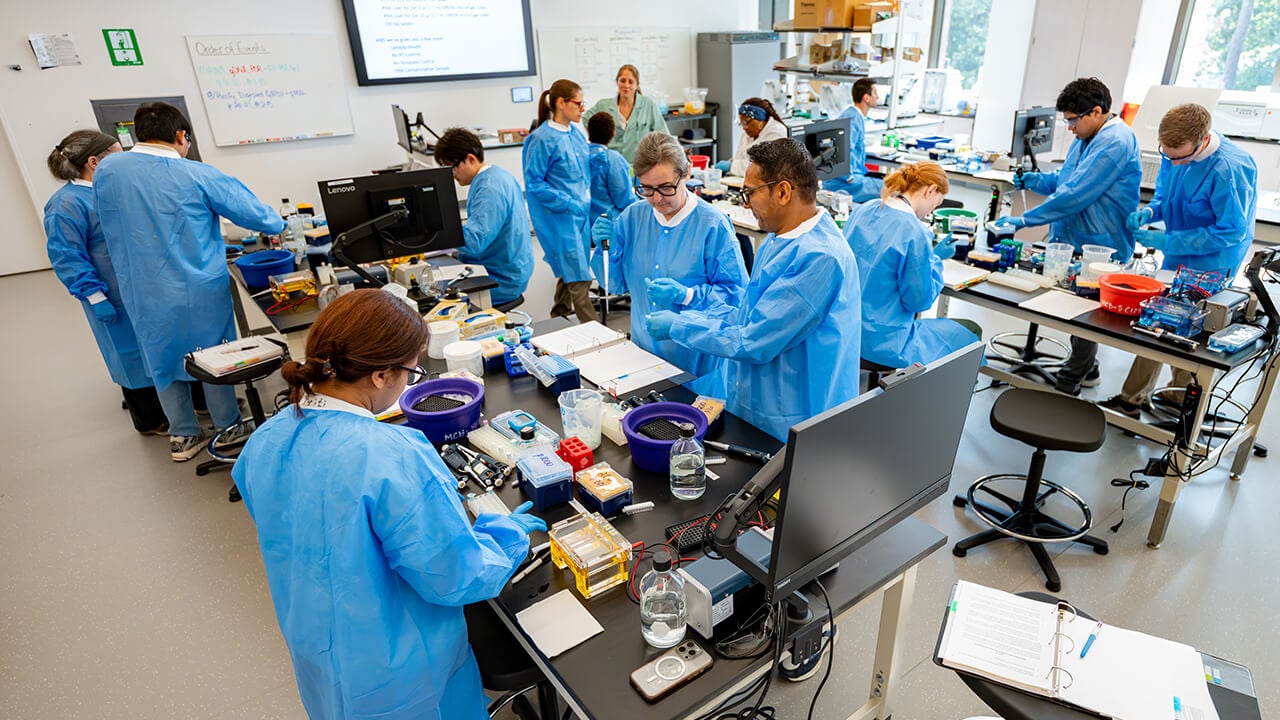
Tressa Pantalena: So the lab is a shared space between the three behavioral neuroscience PIs right now, but next year, we are moving into a bigger building.
Joel Vanner: And a PI is a principal investigator?
Tressa Pantalena: Yes, principal investigator. So the person that runs the experiments, and you're working under them, and they're usually a professor. So I work under Dr. Haight, for example. So each professor will have something different that they might be investigating or different expertise that they bring from their own graduate school experience. But at our lab, we generally pre-clinically model depression, affective disorders, disorders of motivation, sometimes chronic stress. So it really does depend on the year and what we're interested in looking at. But we have kind of certain methodologies that we like to follow. So operant conditioning, classical conditioning, for example. So whatever we can fit into that paradigm, we can research, but they do specialize in a lot of psychiatric disorders, and they model them in a lot of different ways.
Joel Vanner: So you mentioned after research, you create posters. Where do you present those posters?
Tressa Pantalena: It really depends on what the PI wants and where they want it to be presented. But Quinnipiac does host a conference every year called the NEURON Conference, and we host it at our medical school over on our North Haven campus. And that's a really important conference to go to because you can network with so many graduate schools there and, you know, healthcare related jobs. And it's really good experience to kind of present your poster before you go to a national conference because another place we have presented is at the Society for Neuroscience Conference. It's a yearly international conference, but it's in the US every single year. And so I've traveled to DC and Chicago so far, and this year it's going to be in San Diego, California. And we all go together, we'll go out for a lab dinner, and you present your poster to a shocking amount of people that walk by and don't know what you do. And it's really good experience to, you know, be able to talk about your research to fellow experts, which is really terrifying to do, but it's really important to be able to talk about science with scientists. But also, you get people that are in a different area of neuroscience, and they might not know about what I research. And so you need to be able to dumb it down for an audience that isn't in your niche of science. So it's really good experience, and it's kind of also a social gathering for all of us to kind of celebrate all of this work that we did and, you know, show our data to people and show that it matters, and then it came to be, you know.
Joel Vanner: It's really through your experience in the lab, it sounds like you've really gained a community there with your peers that also participate in that program. Tell me a little bit about that community and how that's impacted you and your experience here at Quinnipiac.
Tressa Pantalena: So because we have different levels of involvement, based on what your goals are from getting out of the lab, there's students that are going to be more involved or less involved, which is a beautiful part of being part of the lab. So for students like me that are extremely involved and we're there many hours of the week, we do develop a close knit family because we're helping each other with experiments. When I'm not doing an experiment, I'm either doing my homework, sitting with someone else who's doing an experiment or I'm helping them so, over time, we've just gradually become really close friends, and it's kind of inevitable at that point because you're around them so much, and we're all science majors, so we help each other in our classes, or we have a lot of the same classes. So, in a sense, it's kind of like our own version of a sorority, because we end up becoming friends in this academic setting, and we're helping each other out. And it's some of the most genuine friendships that I've made because we're similar people because we have the same interests. And I find that this little niche of lab people is my own little family away from home. And I'm not someone who's in a lot clubs. And again, I'm not in a sorority. So this is kind of another way that I've gotten extremely involved, and it's tight-knit with the professors. So it's really a great place to be.
Joel Vanner: That's awesome that you found your community in this lab and working with Professor Haight. What have you learned through this experience and involvement, and how has it helped you with other opportunities that you've had here at Quinnipiac so far?
Tressa Pantalena: So because I've always had the goal of going to graduate school and doing research, my work in the lab has directly related to the skills I'm going to be needing. So things as basic as lab methodologies, how to pipet, how to run a Western blot. There's a lot of simple things that you don't realize are really important on your resume for other things that you want to do later on. Even if you want to go to medical school, being involved in this biomedical research really helps you understand all parts of medicine and how we can advance our knowledge. So I'm learning the basic procedures, but at the same time, I'm learning the important question of why are we investigating these questions this way? And this gives me such a strong foundation that when I go on to graduate school, I'm going to be able to design really robust, rigorous experiments because I've slowly just seen from bottom up how a poster is made, how we get our data, how we interpret our data, how to cope with it when your experiment doesn't work, there's just so many ups and downs that come with working in research that you don't realize, and research isn't for everyone, and some people don't even know that it is for them, and you don't know that until you do it. And so this is a really great introduction to the world of research.
Joel Vanner: So trying to find graduate school, your way through the field of research, you had an internship, as well. Tell me a little bit about how you got the internship, what the internship program was and what you've taken away from that.
Tressa Pantalena: So Quinnipiac offers a summer internship called the Quinnipiac Interdisciplinary Program for research and scholarship. It's a mouthful, we call it QUIP-RS. And basically, you just apply for it with a mentor in mind. So you talk to a faculty member. It doesn't matter what major you are, what you want to research, but you have some question in mind, and you apply for this internship saying, these are the materials we're going to need. This is what I'm going to do. And you and your mentor receive a stipend, and you're able to put that towards materials you might need, and you get paid too. And so it really doesn't matter what you do. So I worked with Professor Haight, and we continued to work on a project we were doing in the lab, and it was a great experience of me really taking control of a project. I wasn't assisting anyone anymore. I wrote the procedure for it to propose this huge experiment that was a really big deal for us to get done in the lab because we had to establish a new protocol that we hadn't previously done. So it was a big deal for me as a student, and it's really cool that Quinnipiac provides that opportunity for students because this is something that when I was applying to graduate school, I have certain skills that no other applicants in my pool had because I'm an undergrad who did really advanced research methodology. So when you're able to be involved in the lab and get more involved over time, you can really develop these skills and be a really competitive applicant later on.
Joel Vanner: So in addition to all of these involvements in the lab and QUIP-RS that you've had, also with your academics, it seems like you've had a lot on your plate. How have these experiences helped you grow personally? And you mentioned, you know, applying to graduate school and finding your way there. How is that all coming together for you now as you're preparing to graduate from Quinnipiac in a couple of months?
Tressa Pantalena: So naturally, when you have a packed schedule, you learn vital time management skills. So it comes as you grow. But it really did prepare me for all of graduate school because I was around professors who did the path that I want to do. You know, they earned PhDs in neuroscience, and now they teach and they do research. So being around them really helped me be able to ask the right questions and be guided in the right direction. So they were able to tell me, you know, put this on your resume and your CV, and this is how you build your resume and your CV. And it's been really important for me because it's this, this guidance that you don't really get otherwise because it's not like medical school where there's kind of clear cut steps on you apply here, and this is what you do. Every graduate school is different and there's different requirements. And so it's a very ambiguous process that there's not a lot of help with at a lot of institutions. So working with my professors closely really helped me cultivate, you know, the best application I can have. And I did end up getting an offer this past week for a graduate school.
Joel Vanner: Congratulations.
Tressa Pantalena: Thank you very much, yes. So it does pay off in the end, and they can write you great recommendation letters if you do good work with them, and they're just great mentors all around.
Joel Vanner: So what advice would you give an incoming student or somebody who's looking to also transition into research, like you did, looking back on everything you've learned so far, what would you say to them if they asked you for advice today?
Tressa Pantalena: I have really funny advice, and I say this to anyone who starts in the lab, and that is be annoying. Research is very disorganized sometimes, and the mentors are all over the place. They're teaching classes. They're busy, and they forget things, and it's natural, and it's not a clear cut schedule, like I said. So when you want something and you want to be involved, you can follow up on an email, and it's not annoying to do. You can show up to their office hours and you can ask them questions. If you are a passionate, interested student, you're going to find a professor that likes that you want to work with them, and they're going to like that you're putting this effort into speaking with them. So if they don't reply to your first email, it's probably because they're busy and not because they hate you. And this is real advice because everyone that I've worked with that has gone on to advance to graduate school, we've had to be annoying to really get what we want and ask for it and work for it and prove, you know, I'm going to put in the work to be involved, and I'm going to spend all these hours in the lab to do these experiments. So it takes a special kind of person to like this area of research. And so if you really want it, you just have to show them that you want it. So send those emails.
Joel Vanner: Persistence.
Tressa Pantalena: Persistence
Joel Vanner: I think persistence is the word. Be persistent and just making sure that you're putting yourself out there and getting all the opportunities that you want to get.
Tressa Pantalena: Absolutely. It's so important.
Joel Vanner: That's a wrap for today's episode of Who Are You? Thank you, Tressa, for joining me.
Tressa Pantalena: Thank you so much for having me, Joel.
Joel Vanner: If you like today's episode, be sure to like, subscribe, and share, and find more episodes of "Who Are You" on YouTube, Apple, or Spotify Podcast, or wherever else you get your favorite podcasts. I hope you enjoyed meeting Tressa today with me, and see you next time.

Get the latest news and events sent right to your email by subscribing to Quinnipiac Today.
Subscribe