


‘Who Are You?’ podcast with guest Madison Cleary ’26, MS ’27
The journey to becoming an Occupational Therapist
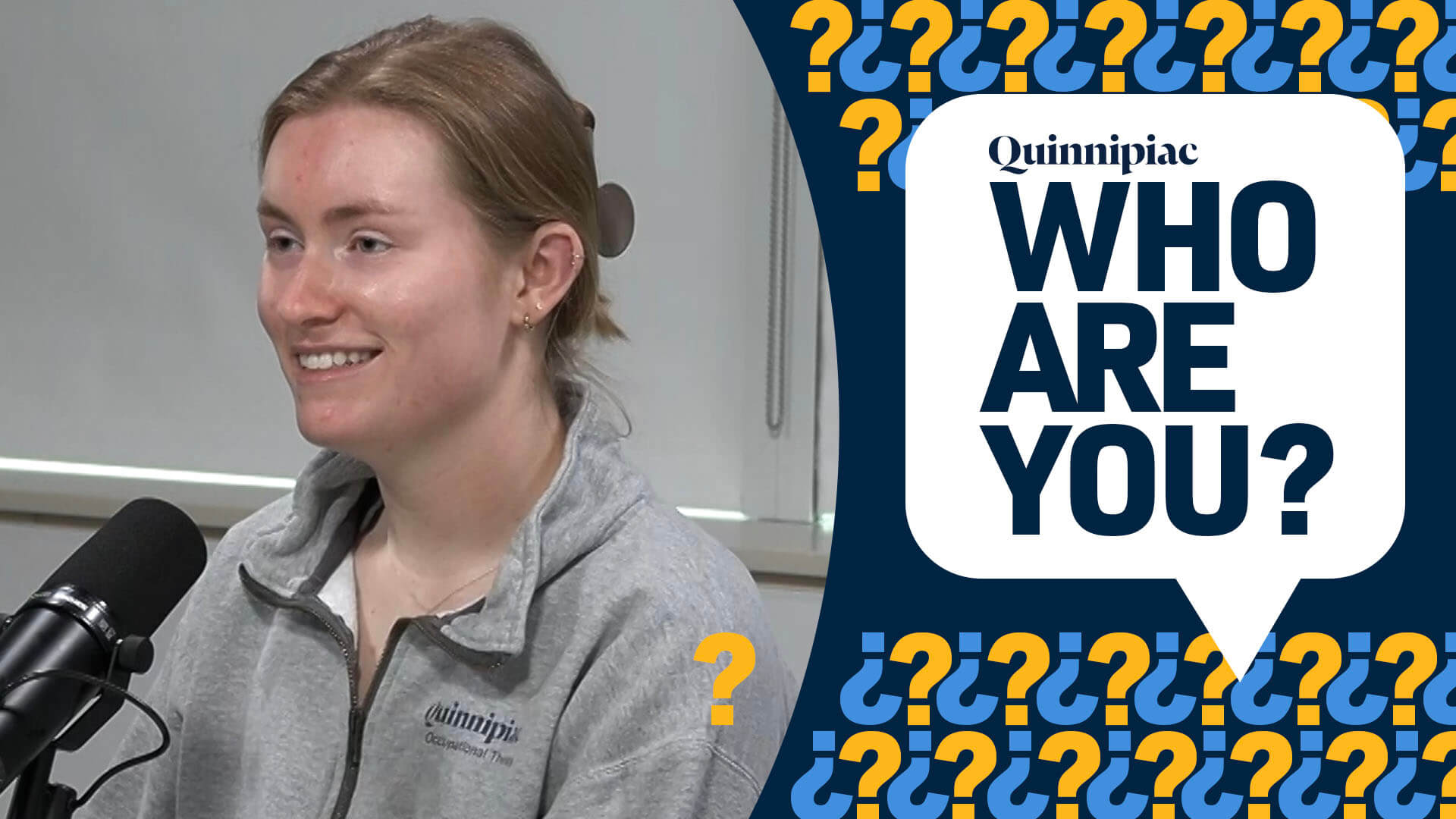
The journey to becoming an Occupational Therapist
0:00 Welcome to "Who Are You?"
0:22 Maddie's Initial Interest in Occupational Therapy in High School
1:19 Reasons for Choosing the Doctorate Program in Occupational Therapy at Quinnipiac
1:33 Maddie's Undergraduate Background & Decision to Pursue OT
3:49 Early Community Involvement & the Keefe Center Preschool Program
4:54 Level Two Fieldwork: Working with the Unhoused at St. Vincent DePaul
7:54 Key Learnings from Fieldwork: Community Needs & Addressing Stigma
10:06 Post-Graduation Goals: Focusing on Mental Health & the VA System
11:15 Advice for Aspiring OT Students: The Value of Shadowing
12:20 Favorite Aspects of the Quinnipiac OT Program: Faculty & Community
Joel Vanner: Welcome to Episode Eight of “Who Are You?” The Bobcats you know, the Stories You Don't. I'm your host, Joel Vanner, and I am joined today by my guest, Madison Cleary. Maddie, welcome to the show.
Madison Cleary: Thank you.
Joel Vanner: And I'm sure you could guess by the name of the show what my first question to you is going to be. We know your name, but who are you?
Madison Cleary: So I am a third-year student in the Doctorate of Occupational Therapy program here at Quinnipiac.
Joel Vanner: So tell me a little bit about your journey to Quinnipiac and your journey to the field of occupational therapy.
Madison Cleary: Yeah, so I first found out about OT back in high school. There was a technology school at my high school that was attached to my school, so you could go there for a health science program for, like, half your day. And so there I got my licensed nursing assistant kind of certificate. And during my clinical time getting that, I was able to shadow a couple of OTs at the nursing home that was there for the clinical time. Um, and that really kind of opened my eyes into what occupational therapy is. Like, I feel like it's such an interesting field that people don't usually learn about. Like, you learn about PT, learn about all these different types of kind of rehab therapy, but OT is often not really talked about, and I think that it's a really interesting field and really helps people a lot.
Joel Vanner: And there are a number of different programs, right, that you choose to study in the occupational therapy field. What drew you to the Doctorate of Occupational Therapy program at Quinnipiac, and tell me a little bit about your journey so far in that?
Madison Cleary: Yeah, so I got my undergrad degree at a different university and then chose to come to a post-baccalaureate OT program here. So this is a three-year program after you have a degree in something else. So I think that I was kind of choosing between going into nursing or going into the OT field in my undergrad time. So I think getting a degree in a basic science field. I got a degree in biology and an undergrad in psychology from there. Kind of I was able to, like, blend the art and the science of, like, the traditional foundation that you need in order to go into, like, any health field, I think. So, yeah, I think that that was super helpful.
Joel Vanner: And what drew you to the program here at Quinnipiac specifically? Madison Cleary: I just felt like a good vibe about it. I don't know what that necessarily was, but I just loved moving 2 hours away from home, felt like a nice distance to move away from home, where it wasn't too far away. It was kind of ready for the next step there. I got into the master’s of OT program that was the five year program for undergrad for OT. And I just felt like I wasn't quite ready to make that leap to, like, move far away from home. So the doctorate program, I think was really drew my attention. At the time, there wasn't a master's kind of post Baccalaureate program. So that was really my only option if I wanted to go into OT. Now, I believe Quinnipiac is starting a master's post-baccalaureate program, which is really great. I think that the master's versus the doctorate is really kind of a personal preference. You can practice OT either way with either a master’s or a doctorate. You take the same certification exam. But I think what drew me to the doctorate program specifically was the ability to do more kind of research things afterwards or teach other OT students later in my life. Kind of getting that highest level of education was important for me to be able to kind of do a one-and-done. Like, I don't need to go back to school to get my doctorate at some point, if I want to. Yeah, in order to teach OT students, you need to have a doctorate.
Joel Vanner: So tell me a little bit about your experience in the program and what opportunities you've been able to have so far.
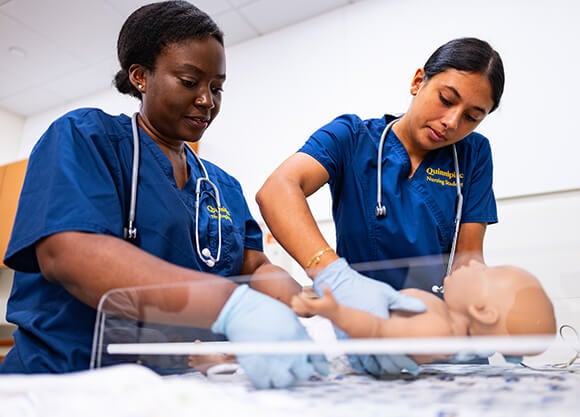
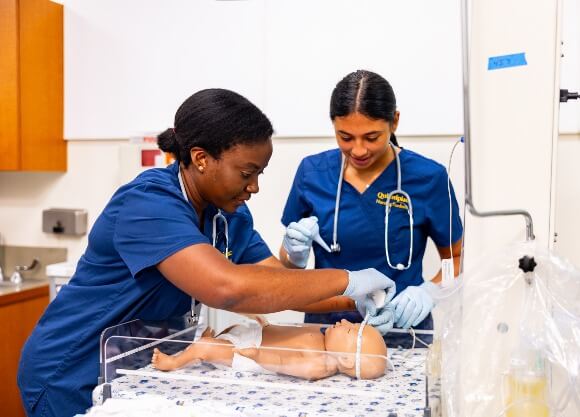
Madison Cleary: So I really enjoyed this program. I love the way that it's kind of laid out. The doctorate program is laid out so that you get into the community as soon as you start the program. So my first semester here, I had a service-learning course that was at the Keefe Center in Hamden, and we were there for a preschool class. We were able to implement an emotional regulation program there based on the movie Inside Out. So we were able to implement some strategies and different tools for those little three and four-year-olds to be able to name their emotions and help regulate themselves.
Joel Vanner: Was in your first summer, right?
Madison Cleary: First summer here. So I think that's really cool that Quinnipiac puts you right out into the community because that's so much about what OT is: helping your community and kind of getting integrated into the society that you're in. Like, kind of being armchair experts is the complete opposite of what OT should be.
Joel Vanner: And tell me about some of the other field experiences you've had so far, is a part of the program?
Madison Cleary: Yeah, so my last summer, or the last summer, was at the Source Kitchen, St. Vincent DePaul in Middletown. So that was my level two field work. So it's like the first fieldwork that you have where you're kind of on your own, and you're kind of more hands-on with clients. We have Level one fieldworks throughout the first year and a half of the program, where we're more observing different studies and things, um, so my first level two field work at St. Vincent De Paul was really amazing. It was working with the unhoused or nearly unhoused population, which I feel like has a huge amount of stigma and bias around it. A lot of people in society, I'll say, are really hesitant to work with this population, I think, but they're the people that need the help boast, I think, in our community. So, this program that I was in last summer, the unhoused population in Middletown kind of sits on this one kind of street corner around St. Vincent de Paul. So our mission was to help people get kind of off that street corner and, like, exploring their community, that's kind of like their safe zone. Like, they know those people there. Like that's where their resources are. So we had a spot down at the church that was a little bit down the street. We weren't affiliated with the church, but we were just renting their space. And there, we had a vocational course that we did or vocational time that we did there, which people were able to make different arts and crafts, make bracelets, make, I think they did, like, decoupage shells and things. And then we sold those items for them at local craft fairs and things. And then the money that we made there went right back to them. So they were able to get a little bit of income to try to help get on their feet a little. We also had a recovery program that we did down at the church that was focused on substance use. So we had individual clients there where we helped them kind of work through their sobriety, work through their recovery, which I mean, as a first year or as, like, a first field work, like, these are amazing things that you're doing out in your community. Like, you really had to like I really had to step up to be able to be like, I'm a competent practitioner, and I can be able to have these conversations with.
Joel Vanner: You're under the guidance of professors and mentor. Was there one in specific that guided you through these experiences?
Madison Cleary: Yeah. So my professor Noreen Carlson is in, obviously, the OT department. She's amazing. She was guiding us every step of the way. The first couple of weeks, we were really more kind of observing and just taking in information from her and learning about the population. We took a couple of short courses on what it means to work with the on-site population on trauma-informed care and things because people who are experiencing homelessness are experiencing trauma in that moment. So being able to know that and to be able to take that into consideration when you're having conversations with them and working with them was really important.
Joel Vanner: What did you take away from that experience there at the St. Vincent De Paul in Middletown and also your other field work experience at the Keith Center in Hampden?
Madison Cleary: Yeah. So I think being able to integrate into your community and find the needs in your community and then serve them the best way that you can is really important. A sink, especially as an occupational therapist. OT originally started in mental health. So I think being able to continue that work and help people who are facing so much stigma in their lives, to be able to get back on their feet or be able to help them move forward, is so important, especially at the Keefe Center and at all these other community centers that are just local to us. Um, in addition to that, my second fieldwork at, like, last fall was at the VA in Westaven, which is a totally opposite population, people who are coming into outpatient therapy. But I did learn that there was a little bit of crossover there. Like, there was some people who were housed who were coming in for outpatient therapy, which I didn't expect. But I was able to, like, apply so much of what I learned at my last the summer field work at the fall field work, which I thought was really interesting.
Joel Vanner: Sounds like there are a lot of different places occupational therapy could infuse in. What have you learned about just having exposure to that through this program? And what may you take away from that to inform future situations and places you may be in?
Madison Cleary: Yes, so OT can be anywhere. I have learned from many of my professors that everybody can benefit from having an OT at some point in their lives. OT just helps you get back to meaningful activities that you're interested in doing. So literally anybody can benefit from OT. I think that I've learned that occupational therapy can really be integrated anywhere in our community and can really kind of forge a path into, like, whatever OTs want to do.
Joel Vanner: So you've had all of these great experiences, the academic experiences, the fieldwork experiences, and mentorship. You said Professor Carlson played a role in all of that.
Madison Cleary: Yes.
Joel Vanner: Where are you hoping that all of these experiences bring you to after graduation?
Madison Cleary: Yeah, so I graduate in May, which is very exciting. I'm working on my Capstone project right now, which is going very well, which is also kind of in a mental health field. Um, but I'm hoping that after graduation, I get kind of more integrated into, like, a mental health field for OT. I'm interested in kind of blending my fall field work, which was with rehab with veterans, in a mental health kind of route. So I think by blending those, I think I'll be able to just like kind of my undergrad was, blending, like, the art and the science. I think being able to blend, like, the medical approach of traditional rehab with more of a mental health focus, being able to kind of treat the whole person, which I think is really what OT is all about is making sure that you're treating the entire person. Oh, my hope is to go into the VA system and to help veterans in whatever capacity that is unsure yet.
Joel Vanner: You seem to have known just in closing, you seem to have known that this was a field you wanted to be in for quite a long time with your experience in high school continuing and now in this program here at Quinnipiac. I'm sure there may have been some tough days. What advice would you give to students who are thinking about going into the occupational therapy field, maybe who have similar opportunities that you had back then in front of them now and not sure if they want to take those. What advice would you give them to get started?
Madison Cleary: Interesting. I would say shadow an occupational therapist. In high school, I like, walked into whatever rehab place was right next to my house, and I asked them if I could shadow an occupational therapist. It is part of your application that you do need some shadowing hours. But that really helped me to see that this was something that I actually wanted to do. People are usually very nice about having you shadow them. I was really an invaluable experience for me because I was able to first of all, I was able to shadow a hand therapist, which was another certification or another specialty in OT, just to see, like, how interesting it was to kind of, like, OTs can really be, like, medical professionals, if you want to be, or OTs can be kind of, like, community practitioners. Like, OTs can go anywhere.
Joel Vanner: What's been your favorite part of the occupational therapy program at Quinnipiac, and how has it prepared you for your career ahead?
Madison Cleary: Yeah, so the Quinnipiac program here, I think has been amazing for me. My class is particularly small. We only have nine people. So our professors were really able to pay close attention to us and make sure that we're getting the best education that we can. One thing that I love about the program here is just how you're treated like future colleagues. The OT professors here, unlike in undergrad, you call them by their first name. So they really are like your future colleagues. They're your mentors throughout the such a person centric field, too, right?
Joel Vanner: So having those kinds of experiences prepare you for what you'll get in the real world, too.
Madison Cleary: Exactly. Yeah. I really have loved all of our professors. We have somebody from pretty much any field that you're interested in going into. So whatever you're interested in, there's a professor there that can teach you more about it or can lead you to the people who can teach you more about it.
Joel Vanner: Well, Maddie, that brings us to the end of our time together today. Thank you so much for joining me on the show and providing your insights.
Madison Cleary: Yeah, thank you for having me.
Joel Vanner: If you like today's episode, be sure to subscribe and find more episodes of Who Are You on Apple, Spotify, or YouTube, or wherever else you get your favorite podcast. Until next time, when I ask my next guest, “Who Are You?” That's all for today. Bye for now.




Get the latest news and events sent right to your email by subscribing to Quinnipiac Today.
Subscribe