


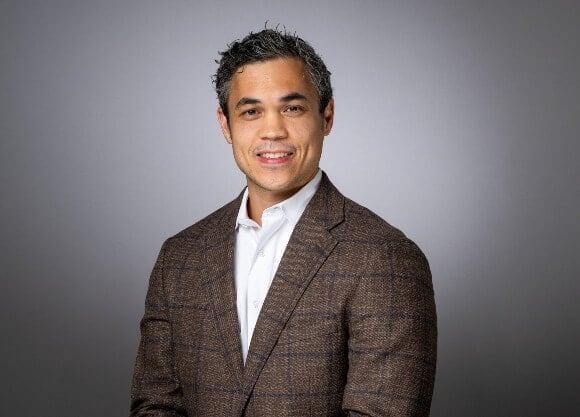
‘Who Are You?’ podcast with guest Elyssa Wrubel ’20
The benefits of being undeclared coming into college
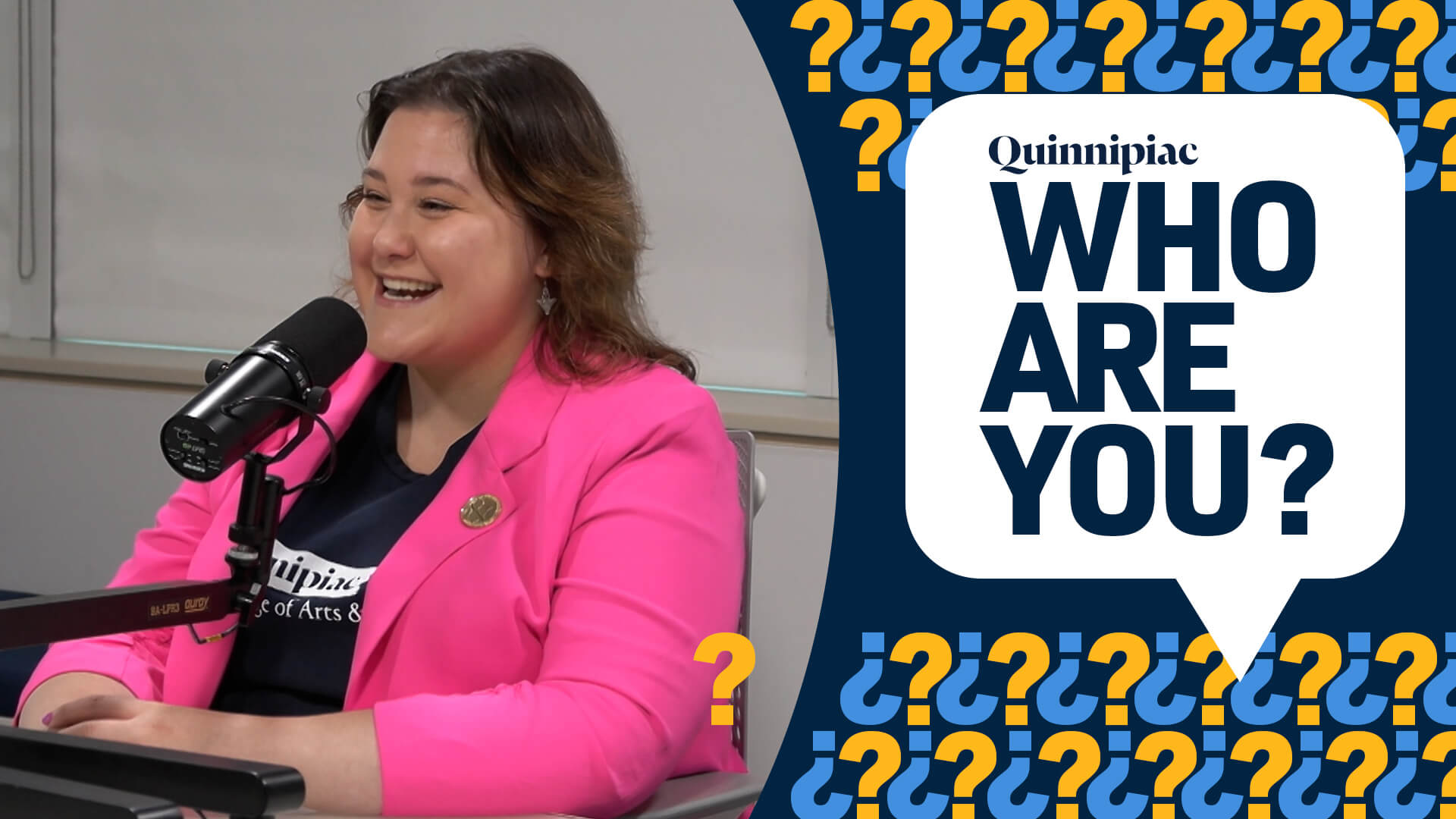
The benefits of being undeclared coming into college
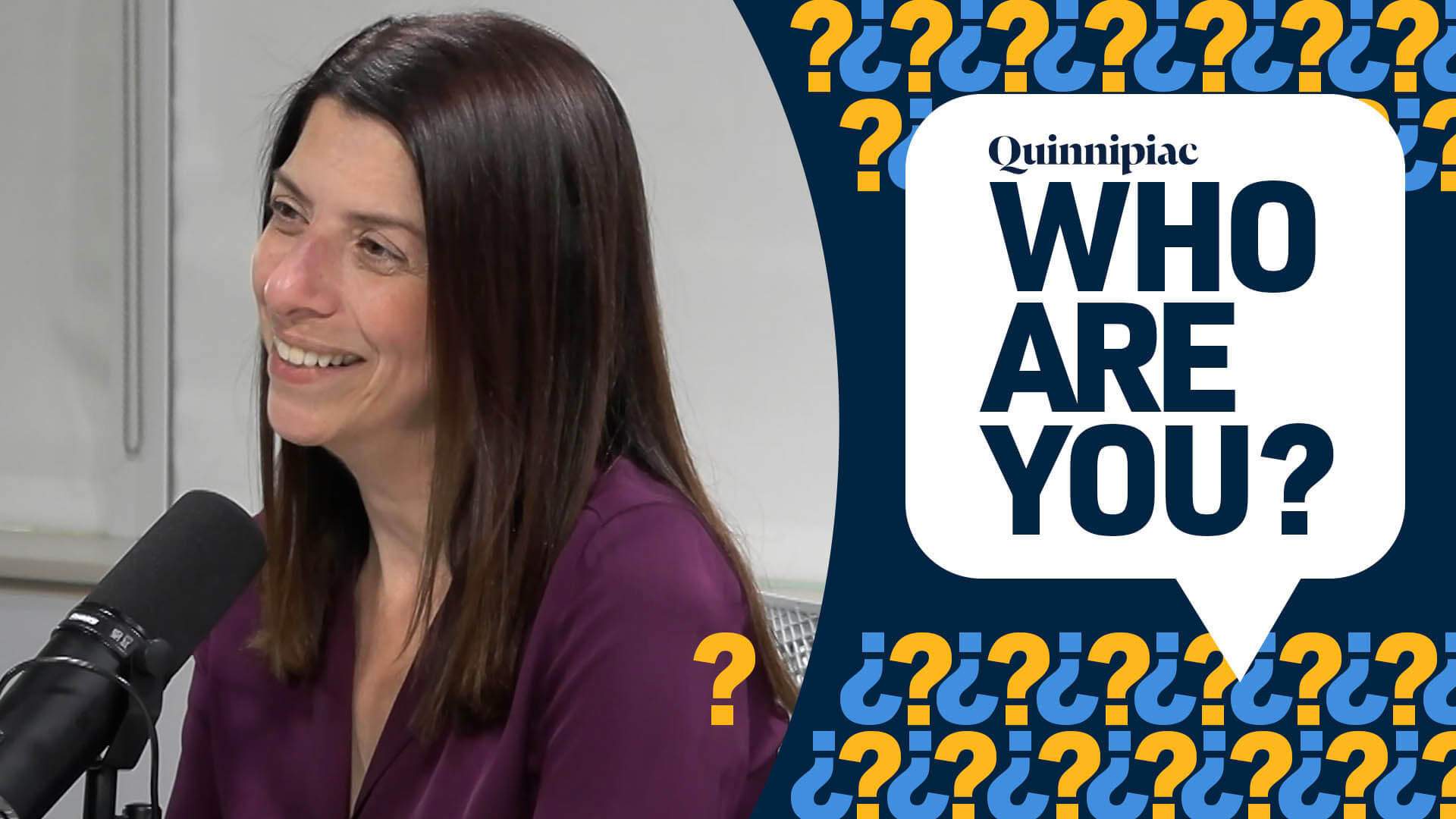
Joel Vanner: Hello, and welcome to ”Who Are You?,” the Bobcats you know, the stories you don't. I'm your host, Joel Vanner, inside the podcast studio at Quinnipiac University's School of Communications, and I am joined today by my guest, Elyssa Wrubel. Elyssa, welcome to the show.
Elyssa Wrubel: Thanks so much for having me. I'm so excited to be here.
Joel Vanner: Glad to hear that. Elyssa, we know your name, but tell me who are you.
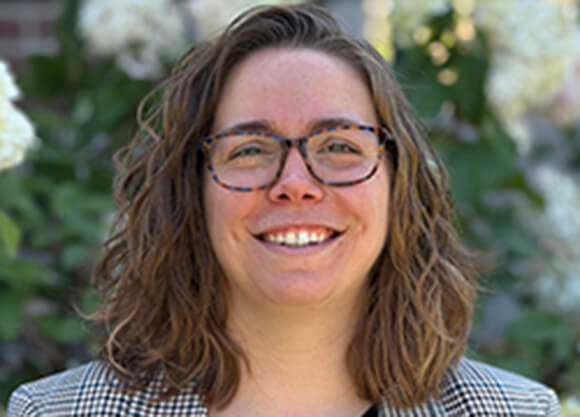
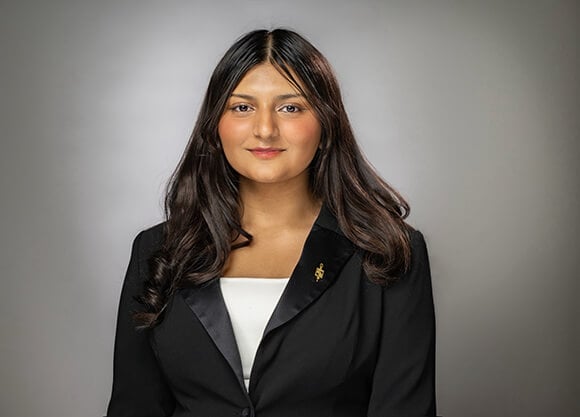
Elyssa Wrubel: Well, my name is Elyssa Wrubel. I'm the director of Advising and Student Experience in the College of Arts and Sciences. I'll spoil a little secret. I graduated in 2020, so I'm a QU Alum with a BA in English.
Joel Vanner: Well, we have two QU Alums at the table today. Director of Advising and Student Experience.
Elyssa Wrubel: Yes
Joel Vanner: When you were younger, did you think you'd have that job? Did you even know what that job was?
Elyssa Wrubel: No.
Joel Vanner: Tell me about you when you were younger.
Elyssa Wrubel: When I was younger, yeah. So my parents were both teachers at one point, and they were both in the STEM field. So I grew up around a lot of science and computers. My dad moved into project management, working for Alcatel Lucent. So lots of STEM in my household.
Joel Vanner: It's like cleaning up the kitchen table of fossils and educational materials at dinner.
Elyssa Wrubel: Yeah, we have fossils in the basement. They're probably still down there back in New Jersey. Yes, so education was always super important in my house and just kind of a value that I had growing up. And I always thought that I would be a teacher, and I kind of took the interest in whatever grade I was in. So I remember being in second grade and thinking, Oh, I want to be a second grade teacher. And then third grade, fourth grade. Oh, I want to be a third grade teacher. I want to be a fourth grade teacher.
Joel Vanner: That's great. Every year, you were empowered and you were like, I'm going to do this and this.
Elyssa Wrubel: Going up, going up. But then, at some point, that kind of times out. And so when I was in college, I still thought that I wanted to go into secondary ed. But there was always sort of a toss up between teaching and whenever I thought of myself as a teacher, I always thought of myself as an English teacher. I just really enjoyed writing. I really enjoyed my language arts courses in elementary school. But I was always also interested in science. And so coming into college, I was sort of torn between that English education path and healthcare management. And it was sort of a a circuitous route to get there as well. I was interested in physical therapy at one point. I started working at a chiropractic office in high school.
Joel Vanner: Which we share. My first job was at a chiropractic office, too.
Elyssa Wrubel: I love that. And that's so niche, I feel like. But seeing that and seeing the physical therapy, I was interested in physical therapy. And then I did a summer program at a large university back home in New Jersey for biomedical engineering. So I was really interested in that.
Joel Vanner: Before you came in college.
Elyssa Wrubel: Before I came to college, yeah. So my junior year of high school. And then I started watching House, and that was my favorite show for a really long time. Just kind of binge watched it on Netflix in high school, and I then was thinking about healthcare management. And that's what brought me to QU actually was my interest in healthcare management. So I came in undeclared. And still kind of torn between English education and health care management. And, I mean, my major was English, so that's the route I ended up taking.
Joel Vanner: So what was that like coming to Quinnipiac? You went through the college search process. You came here.
Elyssa Wrubel: Yeah.
Joel Vanner: Was there a connection you had to Quinnipiac that led you to choose it?
Elyssa Wrubel: Yes. So interestingly, there were two, two People in my life who had gone to Quinnipiac, and that was kind of the only way or the first way that I knew about Quinnipiac. So I danced when I was younger. I did competitive dance, and we had summer camp. And one of our alums, she taught she came back to the summer camp to teach, and she went to Quinnipiac. And so I was very young when I first heard the name Quinnipiac, and I didn't know anything about the school. The name just kind of stuck in my head. And then when I started working at the chiropractic office, one of my friends and colleagues, she's a few years older than me, she was at Quinnipiac, and she was in the physical therapy program. So then hearing that name again, I was like, Oh, this is a place that I should check out. And then I came and visited and I realized that the interest and focus in health sciences would be really helpful when I thought that that was maybe a path that I was considering. And, of course, it is, but I ended up pivoting and going into CAS.
Joel Vanner: So selected Quinnipiac came in. You said you were undeclared, right?
Elyssa Wrubel: Yes Yes.
Joel Vanner: What was that like, you know where you want to go. You know you want to be there, but you're not quite sure what you want to study. How did you overcome and navigate that?
Elyssa Wrubel: So I came in. My major was exploring well, we call it now exploring sciences. At the time it was undeclared sciences. And at orientation, right in that session when you're about to create your schedule and pick your courses, I had this moment where I'm not sure why, but I just thought, maybe I don't want to do sciences and maybe that's too narrow and too limiting. And so I asked my OL, which I know this to be the case. Now, of course, you can change your major at orientation. But I sort of panicked, and I asked my OL, Is it too late to change? And she said, nope and took me right to admissions, and I changed my major to undeclared Liberal Arts, which is now, we call it exploring CAS, to kind of give myself a broader opportunity to be undeclared. And I'm really glad I did that. I did take bio my first semester, so I still had the opportunity to explore sciences, but I also took English. I took a one oh three honors course, and it was focused on speculative fiction, which I did not know what that was. I had never heard of it. And that's what kind of spring-boarded my journey into English. So I think I made the right choice, but it was sort of a spur of the moment choice. And I think I think I've seen a lot of that in my time, like, since I've since I was an undergraduate and since I've graduated, a lot of kind of serendipitous moments, just a singular choice that, you know,.
Joel Vanner: Unlocked other-
Elyssa Wrubel: Yeah.
Joel Vanner: Yeah exploring CAS, exploring College of Arts and Sciences. What is that program? Tell me more about the program.
Elyssa Wrubel: Yeah. So that is our opportunity to be undeclared liberal arts. So it is the broadest way to be undeclared. And it's so funny and so kind of full circle because I oversee that program right now.
Joel Vanner: In your role now at Quinnipiac.
Elyssa Wrubel: In my role now, yeah
Joel Vanner: So you're like giving back to the community that helped you?
Elyssa Wrubel: Yes, yes. And that's why it is it is nothing short of an honor to be in this role and to work with the faculty that helped me. And I think about that all the time. They showed me who I can be and who I want to be, and I get to do this. They've modeled the advising that I get to do for the students. But the exploring CIS folks, they get to take a one credit course, and I actually was not able to take it as a student, but it's CAS 110. And that allows them to explore the different majors and career paths that we offer. And typically, whoever is their instructor, it's the first semester. So it's only offered in the fall. They take it right as soon as they get to Quinnipiac, and whoever's their instructor is typically their academic advisor as well. So they get to build rapport with that person and really kind of think through what their interests are because sometimes students come in and they don't even know how to identify their interests.
Joel Vanner: Right. They need somebody to unlock that?
Elyssa Wrubel: Yes.
Joel Vanner: In them.
Elyssa Wrubel: Yeah.
Joel Vanner: You said you didn't have that experience when you were a student because the course wasn't around then. Were there experiences that you had as a student that helped shape you in that exploring CAS onto English phase?
Elyssa Wrubel: Yes. So, I mean, that first course, the first English course I took my first semester, English 103 honors, that was kind of the starting point. And that sort of led me to continue taking English courses, and I took literature by women course in the spring. And that was kind of the deciding factor for me. After taking that course, I realized, yes, this is the major I want to declare. But I also had minors in women's and gender studies and psychology. And the Women's and Gender Studies minor kind of unlocked a whole bunch of opportunities for me. So I took a course my junior year. It was an anthropology course, but I took it as a women's and gender studies course to fulfill a requirement for my minor. And that experience, it was a fantastic course. It was gender sex and sexualities. It's AN 210. incase anybody wants to take it. But it was Professor Haldane. And I was so interested in anthropology. I had never heard of it before. I had never, I didn't know what anthropology was, and taking that course.
Joel Vanner: What is it? I don't even know what it is.
Elyssa Wrubel: Oh, gosh, you put me on the spot. Professor Haldane's gonna be watching. It's the study of people and peoples. So like cultures.
Joel Vanner: Okay.
Elyssa Wrubel: And there are all different kind of subsets of anthropology. So we have doctor Ollinger. She's a biological anthropologist. Um, we have doctor Giblin. She is an archaeologist, and doctor Haldane is a cultural anthropologist.
Joel Vanner: Oh very cool.
Elyssa Wrubel: So. Yes. They have a number of really interesting courses, but I was so enamored by it, I wanted to take another course with Professor Haldane the only course she was teaching the next semester that was still available, still open was anthropology of Morocco. And so I just asked her about it one day, and I said, Oh, could you tell me a little bit more about this course? And she said, Sure, I'll take you to Morocco. And it was kind of like, hold on, hold on, hold on.
Joel Vanner: Tell me about the course first, and then I'll think about it
Elyssa Wrubel: Right right! Yeah. And I actually when I came to QU, I did not want to study abroad at all. I'm, you know, 3.5 hours from home in New Jersey, and that felt like a good distance. I didn't really feel the need to leave the country. But I did. I took that course. It's a short term faculty led abroad course. So I took the course in the spring, and then we traveled to Morocco for ten days at the end of the spring. And it was an amazing experience. I don't think I have time to talk about how incredible it was, but I actually was able to work with that organization. So we partnered with an NGO, and I had a fellowship with them after I graduated. So they sort of recruited me to work with them. And unfortunately, I graduated in 2020. So it's not the best time for international travel, but I would have actually lived in Morocco and taught English there. And I ended up doing it on Zoom at my dining room table in New Jersey.
Joel Vanner: So you took a chance on the course?
Elyssa Wrubel: Yes.
Joel Vanner: It unlocked that experience.
Elyssa Wrubel: Yes
Joel Vanner: And it unlocked something after graduation for you, too. A bit altered. At your dining room table in New Jersey. That's awesome. You said you got the travel bug. Did you travel anywhere else?
Elyssa Wrubel: Yes. So that's exactly what happened. I went to Morocco, and it was ten days, and I thought that was not nearly enough. So that was the spring of my junior year. And then in the fall of my senior year, I actually went to Brazil during midterm week. And so I felt a little guilty. You know, I was in Rio while everyone else was taking their midterms. But that was for the Oxford Consortium for Human Rights. They did a workshop that was their first workshop in the Global South. And so that was through the Albert Schweitzer Institute. And I was one of two students who got to go. So I felt very fortunate. And the day I got back from Brazil, Professor Haldane sent me an email about a trip to South Africa. And she said, you know, this would be a really great opportunity for you. And I kind of laughed because I said, I just got back from Brazil. Like right now.
Joel Vanner: Don't unpack.
Elyssa Wrubel: Right. Yeah, just go right. Yeah. And what was particularly interesting about these, so I did end up going to South Africa, and all three of these travel opportunities were not within my major. So as we discussed, Morocco was anthropology. Brazil. This was human rights. And there were students of all different majors there, but, you know, primarily, like, law oriented, political science oriented, a lot of policy focus. And then South Africa, it was a democracy conference. So very much political science. It was the Africa Political Theory Association that sponsored the conference. And so I had these really exciting and engaging in deeply, deeply interesting opportunities. And they were all in disciplines that they complemented my major, but they were outside of my major.
Joel Vanner: So as you work with students now advising those who are exploring College of Arts and Science, exploring college in general, right? How do you guide them? How do you bring your experiences into those conversations?
Elyssa Wrubel: Well, if anyone is ever interested in study abroad, I'm always immediately just do it. The way I did it, right? Like, jump in, don't even question it. But I'm always happy to talk to them about experiences with Study Away. But in general, my kind of philosophy, my advising approach is very much passion focused. one of my professors, she gave me possibly the best advice that anybody could have ever given me. And she's retired now, but Professor Tercy she's an English professor. And she said, Listen to the I love doing this meter inside. And it was kind of just like a casual conversation, but it really stuck with me, and that's actually what I put on my graduation cap because I feel like that is so articulate. Like, you have this sense inside, you just have to tune into it and see, when you're taking courses and you're going on trips and joining clubs and doing all of these things that students do, what is really lighting you up? What is making you excited. And that's what I encourage my students to do the most is just pay attention to what they really feel good about and also what they don't feel good about because that's just as much of an indicator, right? Like, if they are not sure what major they want to pursue, what career they want to pursue, when they're exploring and trying all these different things, if something doesn't feel right, it's not right.
Joel Vanner: Right.
Elyssa Wrubel: So that is really how I like to guide my first year students is really kind of dive deep into what are those things that you're passionate about? What makes you so excited? I always said when I was at QU, like, you want to have so much excitement that you feel like you can't contain it in your chest, right? You feel like you have to go like this to kind of stuff it back in.
Joel Vanner: Right. And you only have sometimes you only have a certain amount of time to figure it out. But going by that, it's recognizing that, you know, you had a non linear path to where you are today, right? You took a couple of interests in other areas, and it ended up you came back here to Quinnipiac advising those who who were you when you started here. But in all those opportunities, what I'm hearing is you took them as growth opportunities. It's not a wasted experience. It's what did you learn? And how did that help you maybe look in another place for something that you're gonna love?
Elyssa Wrubel: Yeah. So I think actually, I might disagree when you say you have only a limited amount of time to find that and explore that. I actually think maybe that's not true.
Joel Vanner: Okay, tell me more of then.
Elyssa Wrubel: Yeah, you only have a limited amount of time here at QU, right? Four years or three years, however long you're going to spend as an undergrad. But those growth opportunities continue beyond your graduation at Quinnipiac. So I think my job and everyone else here, we want to give students the foundation, and we want to help them as much as they can. But if they graduate and they're not exactly sure where to go after that, that's okay. And that is kind of what I did. So I ended up after I graduated in 2020. I had my fellowship with the organization called Darcy Hamed in Morocco. So I had my fellowship with them, and that was kind of my gap year. And then I started graduate school. I started an MA PhD program at another university in Connecticut, and my intention was to pursue a PhD in English so that I could become a professor. Going way back to when I wanted to be a teacher, I was like, Oh, in second grade, I want to be a second grade teacher. When I was in college, I was an English major. I wanted to be an English professor. And I did one year of my MA PhD program, and I actually realized that maybe it wasn't the best fit. And so that's when I started looking for other opportunities, and I found this job opening at Quinnipiac. My first role here was the advising specialist, and the primary role was to help oversee the exploring CAS program. And so that's where I realized I could be doing something similar to what I wanted to do where I'm helping students and engaging with them and inspiring them hopefully them.
Joel Vanner: Teaching them
Elyssa Wrubel: Yeah, teaching them but not in a classroom setting, right, in a non instructional capacity.
Joel Vanner: Yep
Elyssa Wrubel: And I never really thought about roles in higher Ed aside from teaching. It was always English professor as soon as I made that decision. That's where I went, and I loved it so much. After one year as the advising specialist, I was so inspired by the work I was doing with the students and what they were teaching me. And so I ended up leaving my program and staying here. This is my fourth year now working at QU. But while I've been in higher ed in this capacity, I've also kind of realized or remembered why I loved being a student so much, just that constant learning and growth. So I actually finished up my masters this past summer.
Joel Vanner: Congratulations.
Elyssa Wrubel: Thank you. Thank you. Yeah, it was online and asynchronous, which was also really interesting to explore a different type of learning and different modality. Um, and it really is fascinating to see how engaging a course or a program like that can be, even though you're not in person, I felt so deeply connected to the material. So it's been really lovely to, you know, this past summer is when I took on the role of director of advising. So that happened in July. I finished up my master's in August, so it's been really exciting to have those growth opportunities after I've graduated from college.
Joel Vanner: There is a huge community that makes up a higher education institution, and you inspired me to think about the lifelong learning opportunities that Quinnipiac offers for continuing to find out. Like you said, you may have limited time in one space, but that's not your life. And there are other ways you can find all that and find out what you're passionate about and interested in.
Elyssa Wrubel: Yeah.
Joel Vanner: Well, Elyssa, thank you so much for joining me on the show today and sharing your insights perspective and all the work you're doing with our students in the College of Arts and Sciences.
Elyssa Wrubel: Thank you so much. I'm so happy that I was able to come on here and talk with you.
Joel Vanner: If you enjoyed today's episode, be sure to like, subscribe and share, and find other episodes on Apple, Spotify, and YouTube Podcasts. Until next time, when I ask my next guest, who are you? I'm Joel Vanner. Bye for now.



Quinnipiac Today is your source for what's happening throughout #BobcatNation. Sign up for our weekly email newsletter to be among the first to know about news, events and members of our Bobcat family who are making a positive difference in our world.
Sign Up Now