


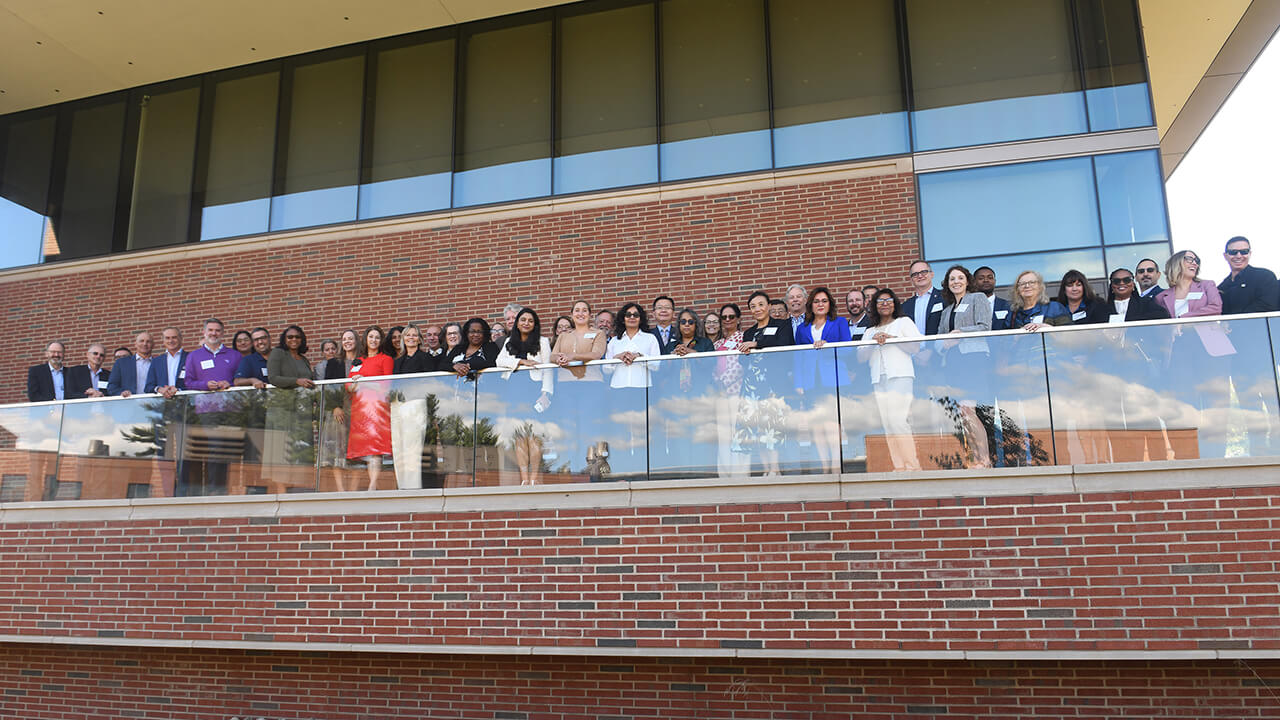
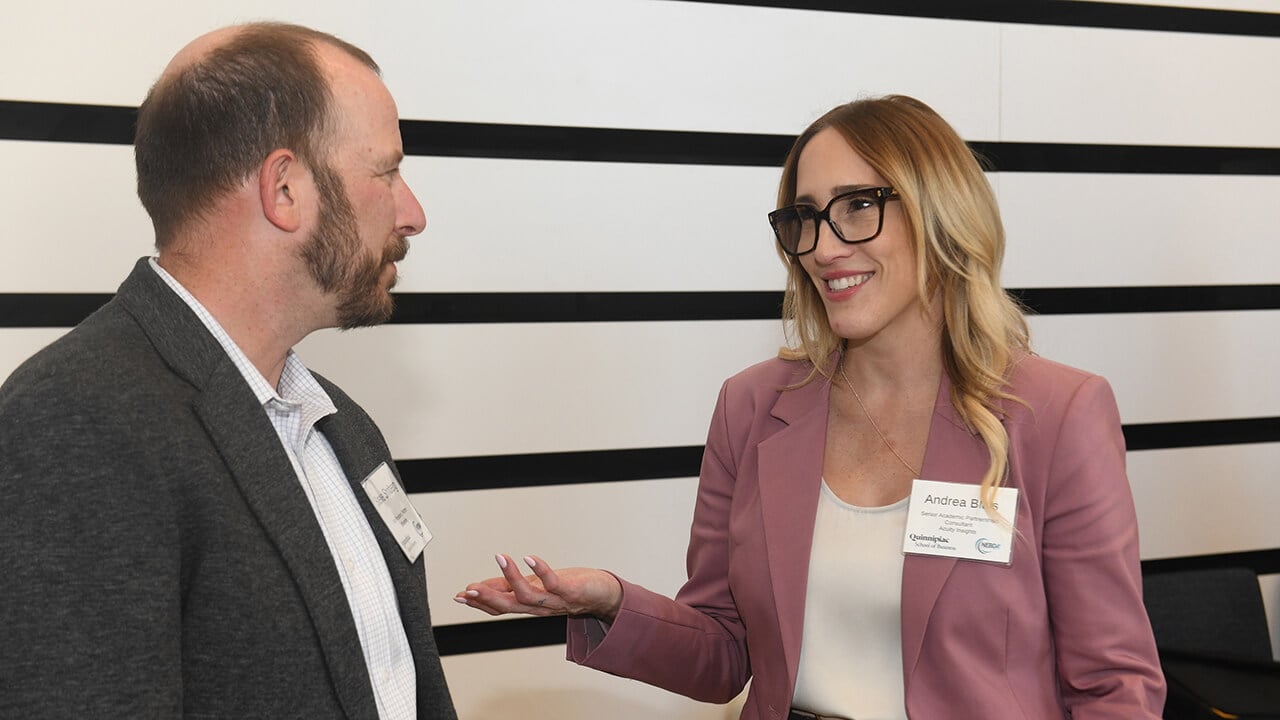
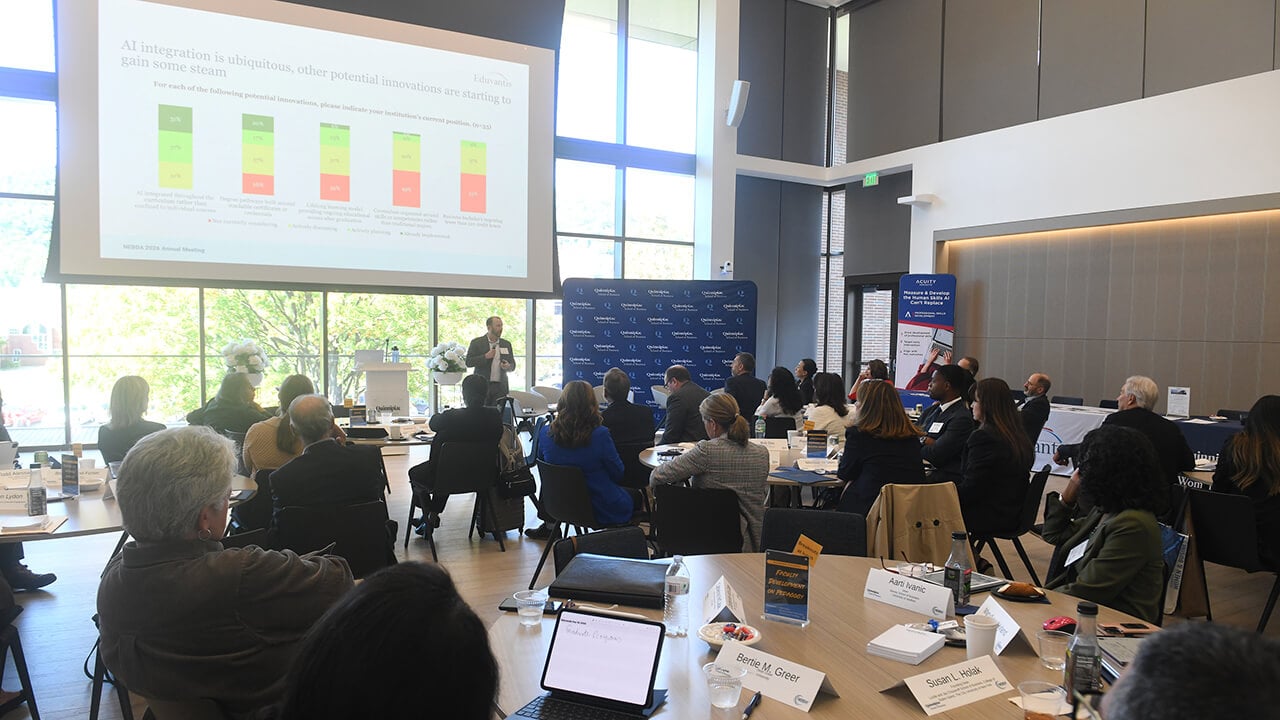
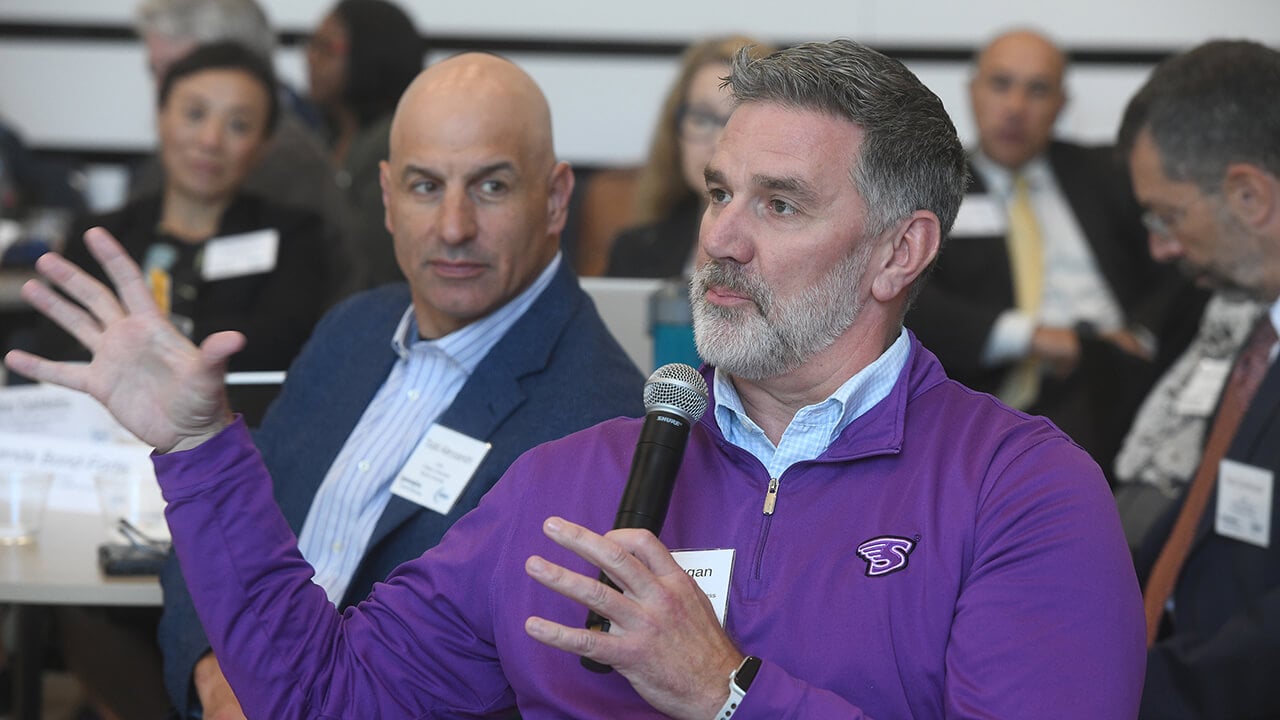
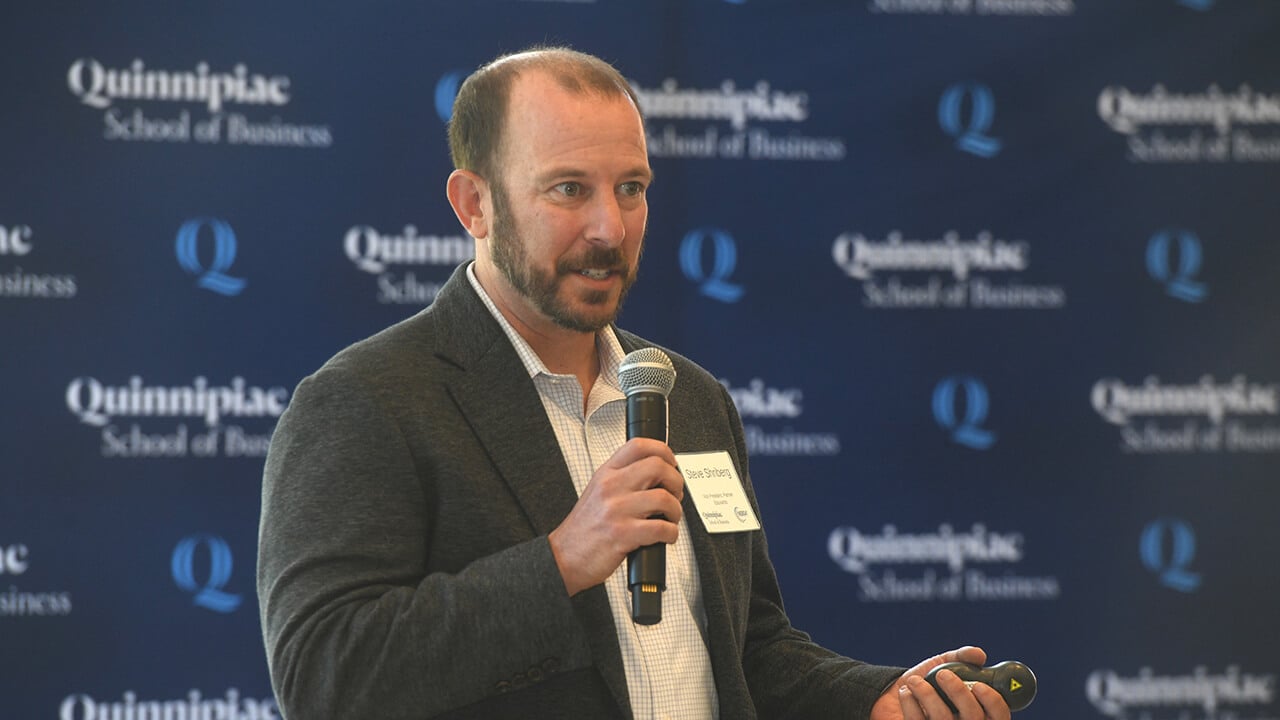
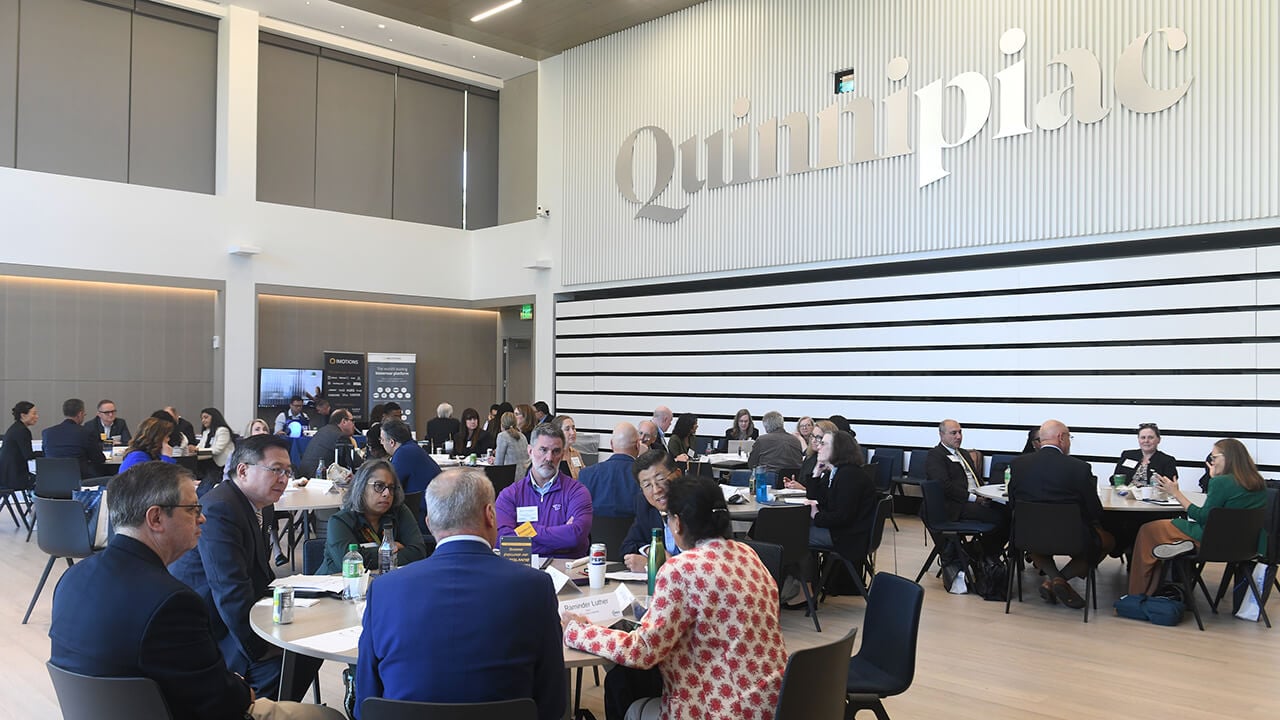
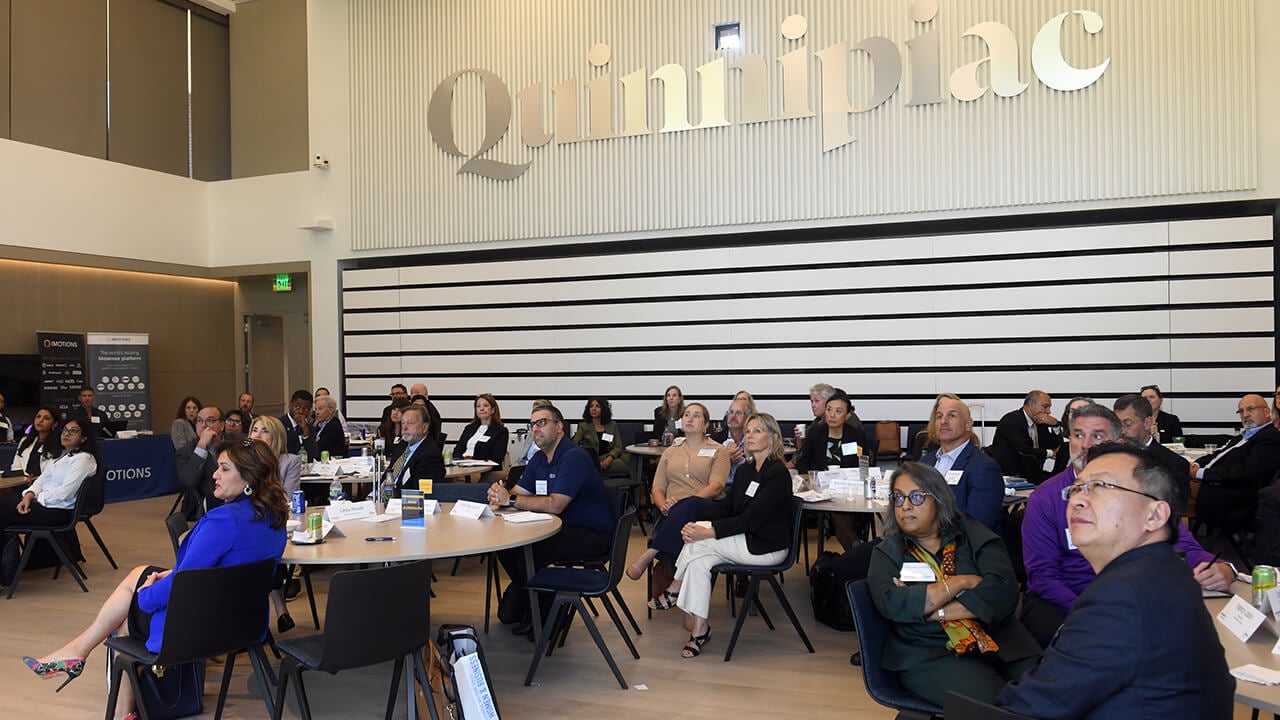
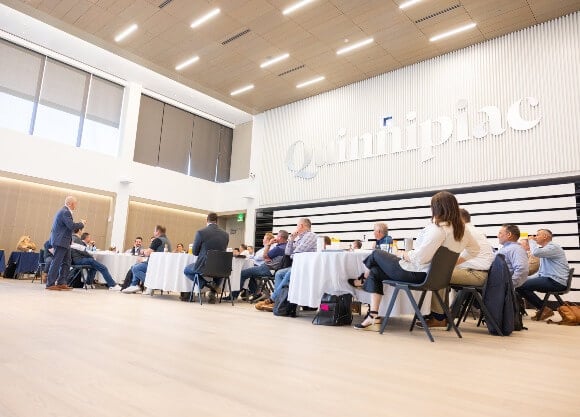
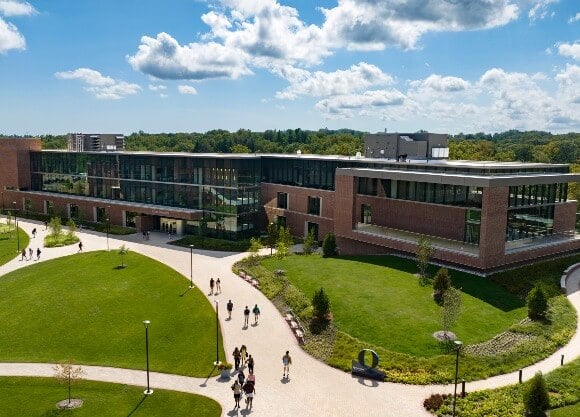
Inside Quinnipiac’s state-of-the-art School of Business, the conference’s interactive panels and collaborative sessions provided practical insights and innovative approaches to embedding experiential learning, building partnerships, leveraging technology, enabled experiences and creating scalable impact.
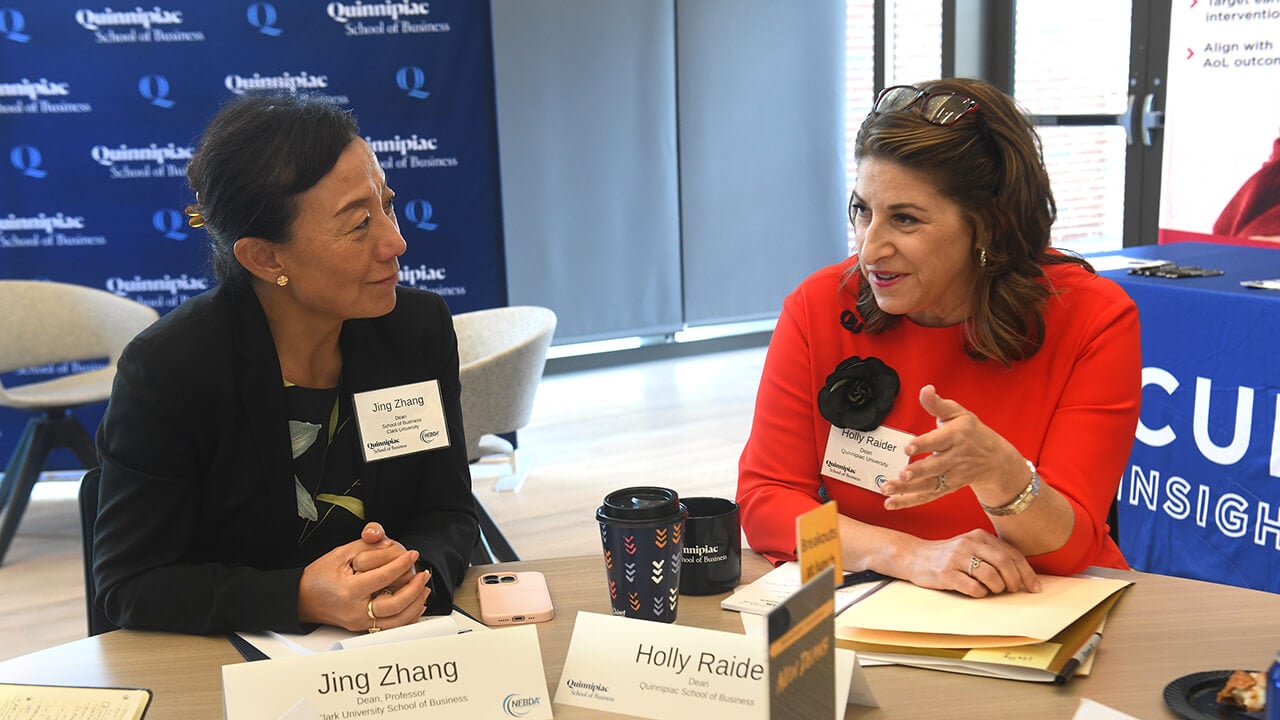
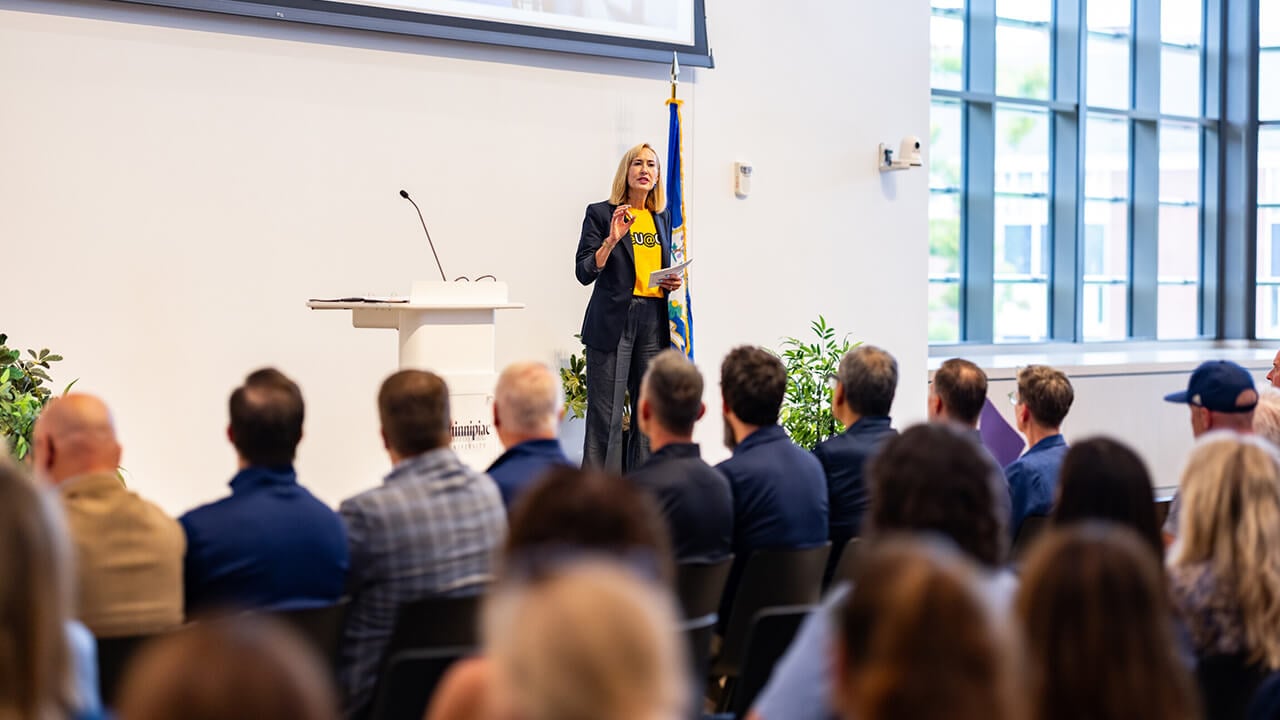
Welcoming her colleagues, NEBDA Vice President Holly Raider, dean of Quinnipiac’s School of Business, expressed her hope the gathering would serve as a prism of new perspectives.
“I hope this inspires the experiential learning that we’re all committed to for our students, and shapes how we think about our teams, our organizations and even ourselves,” Raider said. “How do we make a difference, day in and day out?”
Connecting to the conference theme, Quinnipiac Provost Debra Liebowitz emphasized that collaboration, shared experiences and community discussion spark innovation.
"There is tremendous value in stepping away from our day-to-day responsibilities to engage with colleagues who are wrestling with similar questions and challenges," Liebowitz said. "Experiential learning is in Quinnipiac's DNA, and some of our best ideas emerge when we come together to reflect on our experiences, share what we've learned, and challenge one another's thinking. I hope the conversations at this conference inspire new ways for all of us to strengthen that work for our students."
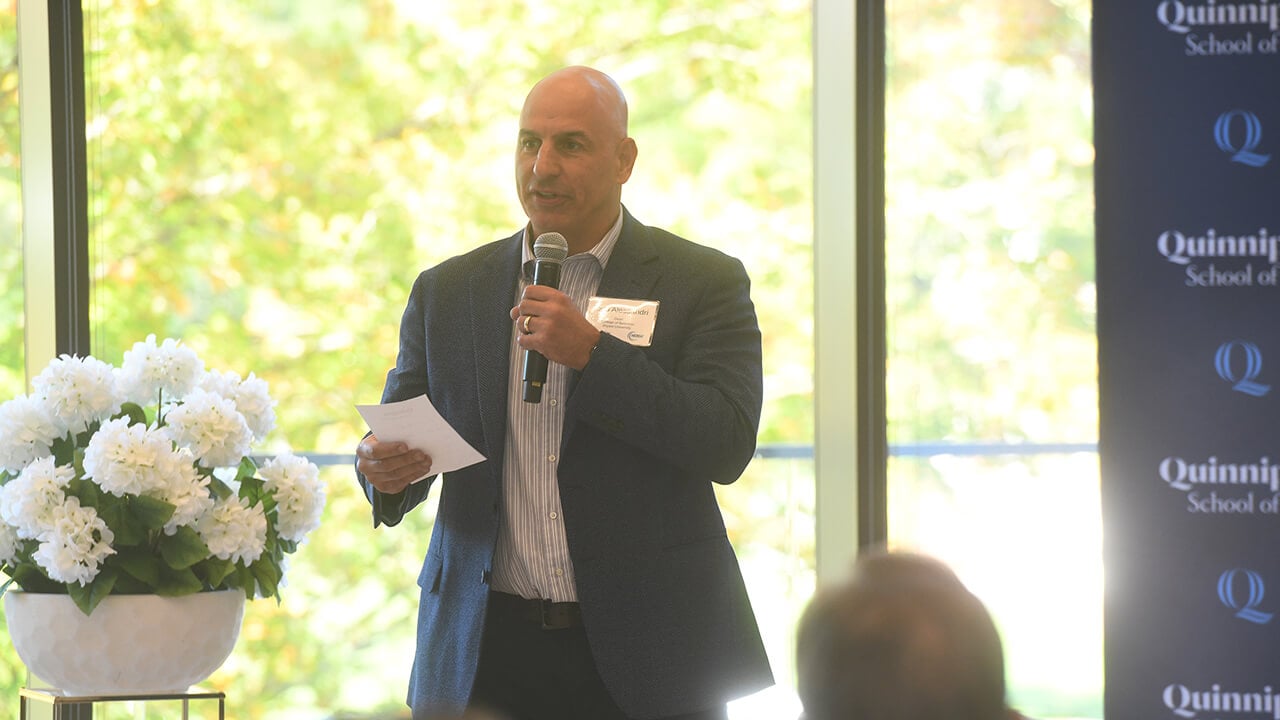
To open the conference, MaryAnne Hyland, NEBDA Secretary and dean of Adelphi University’s Willumstad School of Business, moderated a panel on building an experiential learning ecosystem. She was joined by fellow business school leaders Todd M. Alessandri (Bryant University), Sharon Lydon (Rutgers Business School), and Don White (Salem State University). The panelists highlighted real-world programs transforming experiential learning at their business schools.
White said supporting a large population of first-generation students required a multi-pronged strategy to build awareness and lower barriers to experiential learning and internships. The approach included integrating a required professional development course, mobilizing faculty to educate students on the value of internships and establishing a donor-backed fund supporting nonprofit and underfunded internships, as well as any added tuition fees.
“We also found that our students often could not answer the question, ‘What kind of experience do you have?’” said White.
In response, Salem’s Bertolon School of Business created an on-campus apprenticeship program where students work with a supervisor for a year to acquire the business skills, experience and confidence needed to compete for internships. Every student who completes the program is guaranteed an internship placement, White said.
Lydon said the key to providing the most robust opportunities for experiential learning lies in developing an interconnected system of support tying together innovative programming with partnerships, industry clients and other opportunities.
“We’re looking at it as more of a complete system where it’s continuous and interconnected. We’re hoping, like all of you, that what we have -- this combination of classroom learning, corporate engagement, competitions, consulting and real-world projects -- prepare our students for career access,” Lydon said.
She also shared innovative experiential programming at Rutgers School of Business including its Road to Wall Street program, experiential learning lab and experiential learning showcase.
Alessandri said creating an experiential learning ecosystem relies on innovative curriculum, support for faculty, and building strong relationships with partners and sponsors. He shared a four-year experiential learning framework developed for Bryant’s College of Business that guides students through three distinct stages of growth.
The journey begins with foundational exposure to build initial skills and confidence, transitions into guided practice with high-touch faculty involvement both inside and outside the classroom and ultimately culminates in independent application through client consulting projects, internships and co-ops.
“We’ve mapped out a four-year progression that moves students through those three levels, starting with soft-touch and progressing to standing on their own two feet. The goal is that everyone is completing at least one, hopefully two internships or a co-op by the end, across all majors,” said Alessandri.
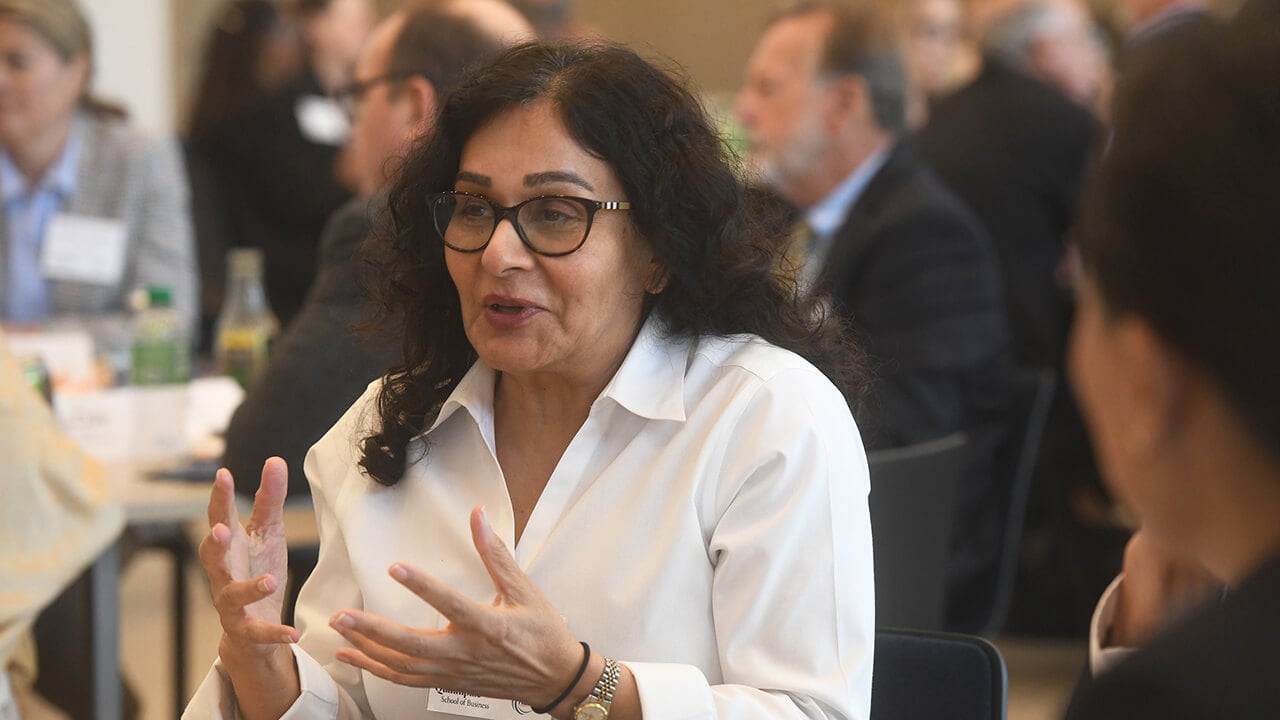
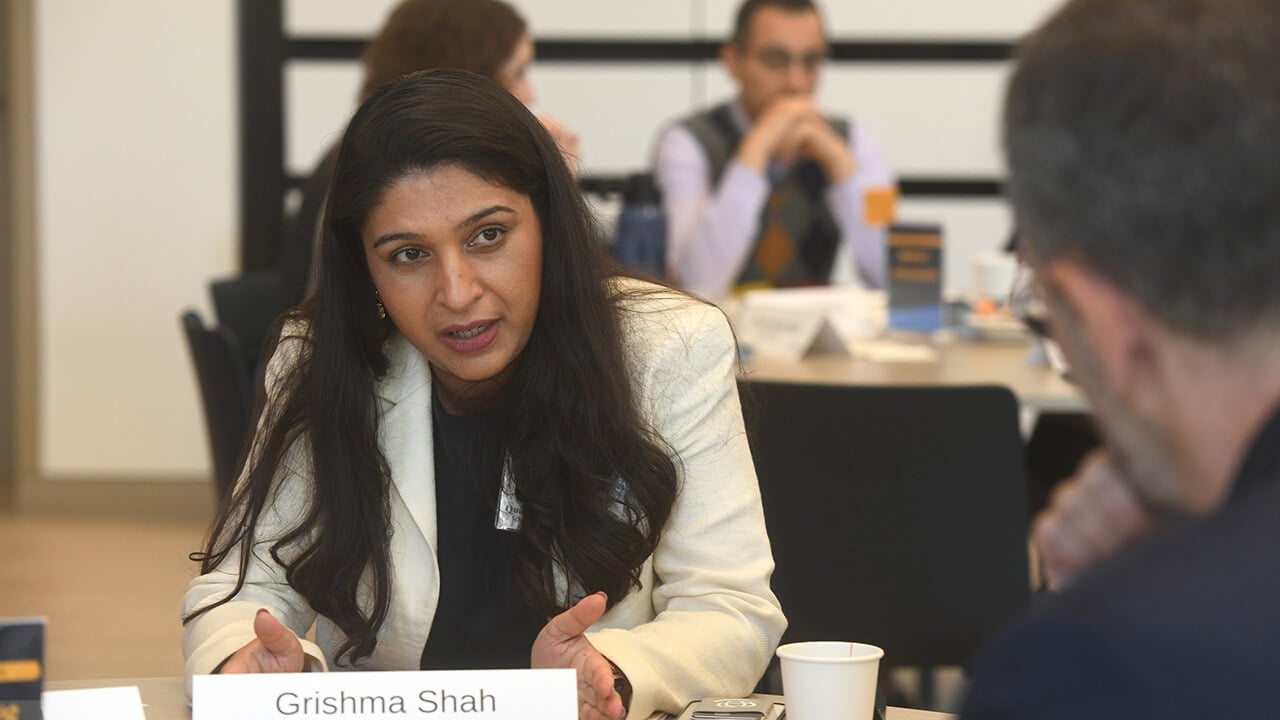
The information-packed conference also featured session highlights such as embedding professional skills development into business curricula, best practices for online experiential learning, a spotlight on graduate program trends, facilitated lunch roundtables and the NEBDA business meeting led by President Maciek Nowak.
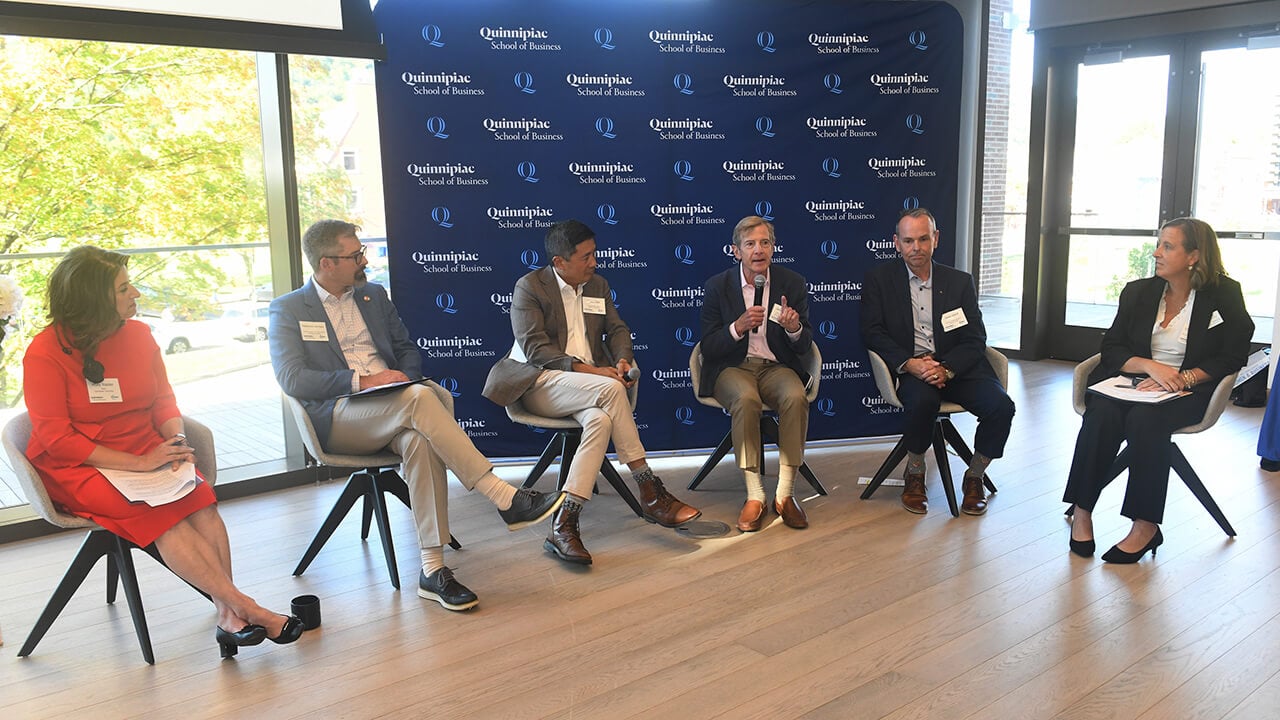
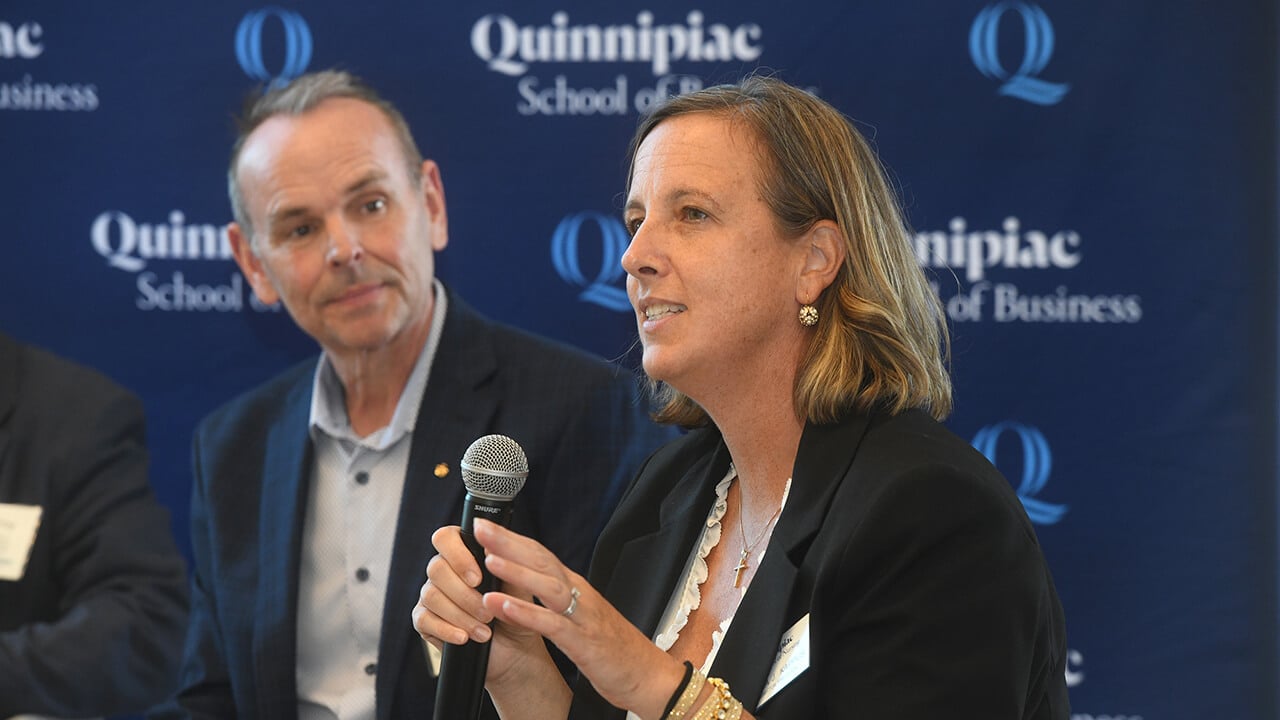
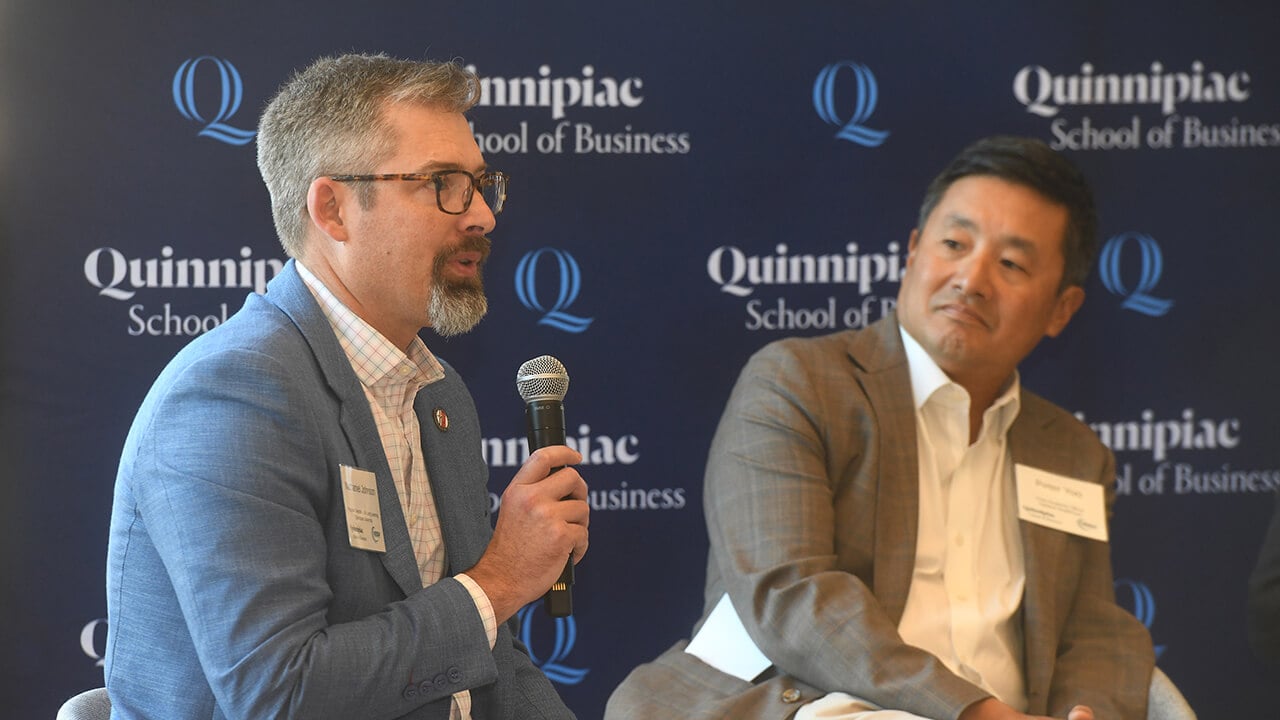
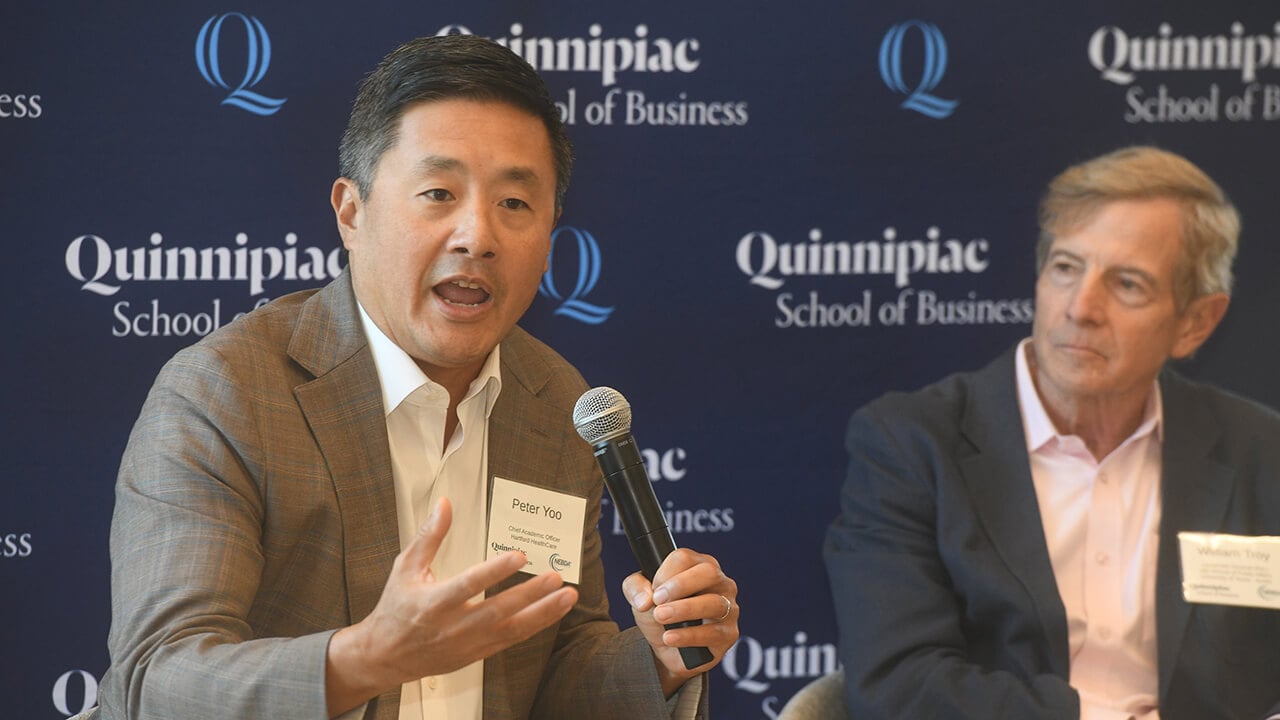
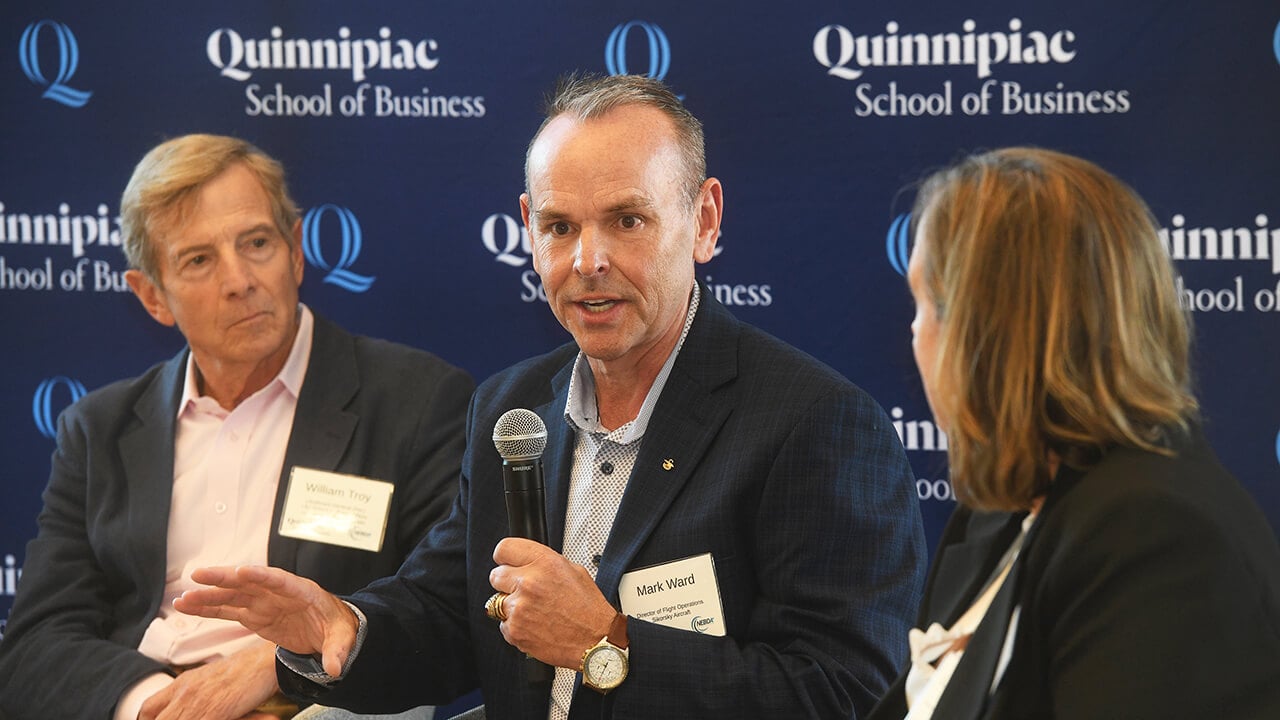
The closing panel discussion, “Learning the Right Lessons from Experience,” was co-moderated by Quinnipiac University’s Lifelong Learning program director Nathaniel Johnson and Raider. The wide-ranging expert panel included Lianna Kappus, Director of Simulation at Quinnipiac University’s School of Nursing; Lt. Gen. Bill Troy (Ret.), former CEO of the American Society for Quality; Mark Ward, Director of Flight Operations and Chief Pilot at Sikorsky; and Dr. Peter Yoo, Chief Academic Officer at Hartford HealthCare.
Inspired by models and practices in high-risk healthcare and military environments, Raider said the session was geared to exploring how to draw meaningful lessons from experience rather than just drifting from one event to the next.
The panelists were asked to highlight key frameworks for learning from experience, including military and aviation After-Action Reports (AAR) and healthcare’s Promoting Excellence And Reflective Learning in Simulation (PEARLS).
“As the conversation unfolds, think about how these different methodologies might be relevant in your own leadership, in teams, in how we can integrate it into pedagogy; and importantly, how to go from your training environments into what actually happens in the real world,” said Raider.
As a surgeon who teaches in high-stakes operating rooms and the safety of simulation settings, Yoo bridges both worlds. He said an important question which can be applied to either setting is “What have you learned today?”
“That turns out to be a particularly evocative question for any kind of experiential learning experience,” Yoo said.
By moving learners away from simply listing what they did to reflect on what they learned, this type of effective debriefing helps to establish clear initial expectations while also balancing reflective questioning with active teaching.
Ward said his differing careers have placed him in situations involving self-reflection after military rescue missions and front-loaded preparation as an experimental pilot. What he’s found to be similar in both cases is the capacity for learning through curiosity and humility.
“It’s the curiosity to be self-reflective and understand that maybe everyday you’re not doing everything 100 percent right; and a certain brand of humility that comes with curiosity to accept that you can make a change,” said Ward.
The panelists also discussed creating psychological safety for experiential learners as they engage in experiences developed to help implement practices and follow policies. Their discussions emphasized the importance of approaching experiential learning by understanding the mission, exploring concepts through case analysis, establishing explicit learning directives, building learner resilience and engaging in guided debriefing to align the experience with core learning objectives.
As one who works with developing leaders, Johnson said the panel’s discussion was revealing and inspirational.
“I can’t imagine a better group of people to speak to this topic,” said Johnson.
The mission of NEBDA is to promote and to enhance collegiate education in business in the Northeastern United States and Eastern Canada, including sharing best practice approaches to issues and challenges facing business educators.
Held September 17 - 18, the 2026 NEBDA Conference was sponsored by Acuity Insights, Eduvantis and iMotions and hosted by Quinnipiac University at the School of Business on the Mount Carmel Campus in Hamden, Connecticut.
In Focus
In this Article
Read This Next










Stay in the Loop
Quinnipiac Today is your source for what's happening throughout #BobcatNation. Sign up for our weekly email newsletter to be among the first to know about news, events and members of our Bobcat family who are making a positive difference in our world.
Sign Up Now