


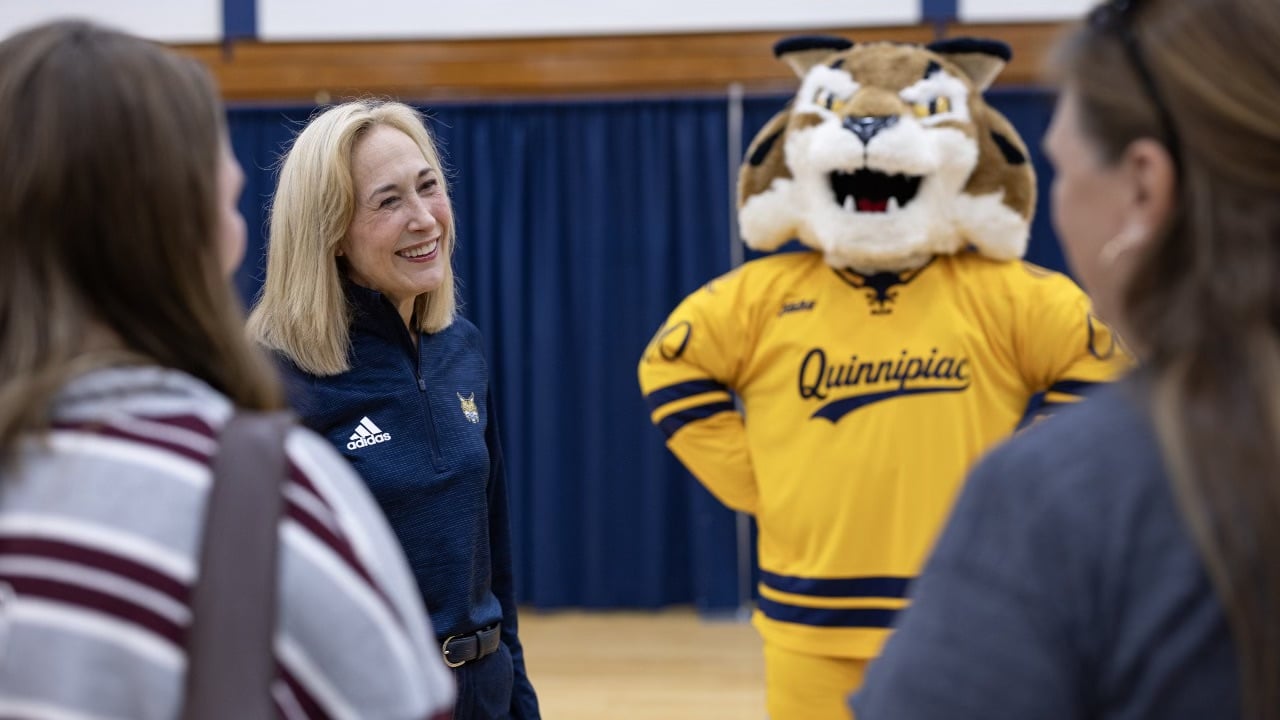
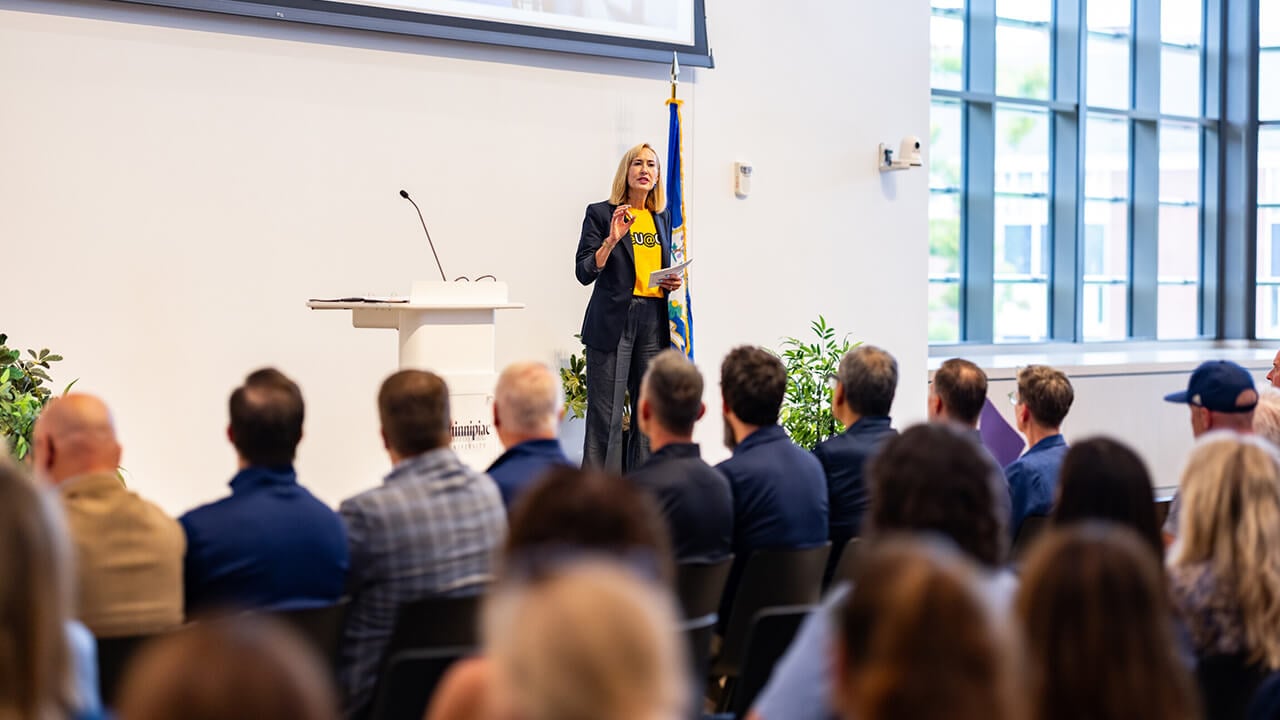
Speaking Friday in the SITE Auditorium at Convocation, the annual kickoff to the academic year, Hardin reflected on what she has seen across the university during her first year as president. She spoke about faculty and staff who mentor students, help them reach goals they did not know were possible and create the everyday moments that make Quinnipiac feel like Quinnipiac.
“I want you to know that I've seen what you do,” Hardin said. “I want you to know I am so proud and so grateful to be part of this community. You know this truly is a special place, isn't it?”
Then she shared something she had heard more than once since arriving at Quinnipiac:
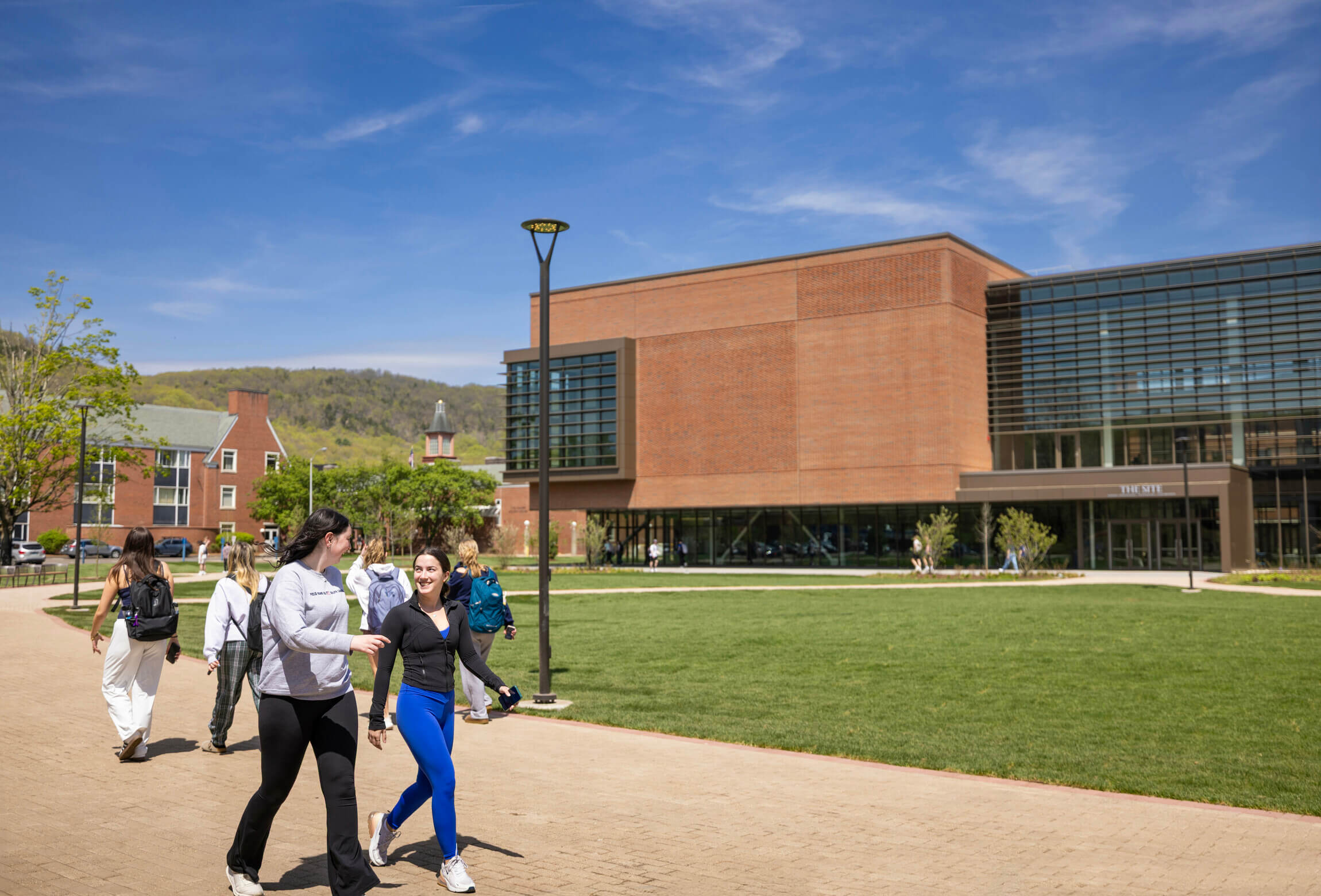
“This is the kind of place where people say hello on the sidewalk. I love that.”
For Hardin, that simple observation speaks to something much bigger. Quinnipiac's values bind the community together and remind its members of their “why.” They also provide a foundation for looking ahead, particularly as the university prepares to enter its second century.
Hardin said one of those values is being bold about the future. But she made clear that ambition by itself will not be enough. Quinnipiac must pair that ambition with focus and a commitment to quality outcomes that distinguish the university in an increasingly competitive higher-education marketplace.
That competitive advantage, she said, will come from leaning into what is uniquely Quinnipiac: its setting, its history, its qualities and its ambition.
Last year, Quinnipiac reinforced its mission, sharpened its vision to focus more strategically on its strengths and established collective priorities to guide its strategic direction, Hardin said. Embedded in those priorities are bold, difference-making ambitions, including experiential learning opportunities for every student and building a national reputation for interdisciplinary careers of the future, including in health and health-adjacent fields.
Hardin also offered her own definition of ambition.
“It is the determination to pursue a better future for ourselves, for one another, and society, and the courage, discipline, and care required to create.”
But ambition alone isn't enough.
Hardin pointed to the work already happening across the university, including advising that helps students stay on track, high-impact teaching and experiential learning that allows students to apply what they are learning in meaningful ways. For Hardin, quality must ultimately be reflected in the outcomes Quinnipiac delivers for its students.
“What must we add? FOCUS. Our vision and priorities require it,” Hardin said. “Let’s own this.”
For Hardin, the equation of ambition + focus = QUality is ultimately about people. Faculty and staff are the ones who will bring those ambitions to life through the work they do every day with students and one another.
“Focus, ambition, quality. This doesn’t happen, hasn’t happened, without YOU,” Hardin said. “It’s the people who have driven our ambitions for almost 100 years. It is your ambition, it is your collective focus, it is our lived values, that will drive us toward our next great century.”
Turning priorities into action
Provost Debra Liebowitz focused on what that vision means in practice, outlining how Quinnipiac can turn its strategic priorities into meaningful action, particularly through distinctive academic and experiential opportunities for students.
Liebowitz said Quinnipiac is entering the academic year on solid footing while also navigating the broader shifts facing higher education, from changing student interests and artificial intelligence to adjustments in federal student loan policies.
Those changes make the next stage of strategic planning particularly important, she said.
“I see the strategic planning process as an opportunity to imagine the future we want for Quinnipiac and to align our efforts around making that future a reality,” Liebowitz said. “As we move from broad aspirations to concrete ideas and initiatives, I believe we need to keep asking ourselves: Will the work we do, the care we bring, and the ideas we generate create the kind of change we hope to see?”
For Liebowitz, one opportunity lies in making better use of what makes Quinnipiac distinctive, particularly its status as a comprehensive university with schools of law and medicine alongside its undergraduate and graduate programs.
That distinction, she said, should be reflected more fully in the student experience, creating opportunities and outcomes that competitors cannot easily replicate. She pointed to the possibility of connecting undergraduate programs with Quinnipiac's School of Law and Frank H. Netter MD School of Medicine in ways that could create more integrated pathways for students interested in law and health professions.
“Distinctive experiences, ones that our competitors can’t or won’t replicate, are critical to our success,” Liebowitz said. “And experiences are not enough. We have to show, through data and student outcomes, rather than telling students that we are distinct.”
She also emphasized that those experiences should be available to every student.
Quinnipiac already has countless examples of transformative experiences in and outside the classroom, Liebowitz said. The next step is to build a distinctive Quinnipiac education in which every student develops the skills, experiences and confidence needed to succeed after graduation.
Career preparation and experiential learning have consistently emerged as important parts of Quinnipiac's identity during the strategic planning conversations.
Liebowitz said Quinnipiac should bring its strengths together into a distinctive story and ensure that every student has meaningful, professionally embedded experiential learning.
The next stage of the work will depend on that engagement. Faculty and staff will have opportunities to participate through Faculty Senate conversations, Common Hour sessions and meetings with the six strategic planning groups. Liebowitz urged the community to stay involved as the work moves forward.
“We’re going to be able to move the needle. We’re going to get where we want to go because of you,” Liebowitz said. “Because you have helped us think strategically about what’s the best way to reach our ambition.”
The Class of 2030 is here
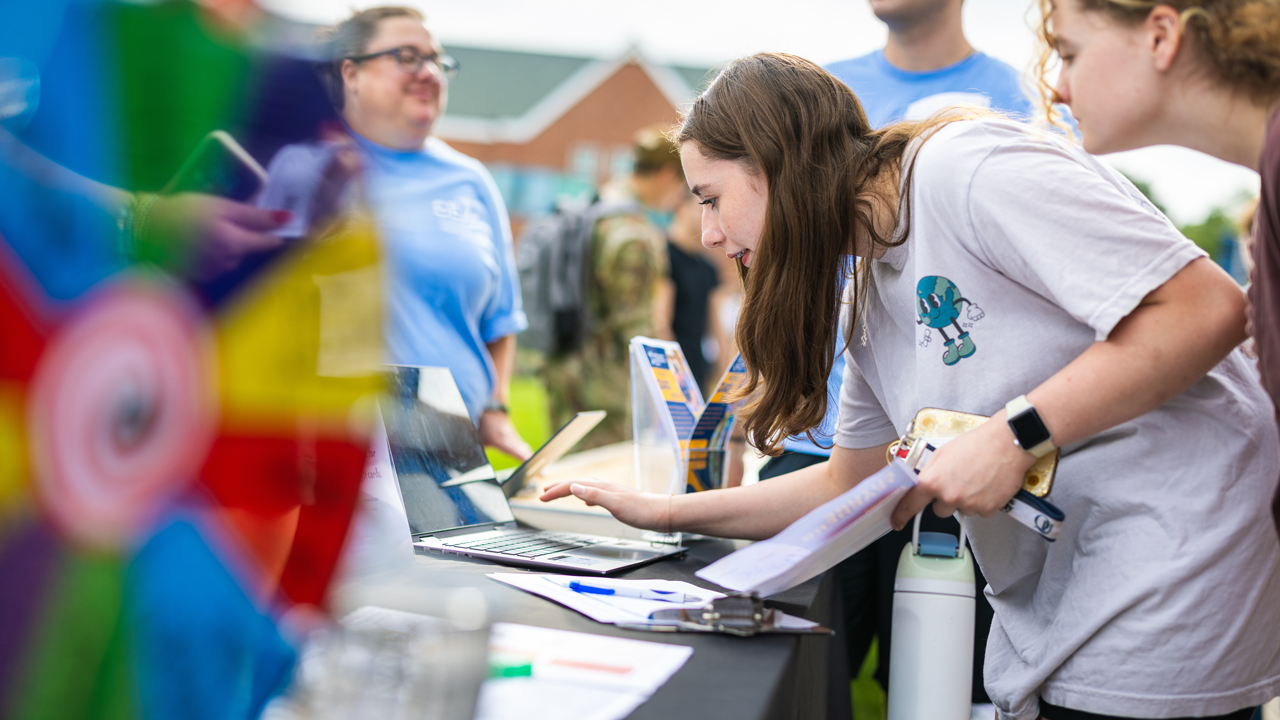
Earlier in the afternoon, members of the Class of 2030 gathered with faculty and staff for an Ice Cream Social on the Mount Carmel Quadrangle following the official Class of 2030 Welcome.
Then, at Convocation, Chief Experience Officer Tom Ellett offered a closer look at the newest Bobcats, not simply as enrollment numbers, but as students arriving with hopes, expectations and questions about what their Quinnipiac experience will become.
Nearly 1,780 new first-year students and 171 transfer students are joining the university this fall. The entering class comes from 32 states and 21 countries, with an average GPA of 3.68. For 61% of the class, Quinnipiac was their first choice.
Quinnipiac's graduate population is also growing, with about 1,276 new graduate students. With students representing 29 states and 11 countries, the university also welcomed 74 new veterans and military-connected students, up from 64 last year
But Ellett said the numbers tell only part of the story.
The university's incoming students are highly future-focused, with many thinking about advanced degrees and careers. At the same time, their responses to pre-arrival surveys revealed some very human concerns: 29% worry about making friends, 65% reported some level of performance anxiety, and more than a quarter expressed self-doubt about their ability to succeed.
But more than anything, Ellett said, the Class of 2030 is arriving with hope. Students are thinking about majors, careers, friendships, internships, research, study abroad, leadership opportunities and futures that have not yet been written.
“They come here believing they are headed in the right direction. They come believing they can grow here. They come believing they can become more of who they hope to be,” Ellett said. “Hope is one of the most powerful things students bring with them, and hope deserves good stewardship. Thankfully, they have each of you.”
That desire for connection came through clearly in a summer survey of more than 1,300 incoming residential students. They were most excited about meeting people and making friends, and when asked what belonging means to them, they overwhelmingly described acceptance, connection and comfort.
“Students experience Quinnipiac one person at a time,” Ellett said. “They are not experiencing Quinnipiac through departments. They are experiencing Quinnipiac through relationships. We are the institution they came here expecting to find.”
That makes every interaction part of the student experience, Ellett said, from the professor who learns a student's name to the adviser who notices when someone is overwhelmed, the facilities employee who offers directions or the dining worker who greets a student each morning.
“Let’s ensure they feel challenged. Let’s ensure they feel supported. Let’s ensure they feel known,” Ellett said. “And most importantly, let’s ensure they feel that they belong.”
Celebrating the people behind the experience
Convocation also provided an opportunity to recognize faculty and staff whose work reflects the quality and care Hardin described.
This year's Center for Staff and Faculty Excellence Awards recognized six members of the Quinnipiac community from a pool of 133 faculty nominations and 128 staff nominations. The six honorees will be formally celebrated at a ceremony in October.
The 2026 Faculty Excellence honorees are:
-
Linda Bedard, clinical assistant professor of physical therapy, School of Health Sciences
-
Priscilla Fonseca, professor and chair of civil engineering, School of Computing and Engineering
-
Julia Fullick-Jagiela, professor and chair of management, School of Business
The 2026 Staff Excellence honorees are:
-
John Jacobi, lieutenant of training and professional standards, Public Safety
-
Kevin MacDougall, associate director of telephony, cabling infrastructure and administrative services, Information Technology
-
Rosa Nieves, assistant director of academic advising, School of Communications
Hardin described the honorees as exemplifying “QUality” and thanked them for the ways they bring the university's values to life.
As Quinnipiac approaches its Centennial, Hardin said, it is the people of the university who have written its history and who will write what comes next.
“The faculty who inspire students to dream bigger and ask them to reach higher. The staff who make students feel welcomed, supported and seen,” Hardin said. “YOU are writing this final chapter of Quinnipiac's first century.”
That work, she said, doesn't happen through one grand gesture. It happens through thousands of small ones: a conversation, a helping hand, a word of encouragement, a door held open.
“Let’s continue to live by our values. Continue to care deeply about our students and one another,” Hardin said. “And keep looking for the opportunities each day to make a difference. Because while those moments may feel small on their own, together they shape our culture, strengthen our community, and define who we are.”
She added with a smile, “And keep saying hello on the sidewalk!”
In this Article
Read This Next

















Stay in the Loop
Quinnipiac Today is your source for what's happening throughout #BobcatNation. Sign up for our weekly email newsletter to be among the first to know about news, events and members of our Bobcat family who are making a positive difference in our world.
Sign Up Now