



Building a stronger athletic community: Inside Quinnipiac’s Student-Athlete Advisory Committee
September 15, 2026
September 15, 2026

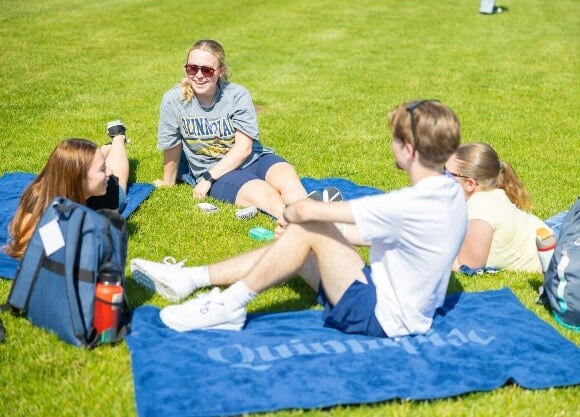
SAAC brings together student-athletes from 22 Quinnipiac’s Division I programs, providing a space for individuals from different teams and experiences to interact. Although advocacy is central to the organization, its purpose also includes building relationships among student-athletes who might otherwise spend much of their college experience within their own teams.
“SAAC is basically a home away from home for student-athletes,” SAAC president and cross-country student-athlete, Michael Strain ‘27 said. “We bring together people from all different teams, backgrounds, and experiences and try to create a place where everyone feels like they belong.”
That sense of community shapes much of what SAAC does throughout the year.
Events, workshops, community service, games of emphasis and recognition efforts provide different ways for student-athletes to become involved beyond attending meetings or representing their teams.
One challenge for the organization is making the full extent of that work visible to student-athletes.
“A lot of people hear ‘SAAC’ and think about sitting in a room for an hour and then going back to their team,” Strain said. “There are so many different things happening behind the scenes that student-athletes might not even realize SAAC is responsible for or involved in.”
Among SAAC’s most important responsibilities is serving as a channel between student-athletes and Quinnipiac Athletics. Representatives communicate with their teams about their experiences and ideas before bringing that feedback into conversations within SAAC.
Those conversations can then reach coaches, athletics staff or administrators who may be able to address them. The structure provides student-athletes with an opportunity to participate in discussions surrounding their own athletic experience.
“For me, giving student-athletes a voice starts with actually listening to them,” Strain said. “Our representatives are supposed to communicate with their teams and find out what people are thinking, what they like, and what they think could be better.”
Having a representative structure ensures that ideas have somewhere to go rather than remaining within individual teams.
“Not every idea is going to be something we can immediately change, but I think it’s important that student-athletes know that their concerns aren’t just disappearing into the air,” Strain said. “Sometimes just knowing that someone is willing to listen can make a big difference.”
SAAC’s responsibilities extend across several committees, enabling members to contribute to specific areas of student-athlete life. Events, QCoor, Belonging, Experience, Communications and Social Media each approach the organization’s mission from a different perspective.
The committees may have individual responsibilities, but their work is designed to complement one another rather than remain separated.
“Everyone has a different job, but we’re all working toward the same thing,” Strain said.
Collaboration between those groups also enables members to contribute outside their assigned roles when an initiative requires additional support. The structure encourages student-athletes to take responsibility for their own areas while still viewing SAAC as one organization.
“We’re one e-board,” Strain said. “Everyone takes ownership of their position, but everyone is also willing to step outside of it when the group needs them.”
Some of SAAC’s most visible work comes through events that connect student-athletes with each other and the surrounding community. Halloween Trunk or Treat, for example, givesstudent-athletes an opportunity to interact with local children while participating in service alongside student-athletes from other programs.
For Strain, the importance of the event extends beyond simply providing another activity for student-athletes.
“It gave our student-athletes the opportunity to keep that holiday special for kids in our community,” Strain said. “Seeing our student-athletes take the time to be there and create that experience for kids was really meaningful to me.”
Community service is also becoming a more unified part of the organization through QCoor. Rather than having each team approach service independently, incorporating the program into SAAC provides opportunities for student-athletes across programs to participate together.
“We want all of our student-athletes to be on the same page when it comes to community-service and giving back,” Strain said. “Instead of everyone doing their own thing, we’re trying to function as one.”
Other initiatives focus on strengthening relationships within Quinnipiac Athletics itself. Games of emphasis encourage student-athletes to attend selected competitions, increasing support for teams while creating opportunities for student-athletes to engage with sports outside their own. The initiative reflects a broader effort to create an athletic culture where teams actively show up for one another.
“I think there’s something really special about seeing student-athletes support each other,” Strain said, “and we want to keep building that."
That support can be especially important because the demands of college athletics naturally keep student-athletes closely connected to their own teams. Practices, competitions and travel can leave fewer opportunities to interact with student-athletes from other programs.
“When you’re a student-athlete, it’s really easy to stay within your sport because that’s where most of your time is spent,” Strain said. “SAAC gives people opportunities to meet student-athletes they probably wouldn’t have met otherwise.”
Those interactions can gradually create stronger relationships throughout the athletic department. Volunteering, attending another team’s game or participating in an event can introduce student-athletes who may share similar experiences despite competing in entirely different sports.
“You start recognizing people outside of your own team,” Strain said, “I think that’s how you create that home-away-from-home feeling that I want SAAC to have.”
Recognition is another way SAAC works to strengthen that community.
The Boomies, Quinnipiac’s student-athlete awards banquet, creates a setting where members of the athletic community can be acknowledged for contributions made throughout the year.
That recognition is not only meaningful to Strain, but for individuals whose work may not always be highly visible.
“Sometimes people are doing a lot behind the scenes and don’t get the recognition they deserve, so having an event where we can celebrate those people is something I think is really important," he said.
While events help build community in the present, SAAC is also placing greater emphasis on preparing student-athletes for what comes after Quinnipiac. Workshops are being developed to provide student-athletes with resources and skills that can remain useful after their competitive careers end.
“We’re trying to give people a base for life after college because being a student-athlete is only one part of your life,” Strain said. “Eventually, your sport ends, and we want to make sure athletes are prepared for what comes next.”
Said approach broadens SAAC’s role from improving the current athletic experience to contributing to athletes’ long-term development. Professional and personal development programming can help students translate skills developed through athletics into other areas of their lives.
The success of those initiatives is not necessarily determined by how many people attend them. “If we put together a workshop and every student-athlete only attends one or two workshops, but those workshops help someone become more prepared for life after college, then it was worth every bit of effort we put into it,” Strain said.
SAAC can also serve as a leadership opportunity for the athletes who become involved. Working alongside people from different teams requires members to communicate with individuals whose experiences and perspectives may differ significantly from their own.
Strain feels his own involvement has changed how he views leadership. “Everyone has a different story. Everyone comes from a different background, has different experiences, and sees things differently.”
Exposure to those differences has shaped the way leadership operates within the organization. Rather than expecting every athlete to communicate or contribute in the same way, SAAC provides different opportunities for involvement based on individual interests and strengths.
“Being around people from so many different teams has taught me that you can’t lead everyone the same way,” Strain said. “For me, leadership is a lot about listening and understanding people.”
That philosophy is also reflected in SAAC’s approach to involvement. Athletes interested in event planning, service, communications, social media, belonging or improving the student-athlete experience can contribute through committees without needing to begin in a major leadership role.
“You don’t have to be the loudest person in the room or have a ton of leadership experience,” Strain said. “If you care about Quinnipiac Athletics and want to make it better, there’s a place for you in SAAC.”
A stronger connection between athletic teams can also contribute to a more unified campus culture. When athletes support other programs, participate in service or become more visible through SAAC initiatives, students outside athletics have additional opportunities to engage with the people representing Quinnipiac in competition.
For Strain, however, impact does not have to come from organizing the largest event or attracting the biggest crowd. “I want the things we do to have a purpose,” Strain said.
That purpose can take different forms, from helping an athlete prepare for a career to introducing teammates from different sports or giving students a way to voice a concern. Collectively, those smaller outcomes help define SAAC’s place within Quinnipiac Athletics.
“If we can make even a small difference in someone’s college experience, then I think we’re doing our job,” Strain said.
SAAC’s significance is ultimately not limited to a meeting, committee or individual event. The organization serves as an outlet for student-athlete advocacy while creating opportunities for service, leadership, professional development, recognition and greater support across Quinnipiac Athletics.






Quinnipiac Today is your source for what's happening throughout #BobcatNation. Sign up for our weekly email newsletter to be among the first to know about news, events and members of our Bobcat family who are making a positive difference in our world.
Sign Up Now