


‘Who Are You?’ podcast with guest Alex Bayer ’25, MS ’27
Leading Quinnipiac's student-run EMS and connecting EMT to nursing

Leading Quinnipiac's student-run EMS and connecting EMT to nursing
Joel Vanner: Welcome to ”Who Are You?,” the Bobcats you know, the stories you don't. I'm your host, Joel Vanner, inside the podcast studio at Quinnipiac University School of Communications. I'm joined for today's episode by Alex Bayer. Alex, welcome to the show.
Alex Bayer: Hey, thanks for having me.
Joel Vanner: I'm sure you could guess by the name of the program, or if you've seen in our past episodes, what my first question to you is going to be. We know your name, Alex. Um, but tell me. Who are you?
Alex Bayer: Yeah, thanks for having me on. My name is Alex Bayer. I'm a senior at the Quinnipiac University School of Nursing. So a nursing major graduating this May excited. Yeah.
Joel Vanner: Tell me how you first discovered nursing healthcare-related fields, maybe something you want to study in college.
Alex Bayer: Yeah, sure. So I was looking around in high school for kind of what I wanted to do. And throughout high school, I had been part of my local ambulance corps junior program that led me to become the chief of that, did that for a little while. And then eventually got my EMT license in New York. And then, looking for college with the background of having been on the ambulance for a while. I was really interested in health care and wanted to go to something like that.
Joel Vanner: In high school, what first got you on the ambulance? Was it a family connection? Was it just something you found an interest in?
Alex Bayer: Yeah.
Joel Vanner: What's the story there?
Alex Bayer: Yeah, so I was really put onto it by my dad, who was an EMT in college. He was an EMT firefighter up in Buffalo. Then he came back down to Long Island and, uh, stopped it for a little while. But when I was younger, he wanted to get back into it, and watching him go through that was really formative for me. It was really exciting to, like, you know, send him off the EMT class and have him come back, and we'd talk about what he learned. So when he joined the local ambulance after getting his EMT card, I joined the Juniors program, eventually got my own EMT card. We did it together for a while. And that was right around when I was looking for colleges. So that was kind of what launched me into the EMS area.
Joel Vanner: And in the juniors program, was it more of like a shadow experience? What were you were you doing there?
Alex Bayer: Yeah. So it was kind of like ride alongs. So once you reached 16-years-old, you could go in and help the team dispatch. So I would sit in the dispatch office and send ambulances to calls and pick up phones. And then at 17, you could start riding on the ambulance with a crew.
Joel Vanner: So that was like the foundation, right? So you had that foundation, and you knew that's what you wanted to study. So fast forward to Quinnipiac, you came to campus for a visit.
Alex Bayer: Mm hmm.
Joel Vanner: An unplanned visit. And there's a fun story there. So tell me a little bit about that day that you came to campus.
Alex Bayer: So my dad and I were planning college tours, um, as we do in our lives, everything is usually unplanned and at the whim. So we were like, Hey, let's swing up to Quinnipiac and see what they're all about. With no preparation beforehand, we walked into the admissions office probably around, like 4:00 in the afternoon. They were all getting ready to go home and close up. But this one kind gentleman, Charles Sharkey, love him to this day, was hanging around and said, Oh, you know what? I'll give you guys a tour and took some time out of his day, gave us a personal tour. Turns out he was one of the gentlemen here who started the EMS corp on campus, and we got to chatting about that. We were sharing our EMS experience together. This was right in the the height of COVID, I think. So we were bonding over the fact that we were both at the time, part of our local county teams vaccinating the public. So he was doing it here in Connecticut. I was doing it back home in New York. So we really hit it off. He was a great tour guide, sold me on the school. But I was really excited about the healthcare things they had to offer here and by the EMS corp that had just started. So it seemed really interesting. He ended up selling me on it.
Joel Vanner: We'll get to QU EMS in a moment. The nursing program, what drew you to the nursing program?
Alex Bayer: Absolutely.
Joel Vanner: And what has been your experience in that so far?
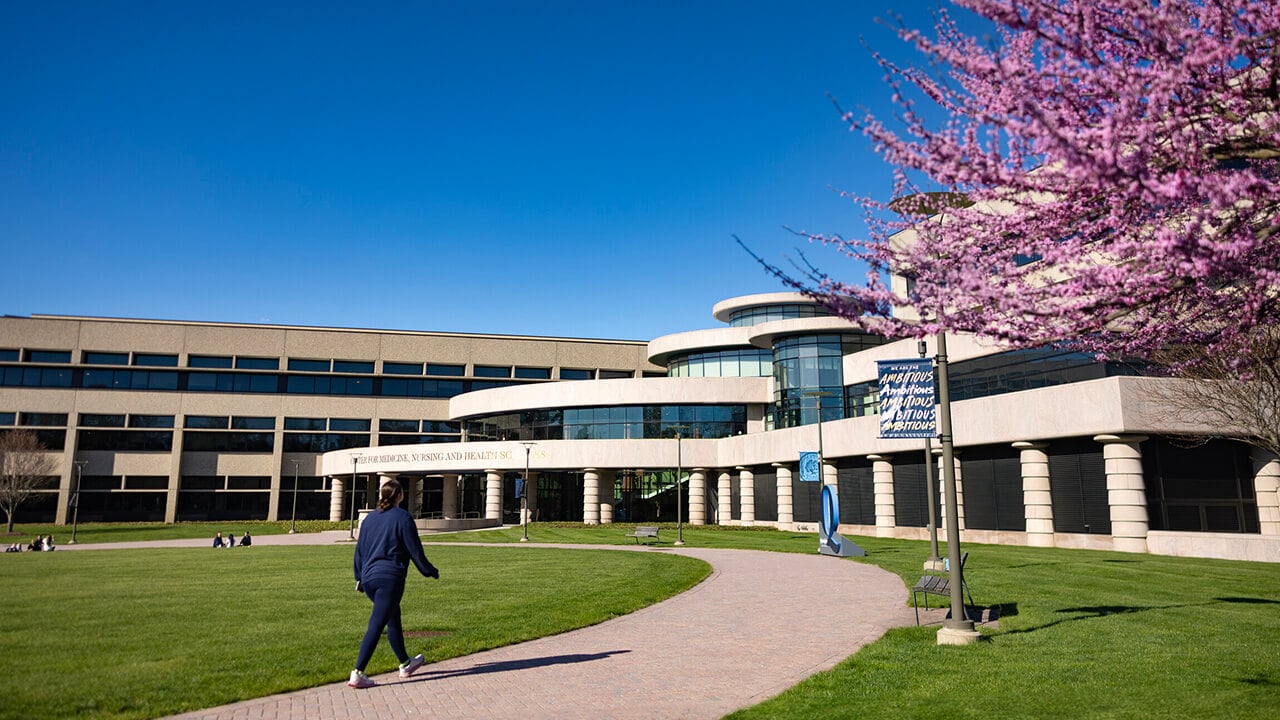
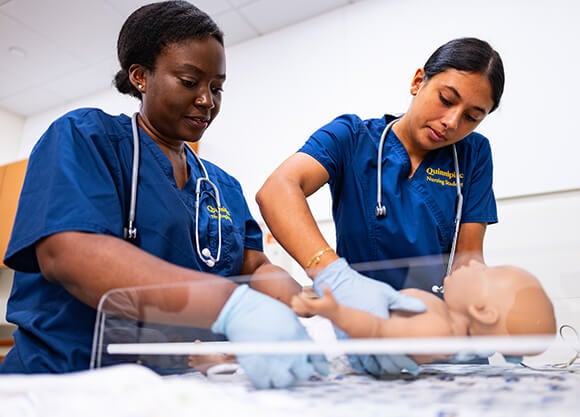
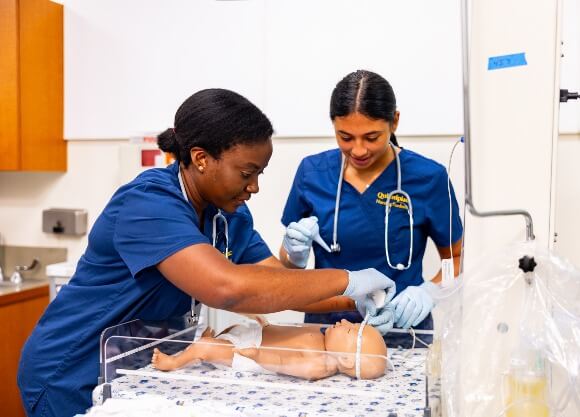
Alex Bayer: Yeah. So being on the ambulance and being a nurse in the hospital, two very different things. But when I was looking for what I wanted to study, you know, I was really interested in the healthcare aspect, but I really liked helping people, too. I really enjoyed getting to connect with people. And the more I learned about different fields, the more I learned that nursing had so many opportunities to do different things, which is something I'm really passionate about. I like being able to put my foot in all different kinds of places and try different things. So I really liked the, like, lateral ability to move around as a nurse. So that's what kind of got me interested in the nursing specifically, and then going to visit the North Haven campus, which is where all the professional programs are seeing the Sim Lab and all the physical space that they have got a number of the programs-.
Joel Vanner: Like state-of-the-art facilities.
Alex Bayer: Yeah. Oh, my gosh. It's amazing. So the last four years have been absolutely incredible of being able to use those, but I'm glad that I'm glad I made that decision four years ago.
Joel Vanner: So QUEMS, how did you get started in that organization on campus? You had the connection with Charles from your campus visit. But how did that all come to be in the beginning?
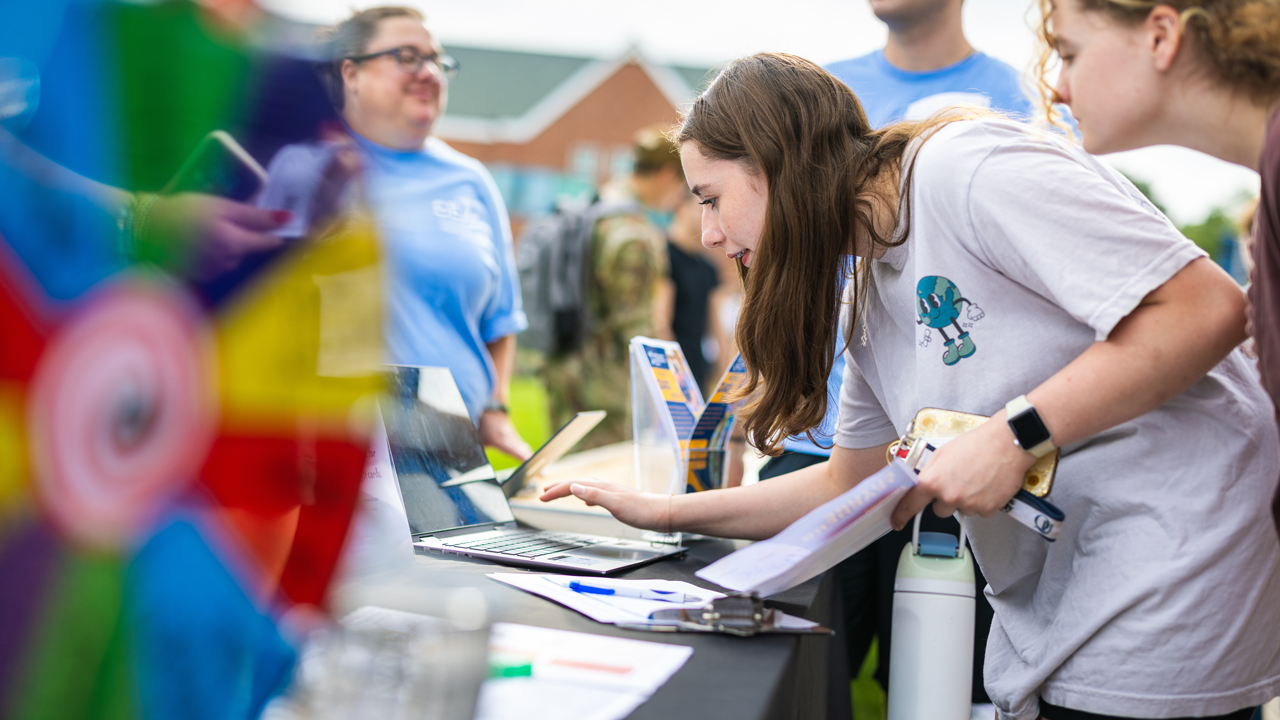
Alex Bayer: So it was since that day. When I came and visited and Charles gave me the tour. He gave me the info. I went on their website, checked him out, filled out the form. And as soon as I got to campus, it was off to the races. So at first, they joined the auxiliary division, just to get a feel for kind of what it was all about. So in that capacity, I was helping table for the organization, and do some promotional stuff. I helped as a CPR instructor. We were teaching classes on campus at that time. And then in the spring, I joined as an EMT, and in the EMT capacity, we were responding to real calls on campus, 911 medical emergencies, getting a little more integrated with the organization's leadership team. So I took on the scheduling officer, and it was a way we go from there.
Joel Vanner: So there are two different divisions in QMS?
Alex Bayer: Yeah.
Joel Vanner: Tell me a little bit about those divisions.
Alex Bayer: Yeah, so the Auxiliary Division is meant for everybody in anyone on campus, any student that's interested either in EMS or health care or just wants to be a part of something that serves the community, right? We have plenty of folks that have no interest in healthcare, business majors, political science, criminal justice. Right. But it's really about service. And if you're somebody that wants to give back and be around a fun group of people to do it with, that's what we're all about. So that's what draws the auxiliary members in. Our EMT folks do have to be licensed EMTs in the state of Connecticut to serve with us. And they respond, like I said, to real medical calls. That's the primary service line of the agency. And everybody, all of our members help support that.
Joel Vanner: How many members are in the organization?
Alex Bayer: I think we're up to about 90 members right now.
Joel Vanner: Oh, wow.
Alex Bayer: Yeah.
Joel Vanner: Wow. So you work with public safety, and on campus, they come right to QU EMS. What's like a typical day for a member of the organization?
Alex Bayer: Yeah.
Joel Vanner: If there is one.
Alex Bayer: You know, it varies for everybody. We staff on an on-call basis. So if you're on shift that day, you'll be sitting in the office for your allotted period of time. And then you know, once you're off shift, you're back off to be a student for the day. So it's kind of this cool, you know, Superman telephone pole, quick change, go be EMT for your shift, and then head back to class.
Joel Vanner: And in your sophomore year, you were the director of operations. So you were really in the scheduling mode. Tell me a little bit about how you got that leadership role and other roles you've had in the organization so far.
Alex Bayer: Yeah, leading into that, I was the scheduling officer. Spring semester, my freshman year. And then that took me into the director of operations role. You know, having come in with some previous EMS experience, I knew what I wanted to see in a system. And so when the opportunity arose that they, you know, were taking applications for the next set of directors, I had some operational experience that I thought would mend well to the organization. So I applied and was enthused to accept the position. That took me off the deep end, I guess, right? We went all in, and I ended up getting the captain position and ran the agency for the last two years.
Joel Vanner: And it's all volunteer-based, right?
Alex Bayer: All volunteers. Yep, every student is a volunteer, we all do it at the love of our hearts.
Joel Vanner: And you mentioned earlier training and education. What are some of the training and education programs you've had for Quinnipiac students, but also for the wider community around us, too?
Alex Bayer: Absolutely. Yeah. So ever since I first joined with helping out with the CPR and Stop The Bleed classes, the organization has been full force ahead. We have now established the agency as an official American Heart Association training site, and we do that in conjunction with our team over at Yale Center for EMS at the hospital. So they've been wonderful to work with. They've been super supportive of our program. We taught over 1,100 students last year.
Joel Vanner: Oh, wow.
Alex Bayer: We're on track to teach a whole bunch more this. Yep. So our programs have done really well with that as far as our community education goes. We do a lot of training internally for our own members, too. Uh, you know, it's an agency. It's a collegiate agency. So a lot of our members coming in are either new EMTs or haven't been EMTs for too long, such as myself when I first joined. So we do a lot of new member education, a lot of cool experiences to get rooted and doing a good physical exam and getting used to patient care-
Joel Vanner: It's a great place to get-.
Alex Bayer: Learn basic skills.
Joel Vanner: That experience.
Alex Bayer: Absolutely.
Joel Vanner: Also, in your nursing courses, what you're learning there, practicing it, you know, using those skills in this experience.
Alex Bayer: A lot of transferable skills between the two. Yeah, a lot of our EMT members are health-related majors, so they are absolutely taking what they learn in class, what they learn out in the field, putting the two together.
Joel Vanner: And how are you making the connection between your work as an EMT and your studies in nursing? Like, what's been that connection connecting the two pieces together?
Alex Bayer: Yeah. I think there's a lot of skill based connections, what you're learning in your clinicals and in your time with us at the EMS trainings. You know, a lot of those skills and comfort pieces come together, whether it's, you know, keeping calm in emergencies, which sounds simple, but it takes a lot of practice to do, right? It's really hard to control that adrenaline rush. So being able to have extra experiences outside of the classroom, we're throwing you into three patient cardiac arrest. Oh, my God, what are you gonna do? Right? Um to then go back into your clinical and be able to hand that real patient hospital a little bit more calmly.
Joel Vanner: And you are on a number of state committees as well. You've been closely related with the Yale system here in Connecticut. And you've had some experiences at St. Francis through your studies in the nursing program. Tell me a little bit about the connections you have with those systems.
Alex Bayer: Yeah, it's been a huge honor to be able to get connected to so many different facets in Connecticut since I've come up here. And the state committees you mentioned, the EMS system in Connecticut operates really well with a whole bunch of volunteer committees. So I've had the honor of being able to sit in on their meetings and contribute where I can a little bit to the education training committee and then the data committee as well. The connections I've made at Yale have been based off our leadership structure here. So our agency's medical direction comes from the hospital. So we meet with their medical directors and work with their operations team to improve our system and mesh with theirs the best we can. So we go to their monthly providers meeting and meet with all the other service chiefs. It's really an honor to sit in on those and be able to see how the system integrates. And then, yeah, you mentioned the St. Francis connection. So I was lucky enough to get a capstone opportunity at St. Francis for my nursing capstone for clinical, and I did a capstone in the emergency department there and just accepted a job offer.
Joel Vanner: Congratulations.
Alex Bayer: Thank you. Yeah. I'm really excited.
Joel Vanner: How is the holistic approach that the School of Nursing emphasizes throughout the courses in the program in the school affected, influenced how you provide care as an EMT and where you're taking your career after Quinnipiac with St. Francis?
Alex Bayer: Absolutely. Yeah. The holistic endorsement from the School of Nursing, I really didn't notice at first. They have it so intertwined and weaved into the program that it just becomes part of you, right? So a lot of the coursework, the methodology, the way of thinking, the way you go about your assessments, where you're thinking about the whole patient not necessarily just one disease process or one injury, right? You're thinking more broadly about, you know, preventative care and social determinants of health and all these different aspects that you might not think of, you know, when you're treating somebody initially in the moment. So as an EMT, it helps me think more broadly. As a leader in, you know, as it helps me think systematically broadly and more holistically. So, you know, we set up policies in our agency and when I help, you know, comment on policies for statewide things. You know, it helps us think about those broader social determinants of health and why is this person getting service in the first place? And what can we do to support their lives and who they are as a person? Yeah.
Joel Vanner: And you are also pursuing a master’s in instructional design in our School of Education.
Alex Bayer: I am.
Joel Vanner: You've mentioned some education-related things you've done with QUEMS with state committees. It sounds like you're learning the what, why, and how people do things. Tell me a little bit about how your studies in that master’s program are connecting with nursing and EMT, and what you're looking to do in the future.
Alex Bayer: Yeah, absolutely. So thanks for mentioning that. I quick plug to the School of Education. Yeah. I was walking around during the admitted students like tabling session where all the schools had their tables out. At the time, I had just gotten my EMS instructor cert in Connecticut. So I was really getting into the EMS education side of things. And I stopped by the School of Education to see what kind of programs they had, and I saw this really interesting instructional design and technology program, where they really taught all about how to design for how people learn. And that was really interesting to me because at the time, I was trying to develop some programs for our EMS group, how to better improve our own internal education and training. And that program really seemed it would work synonymously with my healthcare interests of healthcare education. So that has helped in the undergrad level now, even so I started taking those courses last fall in tandem with the nursing courses as like a four plus one kind of thing. So starting to get that view of how people learn how to teach for, you know, how people learn has really helped, I guess, the like base responsibilities of a nurse, right, have a lot to do with education, right, whether you're teaching your patients how to take discharge instructions or helping develop a system of, you know, how to disseminate information to a community. Having that new level of knowledge has really helped with my systems-level thinking. So I'm really excited to finish out that degree and see where it takes me.
Joel Vanner: And in that, too, with EMS QUEMS being a fully volunteer organization, you know, the way the programs structured, the educational offerings are structured and communicating those to your members who are all volunteers, right? So if students are interested in getting involved with QUEMS, how should they reach out to you?
Alex Bayer: They can head to our website, quems.org, where we have all sorts of cool information about the agency, all about our training site, and the education we provide, our new simbulance donated by Hartford Healthcare and all of our fully stocked equipment in there. Plenty of cool things to check out and reach out to us with our contact form. Yeah.
Joel Vanner: Awesome, Alex, thank you for joining me on today's episode. I enjoyed hearing about your journey to Quinnipiac, all the work you're doing on campus with QU EMS, and congratulations on your upcoming role with St. Francis.
Alex Bayer: Thanks so much, Joel. Glad to be on.
Joel Vanner: If you like today's episode of Who Are You?, be sure to like and share and find other episodes of Who Are You? on Apple, Spotify, or YouTube Podcast or wherever else. You can find your favorite podcasts. Until next time, when I ask my next guest, who are you? I'm Joel Vanner. Bye for now.









Quinnipiac Today is your source for what's happening throughout #BobcatNation. Sign up for our weekly email newsletter to be among the first to know about news, events and members of our Bobcat family who are making a positive difference in our world.
Sign Up Now