



A day of learning and connection highlights the 2026 Indigeneity Initiative Teach-In
November 17, 2026
November 17, 2026
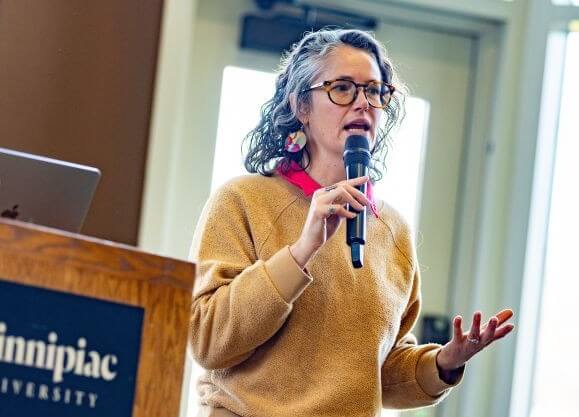
The seventh annual teach-in brought students, faculty, staff and Indigenous community members together Tuesday, November 10 in the Student Center Piazza on the Mount Carmel Campus. Held during Native American Heritage Month, the daylong event featured presentations and workshops on Indigenous history, health, education, culture and identity.
As a student, Tanta-Quidgeon often felt isolated and disconnected from her culture. She wanted to create a community where future Indigenous students could connect with one another and feel a greater sense of belonging. That led her to found the Indigenous Student Union and co-found Quinnipiac’s annual Powwow. Today, as an alumna, she continues to support the university’s Indigenous students.
“Giving Native students opportunities to lead, even in small ways, is a stepping stone toward giving them opportunities to be in rooms with powerful people, with people who have the influence and the ability to change their communities alongside them,” said Tanta-Quidgeon. “We know Native youth have the ability to do that, too.”
During the Teach-In, Tanta-Quidgeon shared her experience and presented on how the Powwow helps to strengthen Indigenous visibility and belonging at Quinnipiac, including its importance as a place for Native students to see their cultures and communities represented.
Jennifer Dauphinais, MAT ’10, an associate teaching professor of education and one of the teach-in’s organizers, presented on the responsibilities and intersections of non-Native and mixed-ancestry identities. She also spoke about the Faculty Indigeneity Initiative and its work to bring together faculty, students and campus organizations to expand opportunities for learning and collaboration. Faculty members from disciplines including education, anthropology, political science, history and nursing contribute to the initiative's work.
“Established by a small core of volunteer faculty from different disciplines, the Faculty Indigeneity Initiative is expanding to include additional voices and contributors across the university’s schools and programs,” said Dauphinais. “It also works in partnership with the Indigenous Student Union (ISU), Albert Schweitzer Institute, Office of Belonging and Powwow Planning Committee (PPC). Over the past seven years, the initiative has brought together faculty, staff and students from the College of Arts & Sciences, School of Communications, School of Education, School of Nursing and the Arnold Bernard Library to work alongside state and federally recognized Tribal Nations, Indigenous educators and community partners.”
Tanta-Quidgeon said the support of faculty members has been just as important as the opportunities themselves, particularly those who have made the initiative a priority beyond their regular teaching responsibilities.
“The faculty who comprise the Indigeneity Initiative are so amazing. They are truly the best allies I have ever come across in my life,” said Tanta-Quidgeon. “None of this could be done without them, and it really shows the value of allyship in this work.”
Julia Giblin, director of anthropology and a longtime member of the Indigeneity Initiative, presented with students about their experiences learning from Maya Kaqchikel communities in Guatemala. An anthropologist whose specialty is archaeology, Giblin has also worked with students to study Indigenous history and artifacts held by local historical societies.
Giblin and her students shared what they learned during a class trip to the Lake Atitlán region, where they explored Maya Kaqchikel cuisine, history and worldview through foods including maize, amaranth, honey, cardamom, watercress and coffee.
She said one of the strengths of the Teach-In is the variety of subjects it brings to campus.
“This teach-in offers many different entry points to the theme of indigeneity,” Giblin said. “We then hope it will empower students to say, ‘I want to learn more about that!’”
Giblin also wants the teach-in to feel welcoming to people who may be encountering these subjects for the first time. She said the organizers have made an effort to create opportunities for people to participate without feeling they need an academic background or extensive knowledge of Indigenous history and culture.
“We really want for it to be an inclusive space where people feel able and excited to join, to be curious, to just come and show up, wherever they're at in their curiosity about these kinds of topics,” she said. “We just want to invite people to participate.”
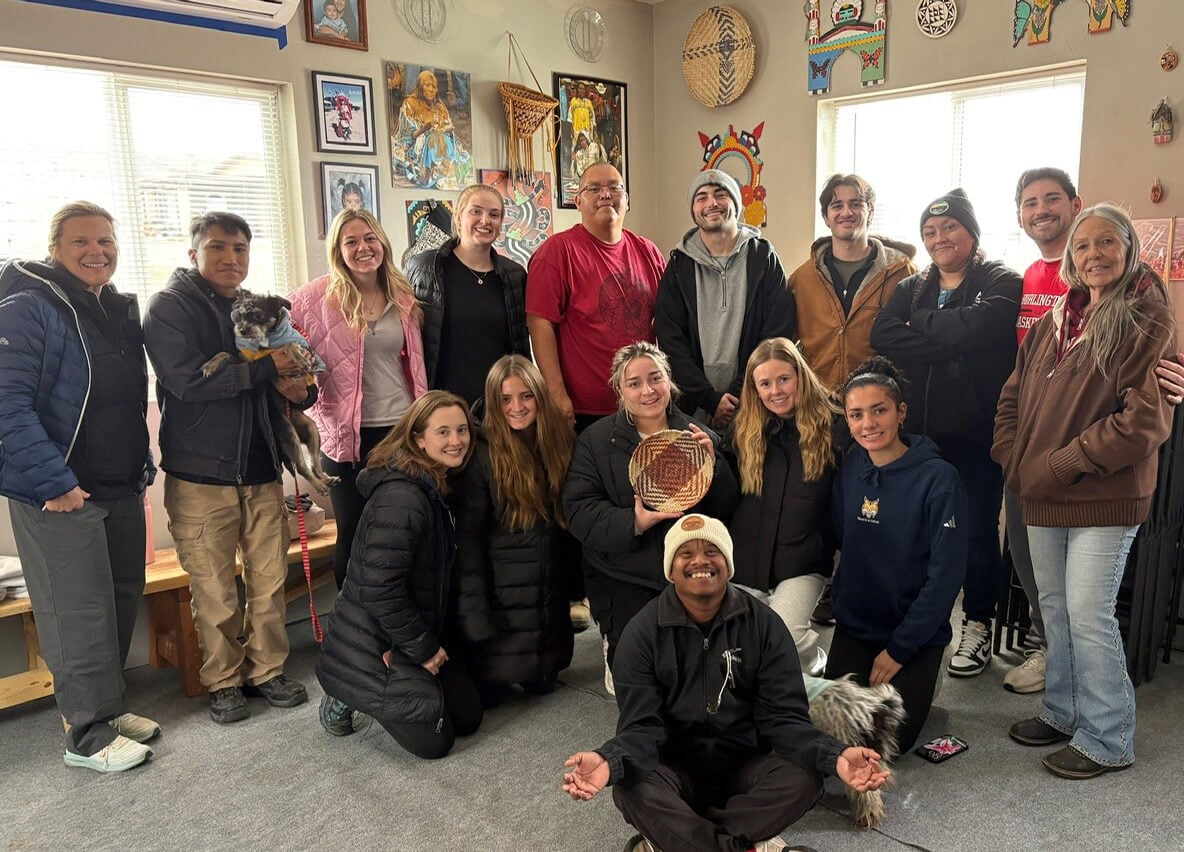
Erica Mumm, a clinical associate professor of nursing, spoke during the event about a field nursing program that takes Quinnipiac students to the Navajo Nation in Arizona. The program grew out of her concern that nursing education doesn't do enough to address the health care needs and experiences of Indigenous populations.
“In our textbooks, we don't have that first-person account of Native Americans sharing their health care needs,” said Mumm said. “It just doesn't exist.”
Mumm and her students spend a week with Navajo community members, learning about their culture, language, history and health care needs while taking part in cultural activities and service work. When they return to Quinnipiac, they develop advocacy projects based on what they learned. It’s follow-through that is an important part of the experience.
“A key part of a teach-in is that you show up, you learn something new and then you share it out with others,” she said. “For my nursing students, one of their main roles as a nurse is advocacy. One of their assignments is to come back from the trip, put together a poster presentation and take an advocacy initiative, whether that's reaching out to a government official or writing an op-ed.”
Other presentations explored a range of topics, including Pequot Tribal advocacy, efforts to improve Tribal education and healthy aging. Sean Duffy, Quinnipiac professor and chair of philosophy and political science, examined the relationship between indigeneity, national identity and decolonization in Ireland. Amanda Gremo (Mohegan) also presented “Remembering Home: A Mohegan Memory Box,” focusing on ways to help Mohegan elders maintain a connection to their cultural identity while experiencing memory loss. Jillian Watt (Mohegan) introduced the University of Connecticut’s Tribal Educational Initiative and its work with Tribal Nations, including a study focused on the perspectives of Indigenous elders in the Northeast on healthy lifestyles and aging.
Collectively, the speakers reflected the many ways Indigenous perspectives and experiences are being explored across disciplines and in the broader Quinnipiac community.
Alexiyah Ha’Teya Hazard ’27 (Mashantucket Pequot), president of the Indigenous Student Union and a School of Business student, said the teach-in offers Indigenous students an opportunity to share their experiences while helping others learn about cultures and histories that may not receive much attention in the classroom.
“Having spaces where Indigenous students feel seen, represented and connected to their culture means being able to bring a piece of home with me to school,” she said. “I want other Indigenous students to feel that same sense of belonging and know that there is a community at Quinnipiac where they can be themselves, celebrate their culture and feel proud of who they are.”
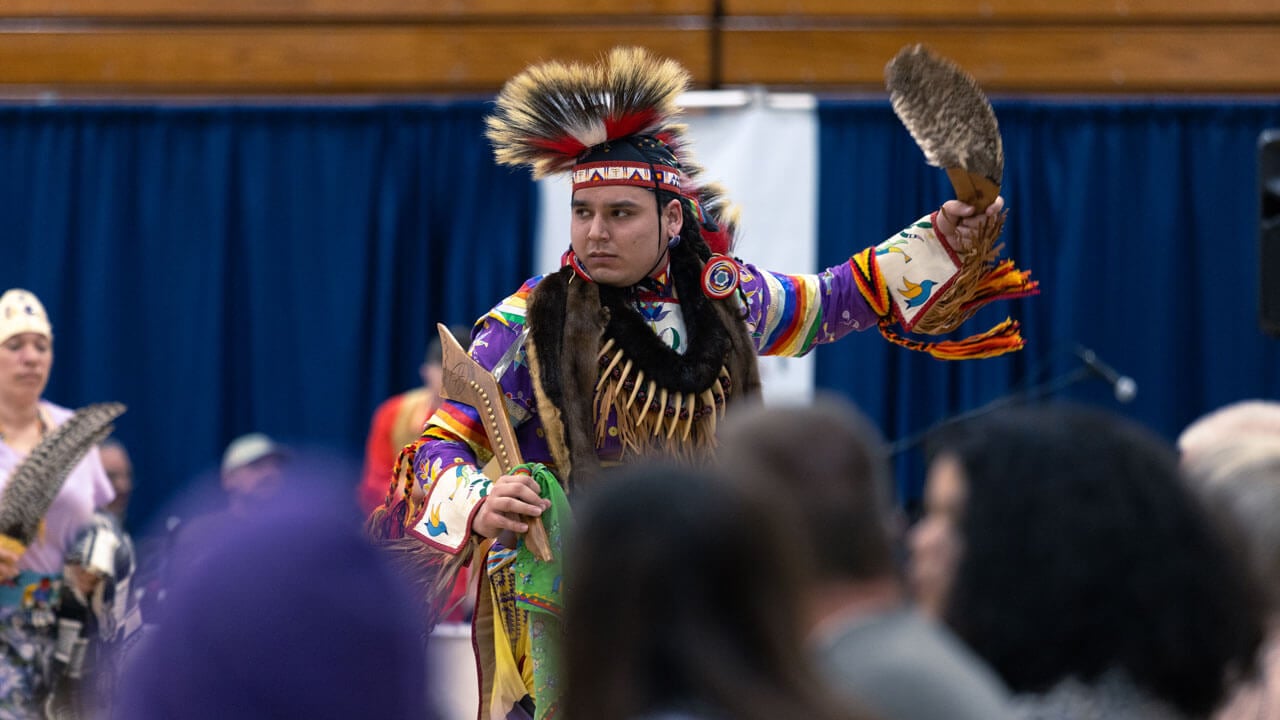
The conversation will continue in Spring 2027, when Quinnipiac hosts its third annual Powwow. Hazard said helping to organize events like this on campus has been some of her most meaningful experiences as president of the Indigenous Student Union.
“Seeing Indigenous students, dancers, drummers, vendors and community members all come together is really special,” she said. “It is rewarding to see non-Indigenous students attend, learn and experience something they may not have been exposed to before.”
Hazard hopes events like these encourage all students to recognize the diversity and continued presence of Indigenous communities.
“I hope non-Indigenous students leave the teach-in with a better understanding of Indigenous communities, our cultures and the history that is not always taught in schools,” said Hazard. “I think it is important for people to understand that Indigenous people and cultures are still here. We are not just part of history, we are living communities with traditions, languages and stories that continue to be passed down today.”









Quinnipiac Today is your source for what's happening throughout #BobcatNation. Sign up for our weekly email newsletter to be among the first to know about news, events and members of our Bobcat family who are making a positive difference in our world.
Sign Up Now